Viking Announces CEO Transition and Reports First Quarter Results

Viking Announces CEO Transition and Reports First Quarter Results

Viking Holdings today announced that its Board of Directors has appointed Leah Talactac, President and Chief Financial Officer, as Chief Executive Officer.

Torstein Hagen, Chairman and CEO, has been appointed as Executive Chairman and will continue to serve as Chairman of Viking’s Board of Directors, according to a press release.

The company also announced that Linh Banh, Executive Vice President of Finance, has been appointed as CFO.

Since joining Viking in 2006, Viking said Talactac has been a key leader on the executive team. Alongside Hagen, she led Viking’s initial public offering in 2024, which was the largest offering on the NYSE that year, and she was appointed President in January 2025 while retaining her responsibilities as CFO. Starting today, Talactac will report to the Board of Directors and continue to lead Viking’s executive committee.

As Executive Chairman,  Hagen will focus on long term strategy and continue to support Talactac in her role as CEO.

“This leadership transition reflects the strength and depth of Viking’s management team and the succession planning we have built over many years,” said Hagen. “Leah’s appointment as CEO is a natural next step, and the Board and I have full confidence in her ability to lead Viking with the same continuity, discipline and vision that have guided us since Viking was founded. On behalf of the entire Viking family, we congratulate Leah, and I look forward to partnering closely with her and the Board as she guides Viking forward in this next chapter.”

“I am honored by this appointment and deeply grateful for the trust of the Board and Tor,” said Talactac. “Tor and our entire executive team have built a phenomenal company over the last 29 years, and I am delighted to lead Viking as we continue to deliver meaningful experiences for our guests and execute our long-term strategy. I also want to take a moment to congratulate Linh on her new appointment as CFO. Linh is a trusted leader within Viking, and her financial stewardship will ensure a smooth transition.”

Q1 Results

The company also reported financial results for the first quarter ended March 31, 2026, and provided an update on operating capacity and bookings.

Key Highlights

  • Total revenue was $1,053.7 million for the first quarter of 2026, an increase of 17.5% compared to the same period in 2025.
  • Gross margin increased 21.2% and Adjusted Gross Margin increased 16.9% compared to the same period in 2025.
  • Net Yield was $596, an increase of 9.5% compared to the same period in 2025.
  • Adjusted EBITDA was $104.8 million, an increase of 43.9% compared to the same period in 2025.
  • Diluted EPS was $(0.12) and Adjusted EPS was $(0.11).
  • Net Leverage improved from 1.1x as of December 31, 2025 to 1.0x as of March 31, 2026.
  • As of May 3, 2026, for its Core Products, Viking had sold 92% of its Capacity Passenger Cruise Days for the 2026 season and 38% of its Capacity Passenger Cruise Days for the 2027 season.

“2026 is off to a strong start and we are very pleased with our first‑quarter results. Total revenue for the quarter grew 17.5% driving a 43.9% year-over-year increase in Adjusted EBITDA, underscoring the demand for our product and our operational discipline,” said Mr. Hagen. “Moreover, we are already 92% booked for 2026 which positions us very well for the remainder of the year. During the quarter, we also continued to make progress increasing our fleet and destination-focused offerings, further enhancing the experiences and value we offer our guests. As we look ahead, we remain focused on delivering on the strong demand while continuing to invest in our future and generate sustainable, profitable growth.”

First Quarter 2026 Consolidated Results

During the first quarter of 2026, Capacity PCDs increased by 6.6% over the same period in 2025. This year-over-year increase was mainly driven by the growth of the company’s fleet, which included one additional ocean ship. Occupancy for the first quarter of 2026 was 94.7%.

Total revenue for the first quarter of 2026 was $1,053.7 million, an increase of $156.6 million, or 17.5%, over the same period in 2025 mainly driven by increased Capacity PCDs and higher revenue per PCD in 2026 compared to 2025.

Gross margin for the first quarter of 2026 was $297.6 million, an increase of $52.1 million, or 21.2%, over the same period in 2025 and Adjusted Gross Margin for the first quarter of 2026 was $717.2 million, an increase of $103.9 million, or 16.9%, over the same period in 2025. Net Yield was $596 for the first quarter of 2025, up 9.5% year-over-year.

For the first quarter of 2026, vessel operating expenses were $357.5 million and vessel operating expenses excluding fuel were $316.1 million. Compared to the same period in 2025, vessel operating expenses increased $47.6 million, or 15.4%, and vessel operating expenses excluding fuel increased $47.9 million, or 17.9%, mainly driven by timing of maintenance and repair costs and the increase in the size of the company’s fleet in 2026 compared to 2025.

Net loss for the first quarter of 2026 improved to $54.2 million compared to a loss of $105.5 million for the same period in 2025. Adjusted Net Loss attributable to Viking Holdings Ltd for the first quarter of 2026 improved to $49.2 million compared to a loss of $105.5 million for the same period in 2025.

Adjusted EBITDA was $104.8 million, an increase of $32.0 million, or 43.9%, over the same period in 2025. The increase in Adjusted EBITDA was mainly driven by increased Capacity PCDs and higher revenue per PCD.

Diluted EPS was $(0.12) and Adjusted EPS was $(0.11) for the first quarter of 2026, compared to Diluted EPS and Adjusted EPS of $(0.24) for the same period in 2025.

Our first quarter results reflect the seasonality of our business. While our ocean, expedition and Mississippi products operate year-round, the primary cruising season for our river product is from April to October.

“We are very encouraged by the financial results of the first quarter. Increasing capacity together with Net Yield improves our profitability and further strengthens our market leadership,” said  Banh. “In this dynamic macroeconomic environment, we remain focused on delivering superior experiences, optimizing revenue and maintaining disciplined cost management, while prudently investing to support long‑term growth.”

Update on Operating Capacity and Bookings

For the company’s core products, operating capacity is 7% higher for the 2026 season compared to the 2025 season and 15% higher for the 2027 season compared to the 2026 season.

As of May 3, 2026, for the company’s core products, it had sold 92% of our Capacity PCDs for the 2026 season and 38% for the 2027 season. Viking said it had $6,225 million of Advance Bookings for the 2026 season, 13% higher than the 2025 season at the same point in time; and said it had $3,403 million of Advance Bookings for the 2027 season, 31% higher than the 2026 season at the same point in time.

Advance Bookings per PCD for the 2026 season was $842, 5.5% higher than the 2025 season at the same point in time, and Advance Bookings per PCD for the 2027 season was $986, 11.0% higher than the 2026 season at the same point in time.

“With 2026 mostly booked, our focus has shifted to the 2027 season, which is off to a great start. Capacity for our Core Products is increasing by 15%, and is already 38% booked, with Advance Bookings 31% ahead of last year,” said Talactac. “Our booked positions for 2026 and 2027 demonstrate the resilience of our loyal customer base and the sustained demand for our product reflecting that travel remains a priority for our customers. These results also underscore the effectiveness of our strategic initiatives including an extended booking window, targeted direct marketing, a broader itinerary offering and a compelling value proposition.”

Norwegian Cancels Joy Cruise Due to Charter

NoNorwegian Cancels Joy Cruise Due to Charter

Norwegian Cruise Line cancelled the cruise that was set to take place onboard the Norwegian Joy on April 12, 2027.

According to a statement sent to booked guests, the sailing will no longer go ahead due to a full-ship charter.

Sailing roundtrip from PortMiami, the vessel was set to offer a five-night cruise to the Bahamas and Mexico.

In addition to Cozumel, the itinerary included a visit to the company’s private island destination of Great Stirrup Cay, as well as two days of cruising in the Caribbean.

Norwegian said that guests will receive a full monetary refund of the fare paid for the cruise, which will be automatically returned to the original form of payment. In addition they will be getting a future cruise credit (FCC).

“We recognize this change wasn’t part of your original travel arrangements, and as a token of our appreciation for your patience, we’re pleased to offer you a 10 percent discount in the form of a Future Cruise Credit,” the company added.

The FCC can be used toward any of Norwegian’s published sailings through December 31, 2027, the statement added.

The company also said that its teams are available to book guests on alternative sailings, suggesting three similar cruises departing from Miami.

Highlighted cruises include two departures of the Norwegian Viva, sailing on April 13 and April 18, 2027.

The first sails to the Bahamas and the Dominican Republic over the course of five nights, while the second is a seven-night cruise to the Western Caribbean and the Bahamas.

Norwegian also suggested a four-night cruise to the Bahamas onboard the Norwegian Getaway on April 12, 2027. All of the options also include a visit to Great Stirrup Cay.

Following its new charter sailing, the Norwegian Joy is scheduled to reposition to the West Coast ahead of a summer season in Alaska.

Joining the Norwegian Bliss, the Norwegian Encore and the Norwegian Jade, the vessel offers a series of seven-night cruises departing from Seattle.

More Information

A full-ship charter for a Norwegian Cruise Line (NCL) vessel generally ranges from £1 million to over £12 million ($1.3 million to $15+ million USD) for a week, depending on the ship’s size, age, and itinerary. Chartering requires covering the equivalent of all stateroom fares, food, entertainment, and a 10% or higher initial deposit. [12345]

Key Considerations for Full-Ship Charters:

  • Costs: Rates often base on roughly $150–$200+ per passenger per day, plus taxes and gratuities, which on a 4,000-passenger ship can exceed several million dollars in total.
  • Capacity & Timing: Costs vary based on the ship class and season; smaller or older ships (e.g., Norwegian Sky) cost less than larger, modern vessels (e.g., Norwegian Encore).
  • Payments: A non-refundable deposit is required at signing, typically with the full balance due 90 days to several months in advance.
  • All-Inclusive Nature: The charter fee covers food, entertainment, and standard amenities, but usually excludes alcohol, spa treatments, and special excursions.
  • Process: Companies like NCL Corporate Incentives handle these, requiring advanced planning (often 12–18 months). [12345]

For exact pricing, you must submit a request for proposal directly to Norwegian Cruise Line’s charter department.

MSC Cruises and Eni Prove Biofuel’s Readiness for Cruise Ship Engines

MSC Cruises and Eni Prove Biofuel’s Readiness for Cruise Ship Engines

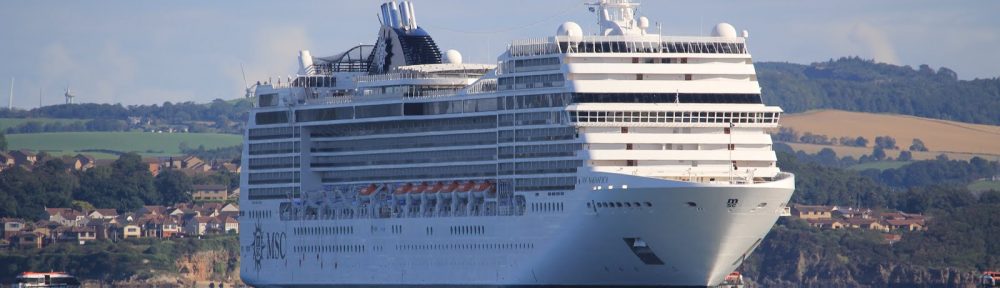
MSC Opera Photo Credit Spacejunkie2 Flickr Account https://flic.kr/ps/GkiQt

Testing by Eni and MSC Cruises has confirmed the technical feasibility of using biofuel in its pure form to power cruise ship engines, the cruise line said in a press release. 

During the tests with Enilive’s HVO (Hydrogenated Vegetable Oil) diesel, one of the MSC Opera’s engines was powered for approximately 2,000 hours with pure HVO. 

No engine modifications were made, while performance and emissions data were recorded. 

The test demonstrated that HVO can be used for marine engines with no technological upgrades needed, with performance staying in line with traditional marine fossil fuels. 

Michele Francioni, Chief Energy Transition Officer of MSC Cruises, said:” We are very pleased to have satisfactorily confirmed the technical feasibility of 100% HVO on our cruise ship as part of our continuous decarbonization efforts. 

“We believe HVO may play an important role in the decarbonization of shipping and together with other immediately available fuels such as LNG and bio-LNG, constitutes an immediate opportunity that could be deployed onboard cruise ships to accelerate the transition towards renewable fuels, bringing us a step closer to our ultimate goal of reaching net zero GHG emissions by 2050”. 

According to the press release, the test recorded lower emissions of both NOx (16 percent) and particulate, as well as a reduction in GHG emissions inherent to the origin of the HVO product of around 80 percent compared to the use of traditional fuel. 

The reduction is said to be due to the usage of 100 percent biogenic feedstocks in the HVO production process. 

Technical data on engine performance and associated emissions were collected and assessed with the support of Wärtsilä as the engine manufacturer, and Bureau Veritas, which independently validated the results. 

Stefano Ballista, CEO of Enilive, noted that his company’s marine HVO diesel has been available at the ports of Genoa, Ravenna and Venice for direct delivery from the terminal to vessels via barge for several months. 

He described the fuel as a viable solution for the decarbonization of maritime transport.