Big Ships vs. Small Ships: the Pros and Cons of Cruise Ship Size
Too big or not too big? That’s the question for a lot of cruisers thinking of trying a ship of a different size, whether they’re newbies or old salts. With mega-vessels featuring a dizzying number of amenities, dining choices and entertainment options, and small ships offering a more intimate and often exclusive experience, the size decision can be a difficult one.
We’ve compiled a list of elements to consider before making a choice about whether bigger is better or small is the way to go. Check out our pros and cons below.
Editor’s Note: For the purposes of this article, we’re considering “small” ships to be any vessel carrying 1,599 or fewer passengers and “big” ships to be anything with a passenger capacity of 1,600 or more.
Big Ships
Number of Passengers
Pro: If you’re someone who doesn’t mind a crowd, a big ship is the place to do it. With some ships — like those in Royal Caribbean’s Oasis Class — carrying more than 5,000 passengers per sailing, it’s unlikely you’ll run into the same folks twice during a week long voyage. With so many bars, lounges and out-of-the-way nooks and crannies, it’s easy to find a spot for yourself, but those who like to constantly meet new people will particularly find mega-ships appealing.
Con: Sailing on what’s essentially a floating city can be overwhelming and likely won’t feel intimate. On large ships with poor layouts, lines for everything from the buffet to the theatre can be long, and good luck finding a deck chair by the pool.
Dining Options
Pro: If you’re easily bored with eating in the same dining room every night, large ships provide lots of options to switch it up. On larger vessels, you can have sushi one night, Italian the next, French the following evening and seafood or steak the day after that. The possibilities are almost endless, which is a plus for anybody who’s a picky eater (or anybody who’s travelling with one).
Con: Chances are good that you’ll end up shelling out extra cash to dine at least a couple of the alternative eateries. Reservations can be difficult to come by for some of the more exclusive options; if you’re dying to try one in particular, book before you board.
Entertainment Offerings
Pro: Larger ships boast more bells and whistles, so it follows naturally that they present more entertainment options. From comedians, game shows and Broadway revues to magicians, movies and dinner theatre productions, there’s something to keep just about everyone busy.
Con: Sometimes it’s difficult to decide where you want to be and what you want to do. Should I catch the movie on the pool deck or head to the lounge for karaoke? If I miss the show tonight, can I see it again during this sailing? Also, a select few events do carry an additional fee to attend, which can be a drawback.
Activities
Pro: Add ropes courses, skydiving and innovative water slides to the host of options that keep passengers busy onboard. Because larger ships offer something for just about everyone, they’re often a solid choice anyone who’s easily bored, couples or groups with varied interests and multi-generational groups. (Think bingo for grandma and grandpa, dinner shows for mom and dad, and innovative children’s programming for the kids.)
Con: As is the case with a large selection of entertainment options, having too many activity choices can make any cruiser’s head spin.
Small Ships
Number of Passengers
Pro: Small ships, by definition, carry fewer passengers. You’ll likely see the same faces over and over on a daily basis and get to know them exceedingly well by the end of your sailing.
Con: If you’re someone who prefers to keep a low profile, a vessel with a larger passenger count is probably a better bet. On a smaller ship, a handful of annoying passengers can make or break a trip.
Dining Options
Pro: Many small ships, due to their limited space, have only one main dining room for meals, and they generally don’t allow for anything other than eating at set times with set table mates. (Others might have alternative eateries, but they’re limited.)
Con: Menu options can be slim, especially with a shortage of alternative restaurants. If you’re someone who likes variety, you might have trouble finding it on a smaller vessel.
Entertainment Offerings
Pro: You won’t find much in the way of casinos, theatre productions or magicians, but that leaves room for more educational pursuits. Small ships often provide enrichment seminars on everything from photography to local culture. Sometimes local performers are brought on board to entertain, as well. Think historians, musicians and dancers.
Con: If history and culture aren’t of interest to you, you might have trouble finding something to occupy your time on board. Be prepared to bring some reading material.
Activities
Pro: Because small ships don’t offer the plethora of amenities that large ships do, the sailings they provide focus mainly on the destinations they visit, rather than the vessels themselves. That means excursions are key, and they often focus on the history and culture of a region, making it easy for cruisers to immerse themselves in their surroundings and learn a lot about the places on which they call. Also, due to their tinier size, small ships can call on more remote ports that can’t accommodate mega-ships.
Con: Marathon shore excursions can leave you feeling like you need a vacation from your vacation. Prepare to spend a day on board relaxing and taking it easy if it gets to be too hectic.
Different cruise lines offer everything from water slides and pool parties to talent shows and culinary classes.
Cruising with the family might be the best vacation value short of pitching a tent in your backyard. A family cruise includes all meals, most onboard activities and stops at different ports for the family to enjoy as they see fit.
According to Cruise Line International Association, the fastest-growing segment of the market is the 25 to 40 age group. Young families in this demographic — as well as families with older kids — have the opportunity to spend less and get more on a cruise, if they know how.
For starters, families on a budget should decide which cruise line best fits their family, budget and style of vacation. Disney Cruise Lines, for instance, offers the most kid-friendly activities, but at a steeper price. On a Disney cruise, however, there is always something going on, including parties, character autograph sessions, musicals, movies, games, princess parties, animation lessons and more.
Carnival Cruise Lines, on the other hand, often offers an affordable cruise for families on a budget. And most of the Carnival ships now offer waterslides, rope courses, miniature golf and Camp Carnival, where kids ages 2 to 11 years old can spend most of the day with other kids in an activity-based program. Kids 12 to 14 can join Club C and play video games, participate in talent shows, have pool parties and more. Teens 15 to 17 go to Club O2 and enjoy their own nightclub-like room where activity leaders keep them entertained. Club O2 sometimes offers special excursions as well.
Royal Caribbean Cruises contracted with DreamWorks to offer Hollywood-style cruises that kids love. Children and adults alike enjoy 3-D movies, parades and character meals. Barbie also joined Royal Caribbean last year — at a cost of $199 per child, the kids can participate in the Barbie Premium Experience aimed at cruisers 4 to 11 years old. Royal Caribbean Cruises also offers special dining for children ages 3 to 11. After young ones finish eating, staff members escort them to the kids club while parents enjoy a romantic dinner at a more relaxed pace.
Holland America Line (HAL) offers Club HAL for kids ages 3 to 17, providing karaoke, pajama parties, swim parties, scavenger hunts, video game tournaments, pizza making and talent shows. Club HAL activities are supervised by full-time staff, all of whom hold degrees in education, childhood development, recreation, leisure studies or other related fields. Families with teenagers might want to consider HAL for its great teen program. The Loft — or The Oasis, depending on the ship — is an entire deck accessible via a secret passageway that is devoted to teens. It features a nightclub venue, a juice bar and a swimming pool. Some teens can choose to participate in digital workshops, culinary classes or other educational programs too.
Norwegian Cruise Line partnered with Nickelodeon and offers a wide variety of activities for kids of all ages. Younger ones will enjoy Dora’s Dance Party, meet and greets with Nickelodeon characters or a themed arts and crafts party. Kids as young as 6 months to 12 years old can sign up for Splash Academy, but at least one parent or adult must accompany kids ages 6 months to 3 years. Teens up to 17 enjoy Entourage, where they play sports, take part in theater and fashion workshops or have pool parties. With “Free Style” cruising, families can do what they want, when they want, including dining. This freedom makes for a more relaxed schedule without the hassles of strict timelines.
MSC Cruise Line’s Divina offers a robust complimentary childrens program. Kids ages 3 to 12 years old can experience Kids Club all day long, with MSC staff supervising. It also offers High-Seas Hangouts for teens 13 to 17 years old. The Teen Club offers dance classes, a virtual world arcade, sports, games and tournaments. At night, teens can play trivia, enjoy live music and dance. Teens can also get a pre-paid “Teen Card” for small onboard purchases.
Stateroom Options
Some of the cruise lines offer a “kids sail free” program and charge only for room taxes and gratuities. Others offer specialized cabins with drop-down bunks or sofa-beds to accommodate up to five family members. These rooms book fast because they provide the best value for a family and should be booked as far in advance as possible. Booking these rooms works best with younger kids — families with older kids capable of being on their own should consider two rooms. Some cabins also have connecting doors, and balcony rooms also have the ability to open the outside partition between cabins to create a single bigger balcony shared by the family.
“I suggest one outside room and one inside room across the hall,” said West Coast Travel’s Jim Manning.
Most cruise lines now offer family-style suites, with one or two bedrooms and a central living area that can be used as an additional sleeping space with fold-out couches. These rooms cost more but can provide the ideal space for families who want to stay together but have some privacy as well.
When to book the family cruise also plays an important role in saving big dollars for the family. Deals during wave season might include shipboard credits, discounted airfares, free shore excursions and room upgrades.
Other ways to stretch a family vacation budget include cruising during shoulder seasons. For instance, in the Caribbean, peak season begins in late November and runs through June. Booking before or after peak season will help families save. Shoulder season in Alaska would be the first one or two cruises of the season and the last one or two at the end of the season.
“You should also consider ‘repositioning cruises’ for your best price,” said Manning.
Repositioning cruises are often priced lower because they occur during the shoulder season and they don’t start and end at the same port. These cruises may increase the airfare costs for a family, but could also work in a family’s favor, depending on where a cruise begins or ends. Repositioning cruises sometimes work well for reunions because family members come from different cities.
Planning a family reunion onboard a cruise ship can solve many problems, including where to go, who does the cooking, who cleans up the mess and how much it will cost. Since cruise ships offer so many room categories with different price points, everyone who comes to the family reunion can choose the room and shore excursions for his or her budget, while enjoying the same high-quality experience.
Disney Magic renovation aims for ‘something for everybody’
By Tom Stieghorst
GALVESTON, Texas — The 15-year-old Disney Magic will get new water features and more exciting slides in a September refurbishment that will be the biggest in the ship’s history.
The tone is set by the AquaDunk, a thrill slide in which riders step into a chamber, a door closes, the bottom falls out, and a plunge of 40 feet ensues before riders loop out over the ocean in an enclosed tube.
Also new will be “Twist N’ Spout,” which Disney executives describe as a family slide.
It will replace the tamer slide that goes into the Mickey Pool, which will be reborn as AquaLab after the renovations.
The general idea is to make the pool and water areas on the Disney Magic less age-specific, said Joe Lanzisero, senior creative vice president at Walt Disney Imagineering.
Lanzisero, the ship’s chief designer, led a preview tour of upgrades for a handful of journalists during a recent turnaround, using iPads to display renderings of the new features.
He said families on Disney ships prefer to stay together rather than be broken up into smaller units (although the Quiet Cove pool remains adults-only).
“We think now, between the family slide, the AquaLab, the thrill slide, that there should be something for everybody out there,” Lanzisero said.
Currently sailing from Galveston, the Disney Magic will spend the summer in the Mediterranean before its six-week drydock in Cadiz, Spain. Afterward, it will head to Miami to replace the Disney Wonder for the rest of 2013.
The pool deck will get the most noticeable makeover, but Disney is making changes throughout the ship to freshen it, change the predominant color scheme and replace some of the more dated concepts.
One area in need of an update, Lanzisero said, is the casual restaurant now called Parrot Cay, which has a quasi-tiki design. Under its new name, Carioca’s, it will get a more contemporary and “timeless” look, he said.
The children’s play areas will be redone, in part to accommodate Disney’s $4 billion acquisition of Marvel Entertainment, whose stable of superheroes, including the Avengers, will be represented for the first time at sea on the Disney Magic, Lanzisero said.
“We definitely wanted to do something with Marvel, especially for boys,” Lanzisero said.
Another big change will be additional space for Topsider, the upper-deck buffet restaurant, which will gain seats by enclosing some walkways and adjacent exterior deck areas. It will be rechristened Cabanas, given an Australian beach theme and have serving stations rather than cafeteria-style lines.
Two areas that won’t change much are Animator’s Palette and the adult restaurant Palo’s, which are both so popular that Disney plans to leave them essentially as they are.
The Magic will keep its art deco design elements but have a lighter, more aquatic color scheme.
The pool changes include building stairs beside the ship’s forward funnel to access the AquaDunk, a follow-on to the bigger AquaDuck water coaster developed for the Disney Dream and Fantasy.
The Disney Magic’s pool changes will also include adding waterplay features from newer Disney ships, such as bucket dumps and, for children under 3, an interactive Nephew’s Splash Zone with pop jets and bubblers similar to Nemo’s Reef on the Disney Dream.
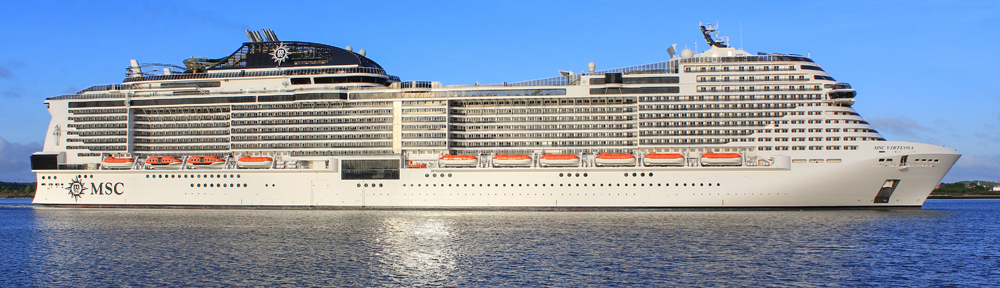
 Too big or not too big? That’s the question for a lot of cruisers thinking of trying a ship of a different size, whether they’re newbies or old salts. With mega-vessels featuring a dizzying number of amenities, dining choices and entertainment options, and small ships offering a more intimate and often exclusive experience, the size decision can be a difficult one.


 GALVESTON, Texas — The 15-year-old Disney Magic will get new water features and more exciting slides in a September refurbishment that will be the biggest in the ship’s history.
 Currently sailing from Galveston, the Disney Magic will spend the summer in the Mediterranean before its six-week drydock in Cadiz, Spain. Afterward, it will head to Miami to replace the Disney Wonder for the rest of 2013.
 Another big change will be additional space for Topsider, the upper-deck buffet restaurant, which will gain seats by enclosing some walkways and adjacent exterior deck areas. It will be rechristened Cabanas, given an Australian beach theme and have serving stations rather than cafeteria-style lines.
 Wetravel2u's Weblog