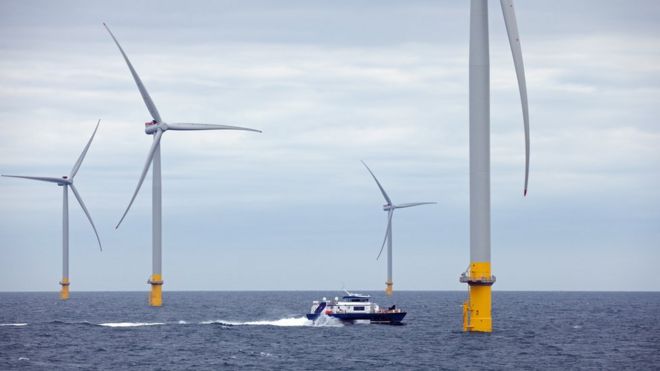
The Norwegian government has announced the opening of more than 860,000 acres of the Norwegian Continental Shelf to offshore wind development.
The areas, known as “Utsira Nord” and “Sørlige Nordsjø II”, are located in Norwegian waters in the northern North Sea. Combined, the two areas allow for the development of 4,500 MW of wind power.
“Offshore wind power offers great opportunities for Norwegian businesses,” said Tina Bru, Minister for Petroleum and Energy. “In the immediate future the market will be in other countries, but if the costs for offshore wind power continues to fall it could also become competitive in Norway. It is now time to prepare for future development by allocating space for offshore renewables.”
.
A proposal to open areas and a draft regulation were open for public comment in 2019.
The Utsira Nord is located to the west of Haugesund and is ideally suited for floating wind power. The area is also large, encompassing 1,010 square kilometres close to shore.
The Sørlige Nordsjø II borders the Danish sector in the North Sea and could be best suited for “direct export” of electricity. The area spans 2,591 square kilometres in mostly shallow water that would allow traditional wind turbines.
The Norwegian government has set an opening date of 1 January 2021.
The document plans for a massive expansion in offshore wind
Greenpeace has joined a growing list of organisations demanding that the UK government puts protecting the environment at the heart of any post-COVID-19 economic stimulus package.
The campaign group has produced a detailed “manifesto” with measures to boost clean transport and smart power.
The document follows a comparable call from some of Britain’s most powerful business leaders earlier this week.
Last week, the prime minister also expressed a similar ambition.
The manifesto also contains measures to support the protection of nature, green buildings and the creation of an economy in which virtually everything is reused.
Greenpeace says the crisis has given Britain a “once in a lifetime” opportunity to transform life, travel and work.
It added that the plan would create hundreds of thousands of secure jobs.
Green business
On Monday, more than 200 chief executives of some of the UK’s top firms – including HSBC, National Grid, and Heathrow airport – signed a letter to the prime minister asking him to use the Covid-19 lockdown as a springboard to “deliver a clean, just recovery”.
Many people may be surprised how similar the recommendations of these two very different interest groups are.
Both Greenpeace and the chief executives are asking the government to prioritise investments in low carbon technologies and calling for the decarbonisation of the British economy to be speeded up
Both say they want to see a focus on sectors that best support the environment
Both are demanding that financial support for ailing businesses must come with a requirement for them to commit to taking action to reduce their impact on the environment.
Greenpeace’s manifesto is, however, considerably more detailed.
It is a 62-page document with a specific policy, spending and tax measures covering most of the British economy.
It calls on the government to deliver its 2050 net-zero emissions goal before 2045.
Controversial policies
Image copyrightGETTY IMAGESImage captionThe manifesto contains measures to encourage clean transport
But many drivers may balk at Greenpeace’s proposals to radically redesign the road network to favour walking and cycling, at the suggestion that petrol and diesel cars are banned by 2030 or that fuel duty is steadily increased.
Many homeowners might be reluctant to spend money to upgrade their properties to meet tough energy efficiency standards.
At the same time, many local communities are likely to resist the plan for a big increase in onshore wind and solar power to complement a proposed massive expansion of offshore wind farms – few things unite local communities like a proposal to put in an array of wind turbines.
Image copyrightGETTY IMAGESImage captionThe manifesto proposes the creation of an economy in which virtually everything is reused
But, says Greenpeace, tough policies like these are essential if the government is going to take meaningful action to tackle climate change.
“The choices our government makes now will define… whether or not we succeed in the fight against the climate emergency”, says John Sauven, executive director of Greenpeace.
“If we fail to get this right, we may never get another chance. Now is the time for a green recovery, and for that, we need action, not words.”
It says there would be huge dividends in terms of job creation, should its programme be adopted.
Greenpeace calculates that its plans would create hundreds of thousands of new high-skilled jobs as well as helping to level up inequalities between communities in the UK.
Unique opportunity
The UK government has already indicated that protecting the environment will feature heavily in any stimulus package.
Back in April, Boris Johnson said a post-COVID-19 recovery plan should include efforts to “turn the tide on climate change”.
Last week, it said it planned to commit a whopping €750bn (£667bn; $841bn) to its recovery package.
Add in spending from future budgets and the total financial firepower the European Commission says it will be wielding is almost €2tn (£1.8tn; $2.2tn).
Fighting climate change is at the heart of the bloc’s recovery from the pandemic.
There will be tens of billions of euros to make homes more energy-efficient, to de-carbonise electricity and phase out petrol and diesel vehicles.
The idea is to turbo-charge the European effort to reduce carbon emissions to net-zero by 2050.
“If we do not do it, we will be taking much more risk,” Teresa Ribera, deputy prime minister of Spain, told the BBC.
“The recovery should be green or it will not be a recovery, it will just be a shortcut into the kind of problems we are facing right now.”
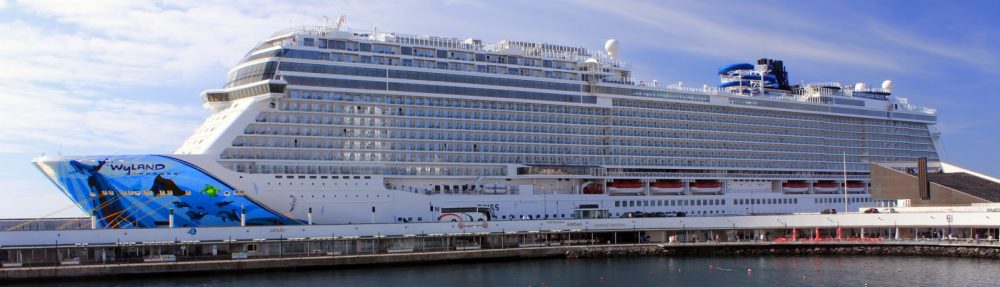
MSC’s first World-class ship is due in 2022. MSC Europa.
MSC Cruises ordered two more cruise ships in its World-class and agreed to develop two additional ship classes. One will have at least four vessels and the other could use wind power.
The two firm ships orders and memorandum of understanding to build the two new prototypes represent a combined value of about $7 billion.
An agreement for the ships and prototypes was made with French shipyard Chantiers de l’Atlantique.
MSC placed orders for its third and fourth World-class ships, powered by liquefied natural gas (LNG), to be delivered in 2025 and 2027.
The new four-ship class will also be LNG-powered, MSC said, while another prototype will incorporate emerging technologies such as wind power.
MSC executive chairman Pierfrancesco Vago said that the investments “confirm this industry’s commitment to environmental sustainability.”
The four new vessels will represent a capital investment exceeding $4.4 billion, MSC said, adding to the $2.2 billion for the two additional World Class ships.
The Chantiers shipyard in Saint-Nazaire, France, is currently building the first two ships in the line’s World-class. The first of those 5,264-passenger, 205,000-gross-ton vessels, due to enter service in 2022, will be the largest ship operated by a European cruise line.



 Wetravel2u's Weblog