MSC Cruises and Eni Prove Biofuel’s Readiness for Cruise Ship Engines

MSC Cruises and Eni Prove Biofuel’s Readiness for Cruise Ship Engines

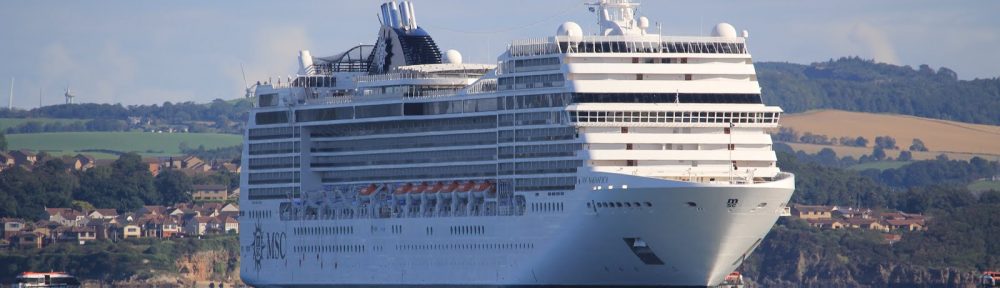
MSC Opera Photo Credit Spacejunkie2 Flickr Account https://flic.kr/ps/GkiQt

Testing by Eni and MSC Cruises has confirmed the technical feasibility of using biofuel in its pure form to power cruise ship engines, the cruise line said in a press release. 

During the tests with Enilive’s HVO (Hydrogenated Vegetable Oil) diesel, one of the MSC Opera’s engines was powered for approximately 2,000 hours with pure HVO. 

No engine modifications were made, while performance and emissions data were recorded. 

The test demonstrated that HVO can be used for marine engines with no technological upgrades needed, with performance staying in line with traditional marine fossil fuels. 

Michele Francioni, Chief Energy Transition Officer of MSC Cruises, said:” We are very pleased to have satisfactorily confirmed the technical feasibility of 100% HVO on our cruise ship as part of our continuous decarbonization efforts. 

“We believe HVO may play an important role in the decarbonization of shipping and together with other immediately available fuels such as LNG and bio-LNG, constitutes an immediate opportunity that could be deployed onboard cruise ships to accelerate the transition towards renewable fuels, bringing us a step closer to our ultimate goal of reaching net zero GHG emissions by 2050”. 

According to the press release, the test recorded lower emissions of both NOx (16 percent) and particulate, as well as a reduction in GHG emissions inherent to the origin of the HVO product of around 80 percent compared to the use of traditional fuel. 

The reduction is said to be due to the usage of 100 percent biogenic feedstocks in the HVO production process. 

Technical data on engine performance and associated emissions were collected and assessed with the support of Wärtsilä as the engine manufacturer, and Bureau Veritas, which independently validated the results. 

Stefano Ballista, CEO of Enilive, noted that his company’s marine HVO diesel has been available at the ports of Genoa, Ravenna and Venice for direct delivery from the terminal to vessels via barge for several months. 

He described the fuel as a viable solution for the decarbonization of maritime transport.

Juneau Reaffirms Cruise Passenger Limits Amid New Dock Proposal

Juneau Reaffirms Cruise Passenger Limits Amid New Dock Proposal

While a proposed new cruise dock could expand the number of cruise berths in Juneau, the city currently has no plans to increase the number of guests arriving.

Speaking with Cruise Industry News, Tourism Director of the City and Borough of Juneau (CBJ), Alexandra Pierce, highlighted the town’s sustainable approach to tourism and said that the development project has not been approved yet.

“We’re one of the communities in the world that has negotiated cruise ship limits, and we don’t have any plans to change those limits,” she said.

Juneau currently holds a voluntary five-ship-a-day limit, which keeps the number of arriving guests steady.

“We’re proud of having these negotiated agreements with the cruise industry,” she said, adding that the deals “were pretty hard fought.”

Pierce noted that the project for additional cruise berths in Juneau, which is being carried out by Goldbelt, is currently pending approval from local authorities.

“They had some preliminary meetings with the city regarding their plans. However, there are very extensive permitting and reviewing processes pending, not just by us, but also by other government agencies that would be impacted,” she explained.

While the proposed port could increase the number of berths available for ships in the town, the actual growth of cruise passengers arriving depends on many other factors, Pierce continued.

“These limits that we have in place allow us to manage for the volume that we have today,” she explained.

Pierce said that such an increase would impact many areas, from transportation to emergency services infrastructure.

“All of that needs to be taken into consideration before adding an additional 500,000 people to a port that already sees 1.7 million visitors a year,” Pierce added.

“To raise those limits, we would need to see some pretty significant infrastructure improvements, which is what our city council is kind of grappling with right now.”

Juneau is soon putting together a visitor industry task force, which will also discuss the matter, she continued.

“One of the things that we’re asking them is under what conditions can Juneau grow? What are our infrastructure needs? What are our criteria for being able to welcome more passengers?”

She noted that the city is working on infrastructure improvements, but these are aimed at better hosting the number of guests that are currently arriving.

“While infrastructure is a great destination management tool, it’s also a very slow destination management tool and very expensive,” Pierce said.

“We want to make sure that we fully recognise and understand the burden on our public facilities of any sort of growth and how we can mitigate that burden going into the future,” she added.

Aurora Releases 2025 Impact Report

Aurora Releases 2025 Impact Report

Photocredit Spacejunkie2, Flickr account https://flic.kr/ps/GkiQt

Aurora Expeditions has released its 2025 Impact Report, showcasing the company’s strides in environmental stewardship, scientific collaboration and community engagement globally.

“Every expedition leaves a footprint, and our responsibility is to minimise that impact and create a shift in the way people think so that they come back with a passion to protect our planet,” said Michael Heath, CEO of Aurora Expeditions.

“Our 2025 Impact Report reflects our commitment to investing in restoring and regenerating the environments we visit,” Heath added.

The company said in a press release that highlights from the 2025 report include the following:

  • The launch of the Ocean Regeneration program: Aurora funds the planting of kelp forests, seagrass meadows and coral restoration, along with the removal of ocean-bound waste.
  • It became the first expedition company to trial Counter Current’s AI ship routing, designed to allow ships to flow with currents, reducing fuel consumption.
  • With Cleaner Seas, Aurora was the first expedition company to install microplastic filters on a ship, preventing microplastics from entering the ocean.
  • More than 74,000 children accessed free environmental courses through Aurora’s partnership with Upschool, and
  • The Sylvia Earle was the first Infinity Class ship to trial a 100 per cent biofuel.

According to the press release, additional highlights from the report’s two focus areas include the following:  

Planet: Restoring Ocean Health and Reducing Emissions

  • The expansion of partnerships with global conservation leaders, including Mission Blue, CleanHub and Veritree, supporting habitat restoration from the Coral Triangle to British Columbia, and
  • The removal of salmon from onboard menus starting in the 2025-26 season to align with stricter sustainable seafood practices.

 People: Inspiring Global Ambassadors for the Natural World

  • Seven Citizen Science projects, from whale tracking (HappyWhale) to ice studies (TIPI), are engaging passengers in research that advances global climate understanding
  • $236,436 USD in-kind expedition support provided to environmental scientists and researchers, plus $90,937 USD in donations to conservation organisations
  • Continued support for the Inuit Community Ambassador Program with The Oxen Network
  • Having a Certified B Corporation 87.5 B Impact Score, well above the global average of 50.9, and
  • The company’s commitment to recertify under the new B Corp standards by 2027, ensuring continuous improvement across governance, community, and environmental performance.

The full Impact Report is available to view here.

Image credit: Spacejunkie2