Australian cruisers increased 20% in 2013

By Tom Stieghorst
The number of Australians who cruised in 2013 rose 20%, outpacing every other sizable cruise market, CLIA Australasia said in a report.

Australia’s growth surpassed Germany (9%), France (9%), North America (3%) and the U.K./Ireland (1%), according to the report’s executive summary.

Last year, 833,348 Australians cruised, up from 694,062 in 2012.

More than 11.7 million passengers from the United States and Canada cruised last year, according to CLIA. But Australia’s growth means that 3.7% of its total population has been on a cruise, exceeding the 3.3% figure for North America.

CLIA Australasia projected it will reach the 1 million passenger threshold by 2016; a previous forecast targeted 2020.

Two Holland America ships will move to P&O Australia

By Tom Stieghorst
Holland America's RyndamCarnival Corp. said it will transfer two of Holland America Line’s ships, the Ryndam and Statendam, to its P&O Australia subsidiary to capitalize on growth prospects in that country.

The ships will depart the HAL fleet in November 2015.

HAL is scheduled to take delivery of a 2,600-passenger newbuild in 2016, and that will more than replace the capacity of the two smaller, older ships.

Statendam and Ryndam, delivered in 1993 and 1994, respectively, each carry 1,260 passengers at double occupancy.

After the move and the delivery of the newbuild in 2016, HAL would have 14 ships in its fleet, and P&O Australia would have five.

The move fits a trend towards replacing a number of smaller ships with fewer, larger ones. Seabourn, a Carnival Corp.-owned luxury line, last year sold three of its 212 passenger ships to Windstar and is taking delivery of a 604-passenger ship in 2016.

Cruise industry capacity has been expanding rapidly in Australia. For Carnival Corp., growth has gone from two P&O ships 10 years ago to six full-time ships, including three from P&O, two from Princess Cruises and one from Carnival Cruise Lines.

The return of the Sun Princess full-time to Australia next year and the two additional P&O ships will increase that number to nine.

Other companies have made similar moves.

The number of Australians taking a cruise has grown 130% in five years, Carnival said. The total of 800,000 last year is projected to grow to 1 million by 2016.

“Our ability to work among our brands to make strategic deployment decisions is a great example of our focus on leveraging our scale and increased collaboration,” commented Carnival Corp. CEO Arnold Donald. “This is an exciting development on many levels.”

China and the cruise industry’s ongoing globalization

By Tom Stieghorst
*InsightThe news that Royal Caribbean International is putting its new ship in China made a big splash. But sometimes it takes a surprising development to show an underlying trend that has been slowly taking shape for years.

The North American share of the world cruise passenger base has been declining, even though in absolute terms it is growing and it still remains far larger than any other source market.

Cruise lines are hungry for new growth, and China is the current gravy train that everyone is hoping to ride. But it isn’t only China. While the Quantum of the Seas is headed for Shanghai, Royal’s Voyager and Rhapsody of the Seas are spending a good part of the year taking Australians on vacations from Sydney.

And Royal is hardly alone. Carnival Cruise Lines is sending its Legend of the Seas to Australia later this year too.*TomStieghorst

Some higher-end cruise lines, such as Azamara Club Cruises, draw more than 50% of their passengers from outside North America.

The international sourcing of passengers is drawing industry attention and resources away from its historical roots in the U.S. and Canada. Cruise officials take pains to assert that North America remains a vital interest for the cruise industry and takes a back seat to no region.

It is obviously true, and yet there is a shift going on that can’t be ignored. It has implications for passengers, for travel agents, suppliers and employees of the cruise lines.

Driving the decision to diversify internationally is the public ownership of the big North American lines. The loyalties of the management of those companies isn’t to country, region or tradition as much as it is to the shareholders that they work for. As Royal Caribbean Cruises Ltd. President Adam Goldstein told me, it is the shareholder’s interest in long-term profit growth that was the primary factor in deploying the Quantum full time to China.

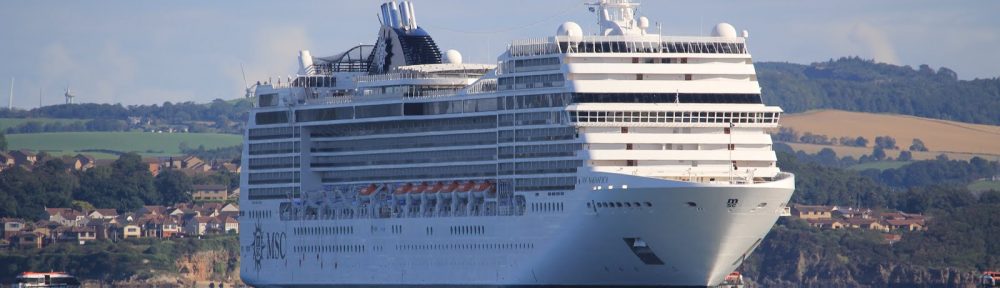
Ironically, as Royal and other U.S.-based cruise lines are looking abroad, privately owned MSC Cruises is knocking on the door, trying to gain more purchase in North America.

MSC is the line adding to its sales force, making its pitch to travel agents here to funnel clients to its small but growing North American capacity. So even as the U.S. loses a new ship (after a short season in New York) it may soon gain a new ship from a Swiss company with an Italian product.

Call it two faces of the same coin, both manifesting the further globalization of the cruise industry.