Carnival Corporation to launch new cruise brand

P&O Adonia

P&O Cruises’ smallest ship Adonia (pictured) is being transferred to a new ‘social impact’ cruise brand being established by parent company Carnival Corporation.

The 710-passenger vessel will operate under the ‘Fathom’ brand, running weekly departures from Miami to the Dominican Republic where passengers will work with local communities on a range of projects for up to three days per cruise.

Cruise-only prices for the seven-day trips start at $1,540 per person, including three onshore social impact activities in the Puerto Plata region.

These can range from helping cultivate cacao plants and organic fertiliser at a local women’s co-operative in producing artisan chocolates, to working with local schools to help teach English and building water filters for islanders.

Fathom sailings are due to start in April 2016 with reservations opening this month. The cruises will be available to book through the UK trade with 15% commission for reservations made until September 4.

Agents can register online via fathom.org and confirmations will be converted onto the Polar Online reservations platform by October. A Founder’s Circle membership scheme is being created for agents who make at least one booking in the first 90 days, with further details to emerge in the autumn.

An unspecified portion of every cruise purchase price will go directly to partner organisations to cover on-the-ground activities in the Dominican Republic, according to Carnival Corporation. Other destinations will be added after the launch phase.

The initiative is being targeted at people aged in their 20s and 30s “looking to make a difference in the world”, and those over 50.

But Fathom chiefs also believe more than half of passengers will be families, as parents “seek a way to open their children’s eyes to other parts of the world in a meaningful way”.

A growing market of potential ‘social impact’ travellers – approximately one million North Americans, in addition to global travellers already pursuing service-oriented travel experiences worldwide – have been identified as being interested in the concept.

The company believes Fathom will attract a “significant number” of new-to-cruise passengers. Almost 40% of those who will book a social impact trip on Fathom will have never been on a cruise before.

Sailings will start with one to two days at sea preparing for going ashore, including an orientation to the Dominican Republic, conversational Spanish lessons, impact activity training and creative workshops.

The onboard experience will be customised to include “purposeful retail options and amenities,” as well as geographically-inspired menus and music.

The ship will serve as a home base for travellers while it is docked at the new Amber Cove port being opened in the Dominican Republic by Carnival Corporation in October.

US social entrepreneur, Tara Russell, founder and chairman of food production social enterprise Create Common Good, is to run the new offshoot as president as well as global impact lead for Carnival Corporation.

Chief executive, Arnold Donald, said: “Fathom will cater to an underserved market of consumers who want to have a positive impact on people’s lives, and aren’t always sure where to begin.

“We believe travel is a meaningful way to allow for personal growth while making purposeful and engaging contributions in the world.

“We are so pleased that Fathom will give travellers a unique opportunity to work alongside local people as part of a larger scale effort that will demonstrably improve lives. Both our travellers and the local citizens will learn and benefit from the opportunity to serve together.”

Russell added: “We created Fathom to meet the real hunger in the world for purpose, while at the same time tackling profound social issues through a sustainable business model.

“We harness the assets and resources of the world’s largest travel and leisure company and combine them with the talents and hearts of those working in social enterprises around the world.

“Travellers will work in partnership with proven, trusted local organisations on the ground to amplify their missions for far greater, sustained impact.

“Because Fathom will bring hundreds of travellers to a destination on a regular basis, Fathom can achieve focused and holistic, collaborative contributions in a broad region of the country – allowing Fathom travellers to make a collective, transformative impact that they know will extend far beyond their involvement.

“They also will know they played an important role in ensuring the region flourishes.

“We are excited about making the Puerto Plata region of the Dominican Republic our first partner destination, and we are optimistic about taking all that is being built in and through Fathom to other global destinations and to the broader Carnival corporate family.”

Australia and Europe tackle cruise ship sulphur emissions

The Quantum of the Seas is one of the first Royal Caribbean ships to be equipped with exhaust gas scrubbers.

Challenges related to air pollution from cruise ship engines are cropping up elsewhere in the world, even as they’ve been overcome for now in waters around North America.

In Australia, a newly elected government ran in part on a pledge to reduce the amount of sulphur coming from cruise ship smoke stacks to the same low level as in the U.S. and Canada.

Meanwhile in Europe, some regulators are asking whether a popular solution to reducing sulphur emissions — exhaust gas scrubbers — might contribute to water pollution in some areas.

The issues are percolating because of a worldwide effort to cut pollution from ship engines, which rely on oil particularly high in sulphur.

Since Jan. 1, all ships, including cruise vessels, have had to meet a much-reduced standard for sulfur in North America and certain other regions such as the Baltic Sea.

The standard, which remains 3.5% of fuel volume in much of the world, was reduced to 0.1% in so-called Emission Control Areas (ECAs). The change will prevent 14,000 early deaths annually by 2020, according to estimates from the U.S. Environmental Protection Agency (EPA).

Now Australia is seeking parity with the U.S. In late March, voters retained the New South Wales state government led by premier Mike Baird, who campaigned on a pledge to reduce the sulphur content of fuel for cruise ships in Sydney to 0.1% by July 2016.

Such quick action could disrupt Australia’s cruise sector, which has been growing by leaps and bounds.

Bud Darr, senior vice president of technical and regulatory affairs at CLIA, said the industry is “directly and actively engaged” with New South Wales authorities and the Australian EPA on air pollution issues.

“We are exploring a range of possibilities with those authorities,” Darr said in a statement. “We encourage those officials to take into account operational considerations and the results of a science-based study they have commissioned before taking any unilateral actions locally or nationally.”

Globally, the framework for air pollution control is set by the International Maritime Organization (IMO). Sulfur standards are scheduled to drop to 0.5% worldwide in 2020.

Countries can act earlier by setting up ECAs, such as the one formed jointly by the U.S. and Canada. The CLIA statement noted that so far Australia has chosen not to create an ECA.

Because of the expense and time involved in the installation of scrubbers — Carnival Corp. is currently installing scrubbers on 70 of its ships in a three-year project that will cost $400 million — the cruise industry has focused on installing scrubbers for ships with ECA itineraries, not those sailing in non-ECA areas such as Australia.

Darr said that the sulphur content of fuel has been on the decline and in most cases is below 3.5%. He said in Australia, which imports all of its marine fuel, indications are that the content is about 2.5%.

In the past, ships were powered with “residual” fuel left over from distillation of refined products such as gasoline, leaving behind oil with particularly high sulphur levels.

In addition to using more refined fuel, ship owners have turned to exhaust gas scrubbers.  Carnival Corp. and Royal Caribbean Cruises Ltd. are among the companies that have won permission from the EPA to meet lower sulphur standards by scrubbing it from engine exhaust.

The scrubbers generally fit in a ship’s smokestack and use either seawater or fresh water augmented with alkaline to create a chemical reaction that transfers the sulphur from air to water.

The water is then treated and discharged. It can also be recirculated with a smaller discharge amount. The treated water is generally more acidic than seawater, although tests have mostly shown it to fall within parameters set by the EPA.

But some worry that the water, if discharged in certain vulnerable areas such as ports, estuaries and coastal waters, could harm marine life and otherwise disrupt the environment.

Regulators in some European countries have questioned whether discharging scrubber wash water can be reconciled with the European Union’s “Water Framework Directive,” which gives local jurisdictions say over water matters in their areas.

A group of ship owners last year petitioned the EU for clarity, saying the uncertainty over enforcement jeopardizes their investment in scrubbers as a solution to lowering sulfur emissions.

In its statement, CLIA said about one-third of ships operated by its members have either installed scrubbers or committed to do so.

In January, many EU states submitted a plan to the IMO to create an alternate standard for verifying the acidity of washwater. CLIA said it endorsed the proposal, which is set to go before the IMO’s Marine Environmental Protection Committee in May.

CLIA added that the IMO global standards should be the ones used by individual governments to fully encourage development of the new technology.

Major Cruise Companies Set for Significant Growth Through 2022

The major brands will continue to get new megaships into the future. (photo: Sergio Ferreira)

The cruise industry’s growth trek will continue into the future, as current data from the 2015-2016 Cruise Industry News Annual Report shows significant capacity increases occurring over the next seven years.

Carnival Corporation will take its industry-leading position from roughly 10 million passengers this year to an estimated 13 million by 2022.

Royal Caribbean, meanwhile, will grow from over 5 million passengers to at least 7 million, and possibly more with no orders yet on the books for the 2020s.

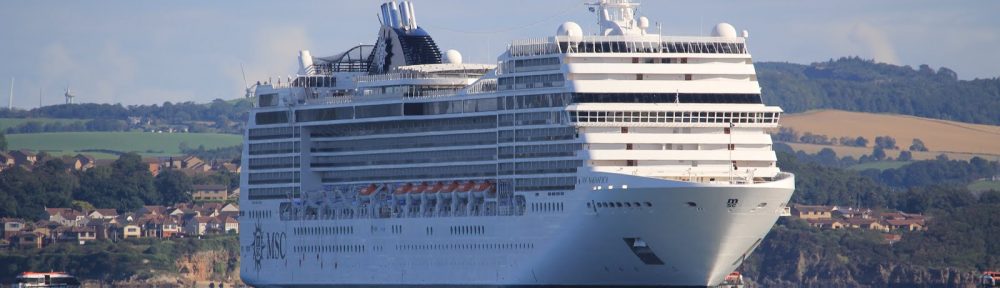
Norwegian Cruise Line and MSC Cruises will see the most significant percentage growth between now and 2022. Norwegian is set to increase capacity by some 50 percent while MSC could double its 2015 capacity by 2022 based on seven new ship orders from an estimated 1.5 million to 2.9 million passengers

Ship withdrawals will be relatively insignificant as ships leaving fleets will generally be smaller, older vessels, while new tonnage coming in is expected to be of the megaship variety.

About the Annual Report:

The Cruise Industry News Annual Report is the only book of its kind, presenting the worldwide cruise industry through 2025 in 350+ pages. Statistics are independently researched. See a preview of last year’s edition by clicking here.

The report covers everything from new ships on order to supply-and-demand scenarios from 1987 through 2021+. Plus there is a future outlook, complete growth projections for each cruise line, regional market reports, and detailed ship deployment by region and market, covering all the cruise lines.