Carnival Cruise Line Celebrates 35 Years at Port Canaveral

Carnival Cruise Line Celebrates 35 Years at Port Canaveral

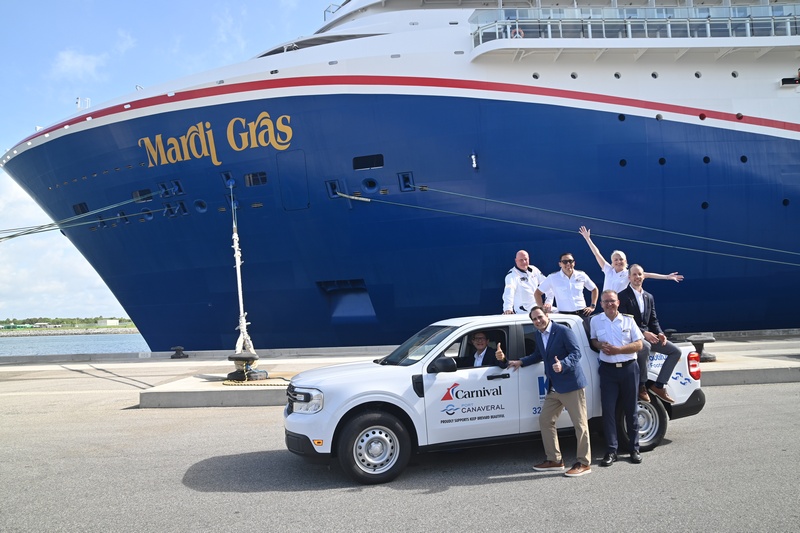
Carnival Cruise Line marked 35 years of cruises from Central Florida with a special celebration aboard its Mardi Gras on Saturday.

Carnival began sailing from Port Canaveral in 1990, and has grown its operations over the years to homeport more ships than any other cruise line and embark more than 1.2 million guests from the port annually, the company said in a press release.

To commemorate the anniversary and longstanding partnership, Carnival hosted an onboard celebration. The event included several members of the community, such as leaders from the Canaveral Port Authority, the United States Coast Guard, and Brevard County.

David German, Port Canaveral’s vice president of cruise business development, presented Carnival with a framed Canaveral Port Authority Board of Commissioners proclamation, documenting the special resolution the board passed this week to recognize the economic growth created by the 35-year relationship.

The cruise line also announced the charitable donation of a hybrid pickup truck that will support the work of Keep Brevard Beautiful, a non-profit organization dedicated to environmental conservation in the area.

The donation coincides with the weekend of World Ocean Day, emphasizing Carnival’s commitment to sustainability and environmental stewardship.

Carnival, which homeports four ships year-round and another ship seasonally at Port Canaveral, recently announced it will enhance offerings further by deploying its next new ship to the port. Sister ship to the Mardi Gras, the Carnival Festival is now under construction and will bring all new features into the Carnival fleet, including music-themed zones and the cruise line’s largest-ever water park, when it debuts in 2027.

Pick up truck

“Port Canaveral has been a cornerstone of Carnival’s success for 35 years,” said Christine Duffy, president of Carnival Cruise Line. “We’re proud to celebrate this incredible milestone alongside the community that has been such an essential part of our growth. Our exciting growth continues with the opening of Celebration Key next month, our exclusive destination that will really be a game-changer for us and for our guests.”

The Carnival Vista, which is homeported in Port Canaveral, will make the first official visit to Celebration Key for the destination’s grand opening. All Carnival ships sailing from Port Canaveral offer sailings that visit Celebration Key on Grand Bahama, which will offer guests the ultimate day in paradise.

With over 300 annual departures from Port Canaveral, Carnival guests contribute an estimated $450 million in economic impact to the region before and after cruises.

“We are proud to celebrate Carnival Cruise Line’s 35th anniversary of sailing from Port Canaveral and humbled by what this milestone represents,” said Capt. John Murray, Port Canaveral CEO. “From the inaugural sailing of the TSS Carnivale in 1990 to having five year-round and seasonal vessels in their homeported fleet today, Carnival Cruise Line is our longest continuous cruise business relationship, contributing economic value over the decades for our Port community, the Central Florida region and our state.”

NCLH and Royal Caribbean on Steepest Growth Curve to 2033

Norwegian Cruise Line Holdings has set an aggressive growth course to 2033, increasing its estimated annual passenger capacity from about 2.8 million at the start of 2025 to more than 4.2 million by 2033, a 50 percent increase or approximately 5.5 percent each year, according to the 2025 Cruise Industry News Annual Report.

Royal Caribbean Group will grow its capacity from an estimated 8.5 million to 10.8 million guests, for a 27 percent increase over the 2025-2033 time period, or 3 percent per year.

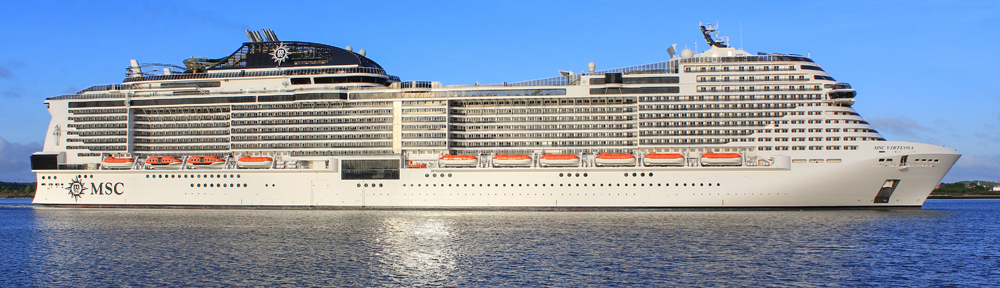
MSC Cruises, including Explora Journeys, is closely behind Royal Caribbean’s growth curve, going from a 4.2 million passenger capacity at the start of the year to 5.2 million in 2033, and a 25 percent increase, or less than 3 percent per year.

Carnival Corporation will have the most modest growth over the time period, based on its current orderbook, going from an annual passenger capacity of 12.6 million at the start of 2025 to 13.9 million in 2033, for a 10 percent increase, or about 1.1 percent per year.

And while Carnival Corporation remains the largest company with a market share of 31.8 percent, based on its existing brands and fleets, the single largest brand by 2033 will be Royal Caribbean International with a market share of 18 percent and 24.6 per cent for the group as a whole.

MSC will have a market share of 11.8 percent and NCLH 9.7 percent.

The 2025 Cruise Industry News Annual Report is available in digital and printed formats. Order today by clicking here.

Galveston to Support Cruise Growth with Updated Master Plan

The Galveston Wharves Board of Trustees announced plans to fund an updated 20-year Strategic Master Plan and to continue to support the development of additional cruise infrastructure.

According to a press release, the plans were voted on Feb. 6, 2025, and come after a record year for cruise operations in 2024.

As the nation’s 4th-ranked cruise port, Galveston saw 3.4 million passenger movements through its three terminals last year.

The port is set to open a fourth cruise terminal in November, which will serve as a homeport for MSC Cruises and Norwegian Cruise Line.

Galveston forecasts more than 400 sailings and almost 3.6 million passenger embarkations and debarkations will take place at the port this year.

The current master plan, adopted by the Wharves Board in 2019, includes plans to double the number of cruise terminals from two to four, to build an internal roadway to accommodate more port traffic and expand its cargo complex.

These major projects are either completed or in various stages of construction, the Galveston Wharves Board said.

“Our updated master plan will look at growth opportunities in all of our business lines – cruise, cargo and commercial,” said Rodger Rees, Galveston Wharves port director and CEO.

“The board’s unanimous vote to support cruise infrastructure growth reflects the economic benefits that our cruise business provides and allows us to continue to invest in our cargo business,” he added.

The port’s cruise industry is a major economic engine for local and regional businesses, the Galveston Wharves Board said.

In 2023, cruise operations generated 4,547 jobs for Galveston area residents, $733 million in business revenues, $291 million in personal income and $25 million in state and local taxes.

“The updated master plan will evaluate all that we’ve accomplished to date and lay a foundation for continued growth based on new cruise and cargo forecasts and port and community goals,” Rees said.

“The master plan has served us well. It’s been our roadmap for major capital projects to grow our business and maximize port assets while managing potential community impacts.”

According to the Galveston Wharves Board, much has changed in the last five years, with the cruise business growing faster than forecast and construction costs continuing to rise.

“A big focus in the master plan update will be how we can continue to efficiently manage traffic on and around Harborside Drive as our cruise, cargo and commercial businesses grow. Our current master plan includes a 2.25-mile-long internal roadway, cueing lanes at cruise terminals and on-site parking garages,” Rees added.

The port also wants the updated plan to consider locations for the USS Texas, public areas on the waterfront and safely connecting the port’s waterfront commercial areas to downtown.

Several items in the current plan will be addressed, including dock and wharf improvements, development potential for port acreage on Pelican Island, drainage improvements and a public boardwalk, to name a few.

Master plan consultants from Bermello Ajamil and Partners Inc. will evaluate these projects, update cost estimates and identify new opportunities.

Consultants will hold workshops and public meetings to gather input from Wharves Board members, port partners and the community.

“Armed with this information, we’ll be prepared to continue to maximize our port assets and remain a strong community asset,” Rees said.