Power hungry
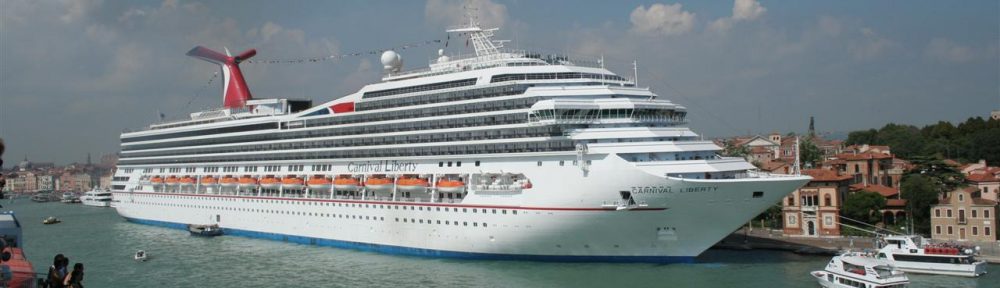
 When the Carnival Triumph is firing on all cylinders, its six massive Wartsila-Sulzer diesel engines generate enough electricity to power 60,000 to 70,000 average homes.
But after a fire in February charred electrical cables passing through the engine room, they couldn’t generate anything.
The Triumph limped back to port under tow, able to muster only minimal emergency power that left passengers with few of the basic comforts they had anticipated on a cruise.
Increasingly, cruise ships rely on onboard-generated electricity for everything from propulsion to fresh water to cool air. And when cruises are spoiled or canceled, more often than not something electrical is to blame.
Just this year, cruises have been canceled or cut short on ships ranging from the Carnival Dream to the Sun Princess for electrical issues. The Triumph and Celebrity Cruises’ Celebrity Millennium have been taken out of service for weeks, resulting in multiple canceled voyages and significant red ink on operational balance sheets.
In the latest example, the three-month-old Royal Princess suffered a Sept. 22 blackout in the Mediterranean and had to end a 12-day cruise after nine days to make repairs.
 For travel agents, electrical breakdowns mean processing refunds for upset clients and rebooking other tickets at reduced fares if prices fall, as they did after the Triumph incident.
The cruise industry, and Carnival in particular, is responding by adding and rearranging equipment to provide better fire resistance and more redundancy when things go wrong.
Carnival Corp. alone has budgeted between $600 million and $700 million to pay for such changes across its brands’ fleets.
“Reliability is extraordinarily important to our industry,” said Mark Jackson, Carnival Corp.’s vice president for technical operations.
After the Triumph fire, Carnival Corp. performed a vulnerability analysis of its fleets and found that some of its ships were susceptible to the same flaw that felled both the Triumph and, in 2010, the Carnival Splendor.
Like the Triumph, the Carnival Splendor suffered an engine fire that left it without propulsion. Although the fires had different origins, they both burned cables that ran across the ceiling from one engine room through the other to an aft switchboard.
 Both ships have two engine rooms and can run with one engine room shut down. But when the cables were burned, none of the engines could connect with the motors that drive the propellers.
“While we had a large number of diesel generators still operational, we were unable to provide power to the ship,” Jackson said. “So we are going to reroute the cables that run from the forward engine room through the aft engine room [and] that could cause a potential vulnerability.
“If we lose one engine room, we don’t want to lose the other,” Jackson said.
The rewiring has been completed on the Triumph and the Carnival Sunshine, he said, and is under way on other Carnival ships as needed.
Though propulsion is the most important use of electric power on modern cruise ships, it is far from the only one.
When the Triumph lost power, it also lost the ability to run the ship’s air conditioners, elevators, stoves, refrigerators and even the pumps that drive the water and sewage systems, meaning the toilets didn’t work.
The loss of passenger comforts was perhaps the biggest reason why the Triumph fire became so notorious in media reports and why Carnival suffered such a drop in demand in the weeks following the incident.
Air conditioning is a particularly big power user on modern cruise ships, where giant compressors draw dozens of megawatts of power through medium- to high-voltage lines.
Marine air conditioning chillers are rated at up to 1,600 tons, compared with 2 to 5 tons for home units.
Especially while in Florida or the Bahamas, air conditioning uses about half a cruise ship’s power supply while in port, and about a third of the electricity it generates at sea, Jackson said.
 Propulsion consumes another one-third of the 60 to 70 megawatts of electricity a Carnival Cruise Lines ship produces. The rest goes to “hotel tasks,” a term that covers everything from lighting to galley equipment to guest services computers to water desalinization gear.
The grounded, three-prong outlets in cabins that passengers use for hair dryers and clock radios draw electricity from the same generators that drive the ship.
“Our refrigerators are a lot bigger. Our stoves are a lot bigger. Our washers and dryers are a lot bigger,” Jackson said. “But in general, we basically have the same functions you’ll find in a home or hotel or anything like that.”
Cruise ships became even bigger users of electricity over the past 50 years as methods of propulsion changed.
At one time, ships plied the ocean on sails, which were supplanted by steam power, then oil-fired engines. As recently as 10 years ago, Norwegian Cruise Line’s vessel the Norway used steam boilers to make its propellers spin.
After the 1970s, cruise lines increasingly adopted diesel generators to provide power because they offer the best combination of energy efficiency and redundancy, Jackson said.
The key components in such systems are the large 8- to 16-cylinder diesel engines, which burn oil and turn a crankshaft connected to an alternator to create electricity.
 Most sizeable cruise ships have six main engines in two engine rooms. Buried in the depths of the ship, the engine rooms are hot and incredibly noisy. The ship’s engineers monitor them from a self-contained control room full of gauges and displays.
From the engines, the electricity goes through cables to a switchboard, which distributes it to various uses. The switchboards are arrayed in head-high cabinets running the length of a corridor. To ensure redundancy, there are at least two main switchboards.
The power from the generators is relatively high voltage, which can only be used directly for some functions such as propulsion and air conditioning. For other uses, the voltage must be stepped down by means of transformers to standard 220- and 110-volt systems, so that most of the hotel equipment, such as clothes washers and dryers, can use it.
The final two important pieces of electrical equipment are for propulsion. The propellers are turned by a large electric motor, in which, like all electric motors, cable windings create magnetic pulses that spin a shaft.
To vary the speed of the spin, the motors have a cycloconverter, so that a constant voltage from the engines can be easily and nimbly managed to quicken or slow the propellers.
Breakdowns in any of these components can result in ships that are unable to move.
 In 2011, MSC Cruises cited a faulty electrical panel for a blackout that ended a Baltic cruise in Stockholm. Passengers were flown home, and the next cruise was canceled.
Last year, most of a 17-day voyage on the Azamara Quest was canceled after a fire caused a blackout on the ship off the Philippines.
A month earlier, a generator fire on the Costa Allegra left it adrift for three days in the Indian Ocean, without hotel services for its 636 passengers.
And earlier this year, Princess Cruises canceled a voyage on the Sun Princess from Singapore as people arrived at the terminal, because a switchboard failed following a 14-day drydock at a nearby yard.
Some electrical failures have triggered government investigations.
In 2010, the Cunard Line’s Queen Mary 2 was approaching Barcelona when there was an abrupt explosion in one of its switchboards.
In that case, the U.K.’s Marine Accident Investigation Branch reported that a component designed as insulation had vaporized after an electric arc shot through it, creating pressure that knocked a steel fireproof door nearly off of its hinges.
“The amount of energy released was easily capable of causing fatal injuries,” the investigative branch reported.
The agency warned all cruise operators of the threat posed by “harmonic distortion,” a vulnerability with some motor designs that supplier ABB likens to “electrical pollution.”
Investigators said it was fortunate the blackout didn’t cause any navigational problems.
“However,” the report continued, “losing control of a large cruise liner due to an electrical blackout, with 3,823 people onboard, is a serious concern. This accident demonstrates how electrical instability can cause unpredictable and potentially disastrous consequences in marine high-voltage electrical networks.”
 Carnival PLC, the British iteration of Carnival Corp., has taken at least three steps to reduce the chances the problem will reoccur, the report said.
A new design for independent propulsion modules has also increased the number of cruises canceled for electrical reasons.
About 20 years ago, ships began to be built with their electric motors at the end of a strut beneath the ship in a self-contained pod. The concept was developed by ABB and Finland’s Kvaerner Masa Yards. Kvaerner Masa called its product an Azipod, a reference to the 360-degree measure of a compass, connoting the pod’s ability to rotate 360 degrees.
“The advantage of a pod is they give you this phenomenal maneuverability in the water, because the pods can rotate around,” said Celebrity Cruises President Michael Bayley.
“So it allows you to move with more delicacy and more efficiency,” he said. But the pod’s Achilles’ heel has been its spotty reliability. “It is an incredibly complex piece of equipment,” Bayley said.
The Millennium developed its problem on a cruise between Vancouver and Seward, Alaska, when a coil on the motor burned out. The ship was idled for three days for repairs, but on the next cruise a similar thing happened in a different part of the motor.
“We lost a little bit of confidence in that [motor],” said Greg Purdy, vice president for operations at Celebrity.
Because the inside of the pod is so cramped, the practical way to effect major repairs is to remove the pod entirely in a drydock. So Celebrity had to cancel the balance of the Millennium’s seven-day cruise, plus all of four other cruises, to send the ship to Grand Bahama Island for repairs.
One Wall Street analyst estimated that the cost of refunds, transportation for passengers, repairs and the cancelled cruises totaled $31 million.
 Pod issues have plagued cruise lines from Carnival to Celebrity to Cunard, repeatedly forcing ships out of service.
On early models, the bearings tended to burn out prematurely. In 2011, Carnival Corp. won a $24 million jury verdict in a suit claiming damages from the failure of the Queen Mary 2’s pods.
The year before, Royal Caribbean Cruises Ltd. settled out of court and received compensation from the same manufacturer, Rolls Royce, after seven years of litigation.
Carnival Cruise Lines was an early adopter of pods, putting them on six ships beginning with the Elation in 1998. But by 2000, it had to cancel cruises for a pod breakdown on the Paradise and for preventive maintenance on the Elation.
Carnival moved away from the new technology as it began building more ships at Italy’s Fincantieri shipyard.
“The shaft-driven propeller, they’re very reliable,” said Carnival’s Jackson. “If you have a bearing issue in the water, you can change it with divers relatively easily. If you have a problem with a pod, basically the only choice you have is to pull the ship out of the water.”
That said, Carnival’s next ship, the Vista, will use pods. Fincantieri is starting to feel more comfortable with the technology, Jackson said.
 The Carnival Vista, and the rest of Carnival’s fleet eventually, will also feature not one but two backup generators. The emergency generator held in reserve for vital functions like navigation and engine-room controls will be supplemented by another that will provide hotel services.
The two will also back up each other, providing more redundancy. When the emergency generator on the Carnival Dream failed earlier this year, Carnival ended a Caribbean cruise early rather than sail without it.
“This is kind of the backup to the backup,” Jackson said. With a second auxiliary generator, a Carnival ship can lose both engine rooms and still have power to run elevators, to make sure all the toilets function, to have hot food for guests and at least some air conditioning.
The auxiliary generator will be connected to both the main switchboard and the emergency switchboard so it can be run through one or the other depending on the need.
“It will have multiple means that it can provide power,” Jackson said.

 The choice faced by Celebrity Cruises management wasn’t pleasant. They could try to repair a damaged propulsion pod on the Celebrity Millennium at the risk of a third failure, or they could swallow the millions of dollars of expense required to cancel four cruises, send 2,000 people home by chartered plane and swap out the pod in an unscheduled drydock.
 Wetravel2u's Weblog