Cruise cools to China

Image result for china cruises

By Tom Stieghorst
The cruise industry’s gold rush to China, if not over, has entered a new phase: For the first time in at least four years, cruise capacity in China will not grow in 2018.

That means that the focus and management attention that has been lavished on the world’s most populous country may now be turning elsewhere.

To hear evidence of that, listen to the list of places that Norwegian Cruise Line Holdings CEO Frank Del Rio reeled off when asked if he’s ready to put the second ship in China.

“We have many other either unserved or underserved markets that we would also consider in the mix, should ships become available to us,” Del Rio said in response to a question from a Wells Fargo analyst. “We don’t have a presence in the mid-Atlantic states. We’re not in Baltimore. We’re not in Charleston. We don’t have a presence at all in the world’s second-largest port, which is Fort Lauderdale. We don’t have a presence in the Gulf States of Texas or Alabama. We don’t have a year-round presence in Tampa or New Orleans or in Los Angeles.”

Del Rio went on to say that the Norwegian Cruise Line brand will have three ships in Alaska this summer, where some competitors have as many as eight.

“So, given our fleet size today and the fact that we will only be taking one ship per year, it could be a couple of years before we consider adding more tonnage to China, if the conditions in the rest of the world remain as robust as they are today,” Del Rio said.

The Chinese boom really got going in 2014 when Royal Caribbean Cruises Ltd. announced it would devote its brand-new Quantum of the Seas, the first of a new class of ship, to the Chinese market.

In a world full of supposedly bold moves, that one really was. And it prompted other lines for the first time to put brand new ships in China, as everyone feared being left behind in the scramble to impress the Chinese.

Being the preferred brand in a market that was projected to be the biggest in the world in a decade or so was worth the gamble of putting brand new tonnage in an unproven and opaque market.

So when Princess Cruises sent the Majestic Princess to Shanghai last year and Norwegian sent the Norwegian Joy, in addition to the Quantum and ships from Costa Cruises and others, the result was a crowded field.

Throw into the mix the spat between China and South Korea that limited itineraries out of northern China, and China became a much weaker cruise market last year.

While cruise lines insist that they’re in it for the long haul, and even in the short term it has been profitable, the sense that China is going to deliver a big increase in global cruise revenues has been tempered.

Already Norwegian’s focus for 2018 has turned to introducing Norwegian Bliss to the North American market, and in particular the U.S. West Coast. Who knows where else in the U.S. Norwegian ships might be coming next?

The Freedom of Cruise Ship Redeployment

The Freedom of Cruise Ship Redeployment
PHOTO: The wake behind Carnival Cruise Line’s Carnival Vista. (photo by Mark Leppert)

When it was uncertain that Cuba would remain open to roundtrip cruises from the United States, it was never a worry that the ships on the route would be incapable of redeployment.

Executives like Frank Del Rio, president and chief executive officer for Norwegian Cruise Line Holdings Ltd., repeat that in troubled times, cruise ships can go anywhere.

It’s true. A ship originally slated for the Caribbean can easily end up in Alaska or Europe seasonally, but often that’s the plan all along.

What may not be anticipated are geopolitical tensions or fears of terrorism that warrant ships go elsewhere. The latter has been the reason cruise lines have shied away from Turkey in the Mediterranean, for example.

More recently, cruise itineraries from China have stayed clear of South Korea due to heated relations between the two countries.

It was looking for awhile like the Trump administration would cease permissions for cruises to Cuba, but thankfully Norwegian Cruise Line and Royal Caribbean International were allowed to continue and Carnival Cruise Line has since been able to make its inaugural run as well.

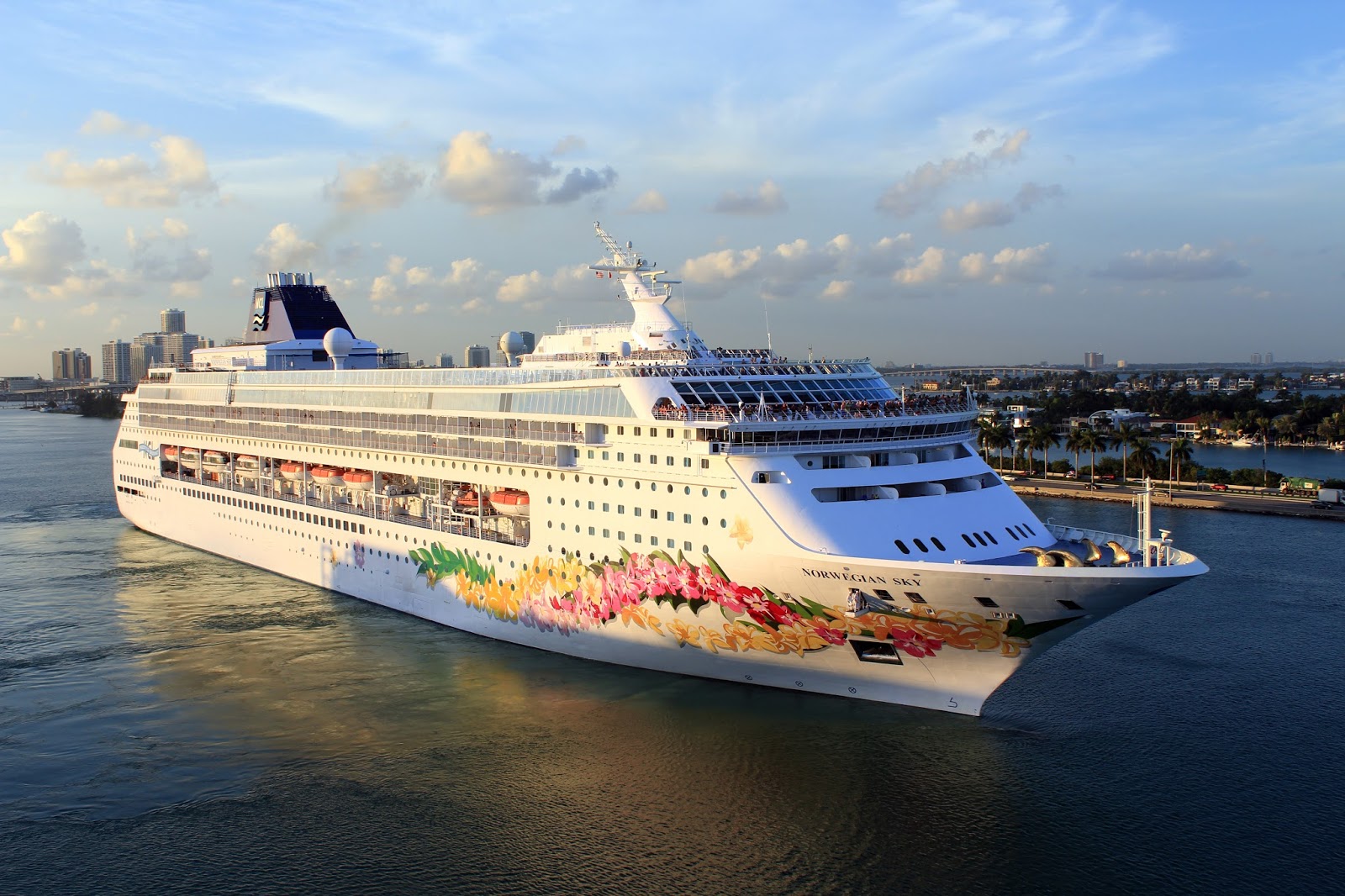
If not, the Norwegian Sky, Empress of the Seas and Carnival Paradise, respectively, would just have had to cruise to lands beyond, likely still in the Caribbean.


Photo Credit Dave Jones~Norwegian Sky leaving Miami

In the Caribbean and the Mediterranean, there are plenty of alternative ports to go to when some become off limits, but such is not always the case. For the Chinese cruise market, the loss of South Korea as a destination has limited where local ships can head, particularly on itineraries with short durations.

In those cases, Japan is an option, but port capacity saturation is then a concern.

Once a booming market, cruise lines may have to rethink their long-term Chinese potential. Princess Cruises’ Majestic Princess—partially for this reason, as well as consideration of other growth markets—has opted to no longer dedicate itself to China year-round as originally planned. It also now has intentions for Australia-based cruising in 2018 and 2019.

When a cruise ship is built generically for any market, it is easy to deploy anywhere in the world, but when it is purpose-built like the Majestic, it is more challenging to take away.

Whether or not the ship will see any sort of redesign prior to its Australian deployment is still to be determined.

Still, the vast majority of cruise ships are geared towards the American market and can go pretty much anywhere in the world, catering to our sensibilities just fine.

As ships have aged out of their original brands, they have often gone on to later service international clients for different companies. However, now foreign markets are demanding new-builds as much as the American one, leaving older ships somewhat in limbo.

It’s easiest for the most popular fleets to deploy wherever they need to and still have a following, but mature vessels have a harder time of either competing in high-traffic regions or being handed down to other markets.

That’s why it’s always crucial for the cruise industry to be developing new port and destination options for the wide variety of international vessels to service. As long as they exist, there are plenty of places to go around for them all.

Having movable assets is a freedom that most shoreside industries don’t have. Even with its occasional challenges, including tracking complex global conditions, the international cruise fleet has it good compared to, say, a fixed retail shop with poor sales in a failing regional neighborhood.

Norwegian Cruise Line’s first ship for China christened

Image result for Norwegian Joy Christening

Norwegian Cruise Line’s first ship purpose built for Chinese passengers was officially named in Shanghai yesterday.

The 3,883-passenger Norwegian Joy is the first cruise ship to feature a two-level go-kart track.

Other elements of the ship include an open-air laser tag course, the Galaxy Pavilion featuring simulator rides, Oculus virtual reality technology, interactive video walls and two multi-story waterslides.

Norwegian Joy has 28 dining options ranging from traditional Chinese cuisine to French, Italian and steakhouse fine dining restaurants, an open space park, as well as the line’s largest shopping area.

The christening marked the end of a month-long grand inaugural tour where the 167,725–gross-ton ship was showcased in Singapore, Qingdao, Shenzhen and Hong Kong, as well as VIP partner cruises from Norwegian Joy’s homeports of Shanghai and Tianjin.

Norwegian Cruise Line Holdings president and chief executive Frank Del Rio said: “After years spent carefully designing this amazing vessel, my team and I are both proud and thrilled to finally christen the world’s first cruise ship custom-designed for the wonderful people of China.

“This is truly a special moment for the entire Norwegian Cruise Line Holdings family, our valued travel partners, honoured guests and dedicated officers and crew across our fleet.”

The naming ceremony featured a performance by the ship’s godfather, Chinese singer songwriter, music producer, actor and film director, Wang Leehom.