Hong Kong making room for big ships

Hong Kong making room for big ships

By Tom Stieghorst
HongKongKaiTekTerminal-renderHong Kong is nearly ready to roll out the welcome mat for large cruise ships, hoping to become the gateway for an increasingly wealthy area of China.

Crews are putting the final touches on a new, $1 billion terminal that will be able to accommodate the largest cruise ships afloat.

Nearly a quarter-mile long, the terminal will open its first half in June, anticipating 37,000 passengers on 16 ships in the first 10 months of operation. By mid-2014, the second half of the terminal will open.

Tourism officials are already selling the city as a new and improved port.

“Hong Kong is fully geared up to provide cruises of all sizes,” said James Tien, chairman of the Hong Kong Tourism Board.

For years, Hong Kong has been an appealing but limited destination for ships.
The city has a great harbor, shopping and cultural treasures, and unlike most of its Asian neighbors, the former British colony is comfortable for English speakers.

Cruise itinerary planners say it is on a select list that includes Istanbul, Venice and St. Petersburg, Russia, where ships overnight in port to let passengers explore.

“I think it speaks to the appeal of Hong Kong,” said Bruce Krumrine, vice president for shore operations at Princess Cruises, which plans two full days in Hong Kong on its 2013 World Cruise.

But Krumrine and others agree that its existing cruise terminal has handicapped Hong Kong. It can handle just two ships of about 50,000 gross tons each. At peak times, a shortage of berth space gives cruise lines heartburn.

“Royal has had to homeport at anchor in Hong Kong occasionally,” said John Tercek, vice president for commercial development for Royal Caribbean Cruises Ltd. “This is a real problem for us.”

Recognizing the issue, Hong Kong officials in 2008 put out bids for a new facility on the site of the city’s former international airport, Kai Tak.

Closed in 1998, the airport’s main runway extends 10,000 feet into Victoria Harbor, creating a natural pier. Hong Kong officials retained renowned British architect Norman Foster to design the terminal, which has a dramatically long profile.

The terminal itself is 1,181 feet long, with berthing space of 2,788 feet, giving it the ability to accommodate two Oasis-class cruise ships, each 1,186 feet long.

Plans call for five passenger bridges and 100 check-in stations, along with customs facilities able to process about 3,000 passengers an hour, officials said. A landscaped park will occupy the third story of the terminal, offering elevated views of Victoria Harbor and the Hong Kong skyline.

With the debut of the new terminal and renovations planned for the old Ocean Terminal, Hong Kong will be able to handle four ships at once, leapfrogging cities such as Singapore and Shanghai, which also have new facilities.

HongKong-StarPisces-TSCruise lines currently treat Hong Kong as a seasonal homeport as they migrate from north Asia to Southeast Asia during the winter.

Malaysia-based Star Cruises is the only line with a year-round presence. Its 1,081-passenger Star Pisces does one-night cruises to nowhere at prices ranging from $150 to $970.

With its large international airport (also designed by Foster), Hong Kong has the airlift to be a starting and departure point, and not just a port of call, for cruise ships.

“The ability to turn around big ships in Hong Kong is something we’ve been waiting on for a long, long time,” Krumrine said.

But lately, an even bigger opportunity has popped up on the radar screens of U.S.-based cruise executives. Cruise lines, particularly Royal Caribbean and Costa, are increasingly putting ships in Asia to sell to Asians.

“The exciting part of our industry is the local potential,” said Tercek.

Hong Kong officials estimate there are potentially 50 million middle-class Chinese in the Pearl River Delta provinces of China who would see Hong Kong as the closest cruise port.

Chinese officials last year granted permits for Chinese residents sailing through Hong Kong to cruise beyond Taiwan to Japan, an attractive route, cruise executives said.

One potential stumbling block for the Kai Tak terminal is its location away from the center of Hong Kong. Jeff Bent, director of cruise projects for Worldwide Flight Services, said that can be overcome by developing water transport options.

A ferry operating from the tip of the Kai Tak pier would cut transit time to Hong Kong island’s Central district in half, Bent said.

The terminal will be run by a partnership, whose principal owner is Worldwide Flight Services, a Paris-based ground handler operating in more than 120 airports.

Minority partners include Royal Caribbean (20%) and Shun Tak (20%), a Hong Kong conglomerate founded by gaming tycoon Stanley Ho.

Asia cruise market prediction: 7M passengers a year by 2020

Asia cruise market prediction: 7M passengers a year by 2020

By Tom Stieghorst
HONG KONG — By the end of the decade, Asian passengers will account for one in every five cruisers, about double the ratio today, Carnival Asia head Pier Luigi Foschi predicted at a cruise forum here.

Foschi said the snowballing growth in Asia will deliver about 3.7 million passengers a year by 2017 and about 7 million by 2020.

Hong Kong Ocean TerminalBy comparison, the Asia Cruise Association said that about 1.7 million Asian passengers cruised in 2011, or about 10% of CLIA’s estimate of 16.4 million passengers globally for that year.

Foschi’s forecast quantifies Carnival’s view of the oft-discussed “potential” in cruising from China and other Asian countries. “The bulk of the real growth will be from China,” Foschi said.

Carnival Corp. Chairman Micky Arison said in December that new Asia deployments for one or more Carnival brands will be announced by April.

Carnival last week announced plans to open a sales office for Princess Cruises in Hong Kong, where officials are getting ready to open a large cruise terminal in June.

Princess also announced it will deploy a second ship in Japan in 2014 to offer summer cruises. The 2,670-passenger Diamond Princess and the 2,022-passenger Sun Princess will offer 42 cruises to 20 Asian ports next year.

The Seatrade Hong Kong Cruise Forum, held here, and where Foschi delivered his remarks, gathered several hundred Asian port directors, cruise line deployment executives, and shore excursion managers. The four-day conference explored cruise prospects for Hong Kong in light of China’s growth and the opening of a new cruise terminal in Hong Kong later this year.

Zinan Liu, chairman of the Asia Cruise Association and a regional vice president for Royal Caribbean, said Royal Caribbean International currently has the most tonnage dedicated to Asia.

In a chart presented at the Seatrade Hong Kong Cruise Forum, Liu put Royal at 276,000 gross tons, followed by Star Cruises at 259,749 tons and Costa Cruises at 160,785 tons.

Having determined to put bigger ships in Asia, the question for the cruise lines is how to precisely tailor a cruise that satisfies Asian tastes, said John Tercek, vice president for commercial development at Royal Caribbean.

“We are in a bit of an experimental stage,” Tercek said.”The potential is fantastic, but it’s a question of what do the local clients want to do, and can we accommodate it?”

One clear preference in Asia is for shorter cruises of five days or less. That makes cruises offered to Asians distinct from cruises offered in Asia to North Americans and Europeans, which tend to be 12 to 14 days or longer.

Other differences are more subtle. For example, Tercek said beach-going is a core interest for North American cruisers. But on cruises from China, Royal is skipping beautiful beaches in Vietnam because Chinese guests tend not to enjoy harsh sunlight.

Other cruise lines are also making trial-and-error discoveries. Princess Cruises expected its cruises in Japan later this year to draw mainly Japanese guests. But enough Americans and Europeans have booked the cruises that Princess has added English-speaking tour guides for its shore excursions, said Bruce Krumrine, a Princess vice president.

Pier Luigi FoschiFoschi said challenges to growth in Asia include misperceptions about what cruises are, lack of distribution, late booking, competition from cheap land vacations and a strong seasonality that causes swings in net revenue yields.
Regional disputes are also a threat. Last year, China granted a permit to extend cruises between Hong Kong and Taiwan to Japan, making them much more attractive.

But the current tension over an island in the East China Sea that China and Japan both claim is making it hard for Royal Caribbean to take advantage of the permit, Liu said.

“These are ongoing business problems that unfortunately will come to us again and again,” he said.

The lack of destination ports with the capability to handle big ships may be the biggest challenge. Liu said there are some 80 potential cruise ports in Asia.

But most lack the capacity to dock large cruise ships. Royal’s decision to add the 3,100-passenger Voyager of the Seas to Asia should begin to change that, Tercek said.

“Wherever we take that ship, others follow because we cause the infrastructure to be built,” he said.

If not, cruise lines could become partners in port developments as they have occasionally in the Caribbean, Tercek said. But to make it work, he said a port has to have the potential to attract several hundred thousand guests and be unable to proceed without outside help.

“It really isn’t our first option ever,” he said.

For itinerary planners, Hong Kong is a challenge

HONG KONG — Cruise deployments in Asia tend to be seasonal. In the summer months, ships sail from northern China ports such as Shanghai and Tianjin to a cluster of destinations in Northeast Asia, mainly South Korea and Japan.

In the winter, cruises operate in Southeast Asia, especially from Singapore, which has just opened a new cruise terminal. From there, itineraries to Thailand, Vietnam, Indonesia, Malaysia and Myanmar are possible, along with cruises south to Australia and New Zealand.

A port such as Hong Kong, which plans to open a large new cruise terminal later this year, falls in between.

Participants at the Seatrade Hong Kong Cruise Forum said that until now, Hong Kong has been primarily a place for transitional cruises as ships migrate from north to south in the fall and back the opposite way in the spring.

Hong Kong is within easy reach of Taiwan and Vietnam, but other destinations are hard to serve on the short, four- and five-day itineraries that tend to be most appealing to Chinese and Asian tourists.

“In terms of where can we take the guests and where can we visit, it’s fairly limited,” said John Tercek, vice president of commercial development for Royal Caribbean International.

Another issue for cruises is the distant spacing of ports in Asia at a time when cruise lines want to cruise slowly to save fuel. “We’re trying to bring down our average speed,” said Mike Pawlus, director of itinerary planning at Silversea Cruises.

That makes it harder to design itineraries that meet the Asian need for short vacations.

“It’s a big ocean, there are large seas here and great distances between ports,” Pawlus said. — T.S.

Viking to build two more ships for 2012

Viking to build two more ships for 2012

By Kenneth Kiesnoski
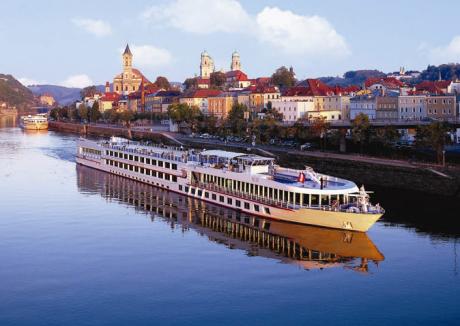
PASSAU, Germany — Viking River Cruises, responding to market demand, said it will launch two additional vessels in 2012.The Embla and the Aegir will be part of the new Viking Longship class, bringing the total of such ships to debut next year to six.

The new vessels will be introduced in July and August 2012, joining the previously announced Freya, Idun, Njord and Odin, all to enter service in March.

“Ever since we announced the introduction of the Viking Longships earlier this year, the response has been overwhelming,” CEO Torstein Hagen said in a statement. “To accommodate demand, we have decided to accelerate the newbuild schedule.”

The two new ships are part of Viking’s $250 million fleet-redevelopment program, which includes refurbishment of existing vessels as well as the introduction of 10 Longships by 2014.

The Longships will measure 443 feet long and feature 95 staterooms, including two 445-square-foot Explorer suites; seven 275-square-foot Veranda suites; and 39 Veranda staterooms measuring 205 square feet.

The vessels will also have Viking’s new Aquavit Terrace, an indoor-outdoor lounge space; al fresco dining on the ship’s upper decks; and green features such as energy-efficient hybrid engines, solar panels and organic herb gardens.