August cruise resumption played down by Carnival Corporation chief

How Carnival Corporation is bringing people together

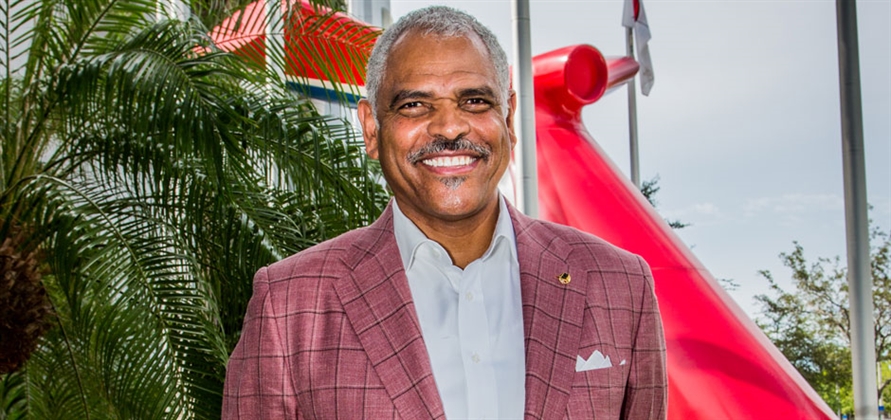
Hopes of an August 1 restart of Carnival Cruise Line sailings have been played down by the boss of the company’s parent company.

Carnival Corporation president and chief executive Arnold Donald described the fallout from Covid-19 as “devastating”.

Ships would only sail when “it will be no greater risk, or even lower risk, than other forms of social gathering”.

Carnival Cruise Line announced a month ago plans to resume services from three US ports from the beginning of August at a time when other operations were being cancelled.

But Donald told The Telegraph that the August 1 date should not be taken as concrete as the situation is “constantly evolving and changing”.

He said: “Those we didn’t cancel [was] in hope that we would be able to cruise at that time and the ships would be positioned properly to honour the cruise, so on and so forth.

“We’re not trying to predict when we’ll open up but we’re hopeful that we’ll be able to. But it’s obviously dependent on what’s in the best interest of public health, not about the cruise but about broad social gathering… if people are in restaurants, hotels, airport terminals and subway stations, if a social gathering is happening, then it’s a condition for the cruise.

“But if we’re still in a state of highly constrained social gathering then it’s not the right situation. So we’ll see where society is at that point.

“We’re aware that people are anxious to get their economies going again, people are definitely anxious to cruise.

“We continue to get bookings and so on. So we’re anxious to go, too. But we only want to do it when the time is right so I think that there is a broader societal metric that we have to look at – we can’t just look wholly at cruise.”

His comments follow UK brand P&O Cruises further cancelling sailings until mid-October.

Donald added: “Our highest responsibility and our top priorities are, and they remain, compliance, environmental protection and the health and safety and wellbeing of our guests, our crew and the people and the places we go,” he said.

“So I want people to know that we will do everything to make certain that they are not taking a far greater risk by being on a cruise than other forms of social gathering – we don’t want that, we’re not going to let that happen. It will be no greater risk or even lower risk than other forms of social gathering.”

Looking forward, he said: “I don’t think there will be any issue filling the ships initially because the reality is that there’s not going to be that many ships and that many itineraries, [and] there will be plenty of people wanting to cruise.

“Over time, we’re going to eventually need to get back to where we were which was attracting people who haven’t cruised before.

“That job has been made, short-term, more difficult because people who haven’t cruised are hearing lots of stories and read stuff in the news, and now in their mind, they have another reason not to cruise.

“We’re going to have to, over time, chip away at whatever myth they happen to hold about a cruise, and help them see that that’s not the case.”

A crucial part of the cruise restart: Lines and ports must agree on health protocols

Carnival Cruise Line ships in Cozumel, Mexico. As it works towards a restart, the cruise industry must work with port authorities and governments to agree on health protocols.

As cruising looks to resume operations after the coronavirus-induced industry halt, it faces challenges unique to an industry in which the majority of its ships touch multiple nations on each itinerary.

CLIA global chair Adam Goldstein said in a conversation with Travel Weekly editors that the association is aware that it will be paramount for travel advisors to have clarity about when cruising can resume and what protocols will accompany that resumption.

Among the challenges the cruise industry faces is that each country will have its own set of rules and regulations to comply with. But Goldstein said this is not new for cruising, and he said CLIA is supporting its member cruise lines to put together protocols that should “meet the test of any international national health authority.”

“There’s never been a perfect harmony across the 1,000 destinations that cruise ships visit, and somehow we managed to work out a fairly seamless vacation environment,” Goldstein said. “This presents new challenges across every dimension. And while our aspiration is for the most harmonized global approach possible, it’s a complex world. Regions are quite different from one another. It’s possible we won’t end up with a perfectly harmonized Covid-19 world to deal with. But I don’t think there’s anybody more experienced, clever or determined to succeed in a global environment than the cruise industry, and that’s been well demonstrated over a half-century.”

CLIA CEO Kelly Craighead said that regulatory agencies worldwide have approached the cruise industry in different ways.

“Some of the challenges in the U.S. are different from the challenges we’re having [elsewhere],” she said. “In Europe in particular, the industry is welcome to participate in dialogue about thoughtful resumption protocols. In the U.S., with the CDC, we’re having some challenges with having that kind of engagement and dialogue with them.”

Craighead added that in Europe, “there is an interest from governments to reopen tourism, and cruising is considered an important part of that.”

Given those complexities, Goldstein said it is premature to say where CLIA members might first relaunch.

“We can’t comment for the authorities,” he said. “They’re dealing with a billion different things. Travel and tourism is one piece, and cruise is a very small piece of that piece.”

He also said that it is likely there will be the sequencing of cruise resumption in different regions.

“I just can’t say which will go first, second, third,” he said. “We also expect [cruises may be shorter] toward the beginning, they could go to fewer ports at the beginning. It will take time, and there will be an evolution back towards what we were doing pre-pause.”

Above all, right now, Goldstein said it is important for the industry to be ready to engage with governments around the world at any time.

“What concerns us is: would we miss opportunities to engage at the time when governments are prepared to engage with us?” he said. “So the message to the member lines is, ‘let’s be as ready as we can be as an association.’ It’s an everyday challenge we work through.”

Genting Cruise pioneers infection prevention certification

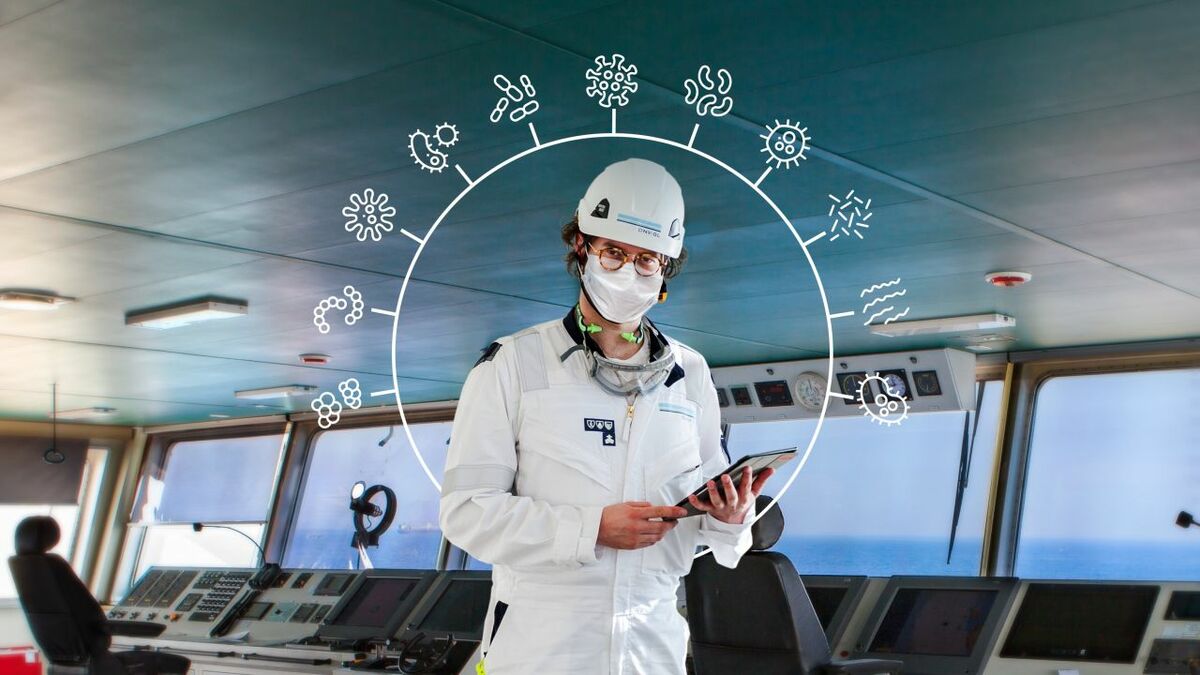
A DNV GL surveyor has multiple assessments to complete for CIP-M certification
A solution has been launched to help the cruise industry resume sailing after the Covid-19-induced global shutdown

Genting Cruise Lines has become the first maritime customer of DNV GL’s certification in infection prevention (CIP-M) for one of its passenger ships.

Together, Genting and DNV GL are working towards providing CIP-M certification for cruise ship Explorer Dream, operated under the Dream Cruises brand.

More cruise ships and operators are expected to follow this example to certify cleanliness and healthcare on their liners as owners attempt to return operations to pre-crisis levels.

This new certification was introduced as cruise shipping is reeling from extreme effects of the global coronavirus pandemic and resultant worldwide travel restrictions. Cruise ships have been at the forefront of the global Covid-19 infections, initially as centres for coronavirus outbreaks and passenger deaths.

As travel restrictions are gradually lifted, the cruise industry hopes to resume ship operations and attract passengers again. For this it needs to inspire confidence in health and safety on its ships.

“The Covid-19 crisis has been unprecedented in its impact on the maritime industry, and on the cruise lines in particular,” said DNV GL chief executive for maritime Knut Ørbeck-Nilssen.

“But I hope that with innovative ideas like CIP-M we can help the industry get moving again in a way that gives passengers and crew confidence that exacting measures are in place to enhance the cruise industry’s already rigorous health and safety standards,” he explained.

CIP-M enables cruise ship operators to demonstrate they have procedures and systems in place to prevent, control and mitigate infection to protect their passengers and crews.

“CIP-M was inspired by health experts and has been tailored for maritime,” said Mr Ørbeck-Nilssen during a press briefing. “It meets the statutory requirements to restore passenger and industry confidence. It is a move forward as a holistic solution to the pressing challenges our industry faces.”

CIP-M builds on DNV GL Healthcare’s work in infection risk management, which includes working with 3,500 healthcare organisations, including certifying 640 hospitals worldwide.

Experts from DNV GL’s Cruise Center in Miami customised the healthcare CIP for use in a maritime setting in co-operation with DNV GL’s Business Assurance division.

CIP-M integrates maritime specific standards, such as the US Centre for Disease Control and Prevention’s vessel sanitation programme, and incorporates national and industry guidelines.

The certification surveys and audits are performed by DNV GL surveyor teams of healthcare infection prevention and control experts together with experienced maritime auditors.

Genting Cruise Lines president Kent Zhu expects CIP-M certification to improve passenger confidence in its ability to prevent infections. “With consumers’ heightened expectations on safety and well-being, the customised CIP-M certification will indeed further boost consumers’ confidence in cruising as we recommence operations in the very near future. At Genting Cruise Lines, the safety and well-being of our guests and crew are of paramount importance to us,” he continued.

“From the onset of the pandemic, Genting Cruise Lines has been at the forefront in enhancing its preventive and safety measures with the Covid-19 pandemic in mind.

We were the first in the industry to launch and introduce our enhanced measures, which we will adopt as the new safety normal for our fleet and we hope for the industry too.”

CIP-M assessment of Genting Cruise Lines has already kicked off with a re-assessment of the company’s management system, to be followed by a certification survey of Explorer Dream. Genting expects the certification programme to be successfully completed by the end of June.

As part of the CIP-M certification, DNV GL assesses vessel operations, including enhanced sanitation procedures, food preparation and handling, physical distancing requirements and personal protective equipment use by crew members. DNV GL also evaluates maintenance of public health essential systems, emergency response plans, pre-boarding screening, embarkation and debarkation processes, and itinerary or port planning protocols.

Annual surveys on board and company audit ashore are conducted to verify continued compliance and improvement.