Carnival Partners With DXC Technology

Carnival Partners With DXC Technology

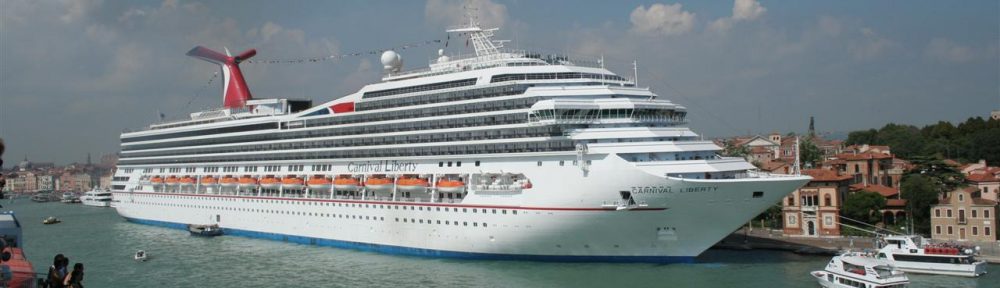
DXC Technology and Carnival Cruise Line today announced a multi-year agreement to power the cruise line’s technology infrastructure.

This partnership will support Carnival’s guest experience across its global fleet, as well as its portside and shoreside operations.

DXC will deliver IT services designed to enhance operational efficiency, improve employee productivity and help ensure a seamless and connected experience for guests.

“At Carnival, we’re committed to delivering memorable vacations for our guests, and technology plays a vital role in ensuring they have the best onboard experience,” said Sean Kenny, senior vice president and chief information officer at Carnival.

“The DXC team demonstrates exceptional technical expertise, responsiveness and a clear commitment to delivering on our long-term vision.”

“With them as our trusted partner, we’re investing in technology that strengthens the foundation of our operations to provide a great experience for our guests across our 29 ships globally and supporting our dedicated team members both shipboard and shoreside,” added Kenny.

“This collaboration with Carnival Cruise Line represents a significant milestone for DXC as we continue to expand our footprint in the hospitality and travel sectors,” said Chris Drumgoole, president of global infrastructure services at DXC Technology.

“Our goal is clear: deliver complete customer operational confidence by minimising technology disruptions. By managing their complex IT operations and providing modern solutions, we’re proud to help Carnival do what they do best, ensuring every guest enjoys their cruise vacation,” added Drumgoole.

Through the partnership, DXC will manage Carnival’s core IT infrastructure across all operational environments, including shipboard systems, shoreside offices and port facilities.

Using an employee-centric delivery model, DXC will ensure that the tools and services provided are tailored to support Carnival’s workforce needs and provide a consistent guest experience.

Services will include workplace support, IT service management, infrastructure operations and security risk management.
NCL Holdings forecasts ‘strong demand so long as it’s safe’

NCL Holdings forecasts ‘strong demand so long as it’s safe’
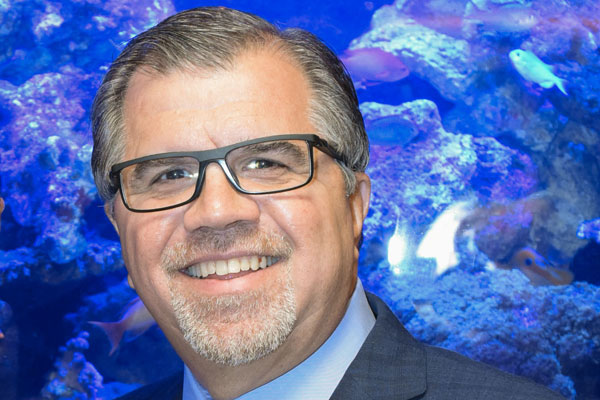
Norwegian Cruise Line Holdings chief executive Frank del Rio reported “strong demand for future cruises” as the company recorded a half-year loss of $2.65 billion this week.
Del Rio dismissed a suggestion the Covid crisis could put many cruise-focused travel agencies out of business, but he described the Covid infection of passengers and crew on Hurtigruten’s MS Roald Amundsen as “disappointing”.
He suggested Norwegian Cruise Line Holdings could see a “limited” return of sailing in November and December.
The company’s sailings are currently suspended through to the end of October.
Del Rio insisted: “There continues to be strong demand for future cruises despite our reduced marketing. Consumer demand is evident across markets.”
He forecast: “The last two months of 2020 could see a return of sailing with limited capacity.  We’ve taken important initial steps.
“We’re developing safety protocols with the formation of the Healthy Sail Panel which demonstrates our commitment to combating the spread of Covid and bringing back cruising sooner rather than later.”
The Healthy Sail Panel of experts, set up in collaboration with Royal Caribbean International in July, is working to develop recommendations for a safe resumption of cruising.
Del Rio said: “The panel will submit its initial recommendations to the [US] government and Centers for Disease Control (CDC) for evaluation.”
He acknowledged: “Things will be different, of course. We’ll be mindful of how measures impact on the cruise experience.”
NCL Holdings chief financial officer Mark Kempa said: “We expect to launch with a handful of ships at first with low occupancy.
“Our break-even [on operating ships] is at around 40% of normal revenue. Layer on corporate overheads and it would require 60% of normal revenue.”
Asked whether the crisis could transform cruise distribution, which remains overwhelmingly through travel agencies, del Rio said: “We have seen smaller travel agencies folding and larger ones furloughing employees. We’ve seen an uptick indirect business.”
But he argued: “It might be exaggerated because of the partial closures of agencies. We think travel agencies will survive. Travel agencies have shown their resilience over the long term.
“Not too long ago people were predicting the demise of travel agencies, but they came back stronger. Long term you won’t see much change.”
Del Rio insisted: “We enjoy a very loyal customer base in the cruise industry. Between 15 million and 20 million people have not been allowed to cruise this year – there will be a lot of pent-up demand.
“People are booking. We’ve not seen any major shifts in consumer behaviour. We’ve not changed our itineraries. If people favour cruising closer to home or not going to Asia, we’re not seeing it.
“My instinct is we will be [operating] somewhere in the range of 75% of capacity for the full year 2021. It might start at 50%-60%, with the limitation being concern about the spread of Covid more than about consumer demand.
“So long as we can ascertain cruising is safe we’ll have customers coming back in droves.”
Del Rio added: “We’re hopeful we’ll be able to put together a comprehensive set of health and safety protocols that get us back quickly.”
Asked about the Covid outbreak on the Hurtigruten ship which infected more than 50 passengers and crew, Del Rio said: “It’s disappointing – the re-emergence of Covid aboard vessels.
“But it’s an opportunity to learn something. The cruise companies and ports which suffered these setbacks have handled it well. We’ve not had a repeat of what happened at the start of the crisis.”
Kempa reported the group paid out $725 million in cash refunds to customers in the three months to June, more than the company’s cash burn of $575 million during the quarter.
He said future cruise credits make up 30% of advance bookings and monthly cash burn had fallen to about $160 million.
The company ended June with $2.26 billion in liquidity after raising $2.3 billion during the second quarter.
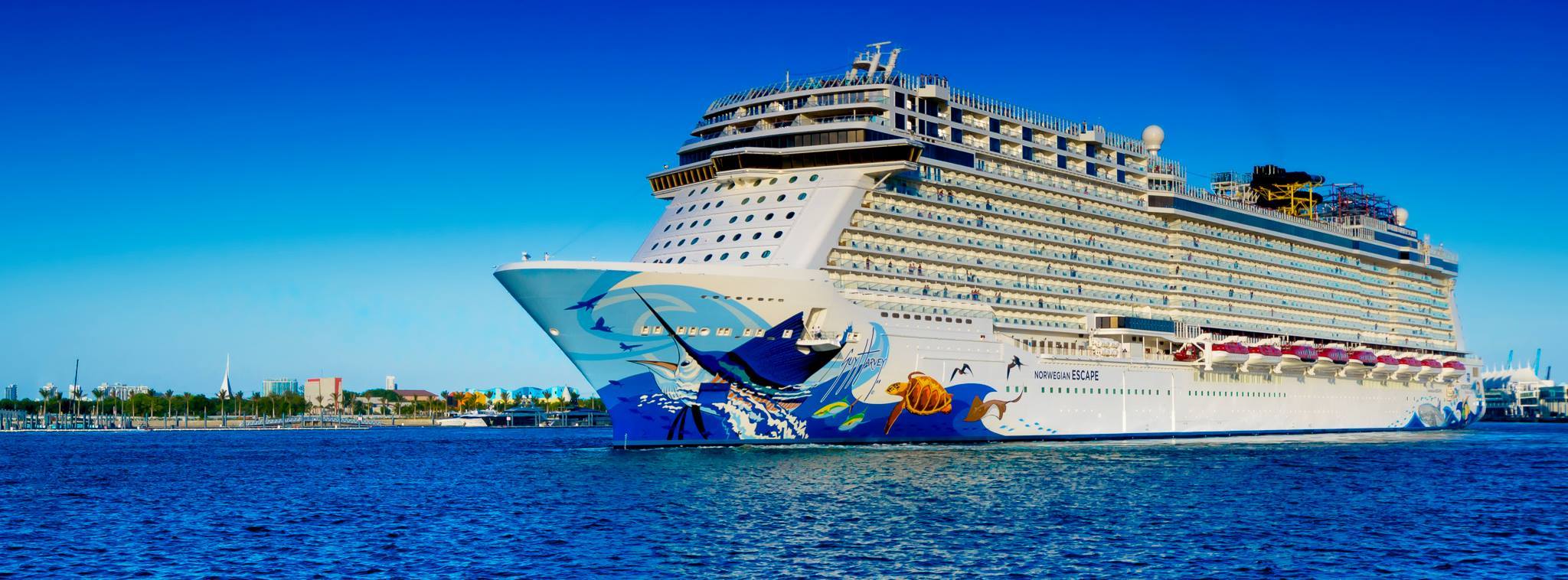
Norwegian Cruise Line Holdings operates 28 ships like Norwegian Cruise Line, Oceania Cruises and Regent Seven Seas Cruises.

MMGY: 2016 shaping up to be ‘remarkably positive’ year for travel

NEW YORK — MMGY Global’s Portrait of American Travelers, unveiled Wednesday evening, suggests 2016 will be a record year for travel, barring any unpredictable disruptors.

MMGY executives presented some key data findings during an event at the New York Times building here.

Two-thirds of U.S. travelers are planning at least one leisure trip this year that requires overnight lodging, said Peter Yesawich, MMGY’s partner, industry insights; on average, they are planning four trips.

While that number remains the same from last year, the number of people traveling for business has increased by 12%.

“The outlook is incredibly positive, because you’ve got very robust demand from leisure travelers; you’ve got remarkable growth in demand from business travelers,” Yesawich said.

The data was from MMGY’s quarterly “travelhorizons” survey, which studies travelers’ intentions, using a sample of 2,300 households of active travelers that are 18 years old and older.

Steve Cohen, vice president of research and insights, said that a separate, annual study, which surveys travelers with household income level over $50,000, showed that the amount travelers are spending is also up.

The average amount travelers plan to spend on vacations this year was $5,048, compared with $4,526 spent in 2015 and $3,874 in 2010.

Additionally, Cohen said, the annual data shows the number of travelers who intend to travel more is on the rise. According to the study’s summary, 28% of travelers said they intend to take more vacations, and 14% said they plan to take fewer vacations.

“This means there is a 14-point positive variance in the market’s intention to vacation during the next 12 months, representing a 10-year high that surpasses the previous record, a pre-recession 11-point increase in travel intentions reported in 2007 and 2008,” the summary states.

The data, Cohen said, suggests a “record year” for travel.

Yesawich said that only a major, unpredictable disruptor, like an act of domestic terrorism, could shift the tide; barring that, he said 2016 was shaping up to be a “remarkably positive” year for travel.