
To introduce new technologies to ships, the cruise industry needs to simplify access for guests as much as possible, said Francesco Pugliese, vice president of mobile and onboard digital technology at MSC Cruises.
While new developments pile up ashore, cruise lines need to be careful in the way they are implemented onboard, he said.
“We call it ‘keep it simple,’ which means simplifying access as much as possible for our guests. You need to consider all the scenarios and make sure they have a smooth experience,” Pugliese said, mentioning MSC Cruises’ MSC for Me mobile app.
While some guests will embark with the app installed on their phones, others will download it onboard, which can lead to different experiences.
“So, you need to ensure there’s always a smooth path but, of course, not forgetting the cybersecurity issues and challenges that we have,” Pugliese added.
The digital ecosystem onboard also needs to focus on the features that the guests are looking for, he said.
In addition to training crew to help passengers deal with the new technologies, cruise lines also need to ensure that they are communicating with guests in the right way, Pugliese said.
“It’s very important. That’s why we work in close collaboration with our marketing colleagues to explain to the guests, for instance, that the app is for free, which is something that they don’t always realize.”
Pugliese also said that, with new features on ships, the vessels are becoming one of the reasons why guests choose to embark on a specific sailing.
“They are not selecting their cruise based on itinerary anymore, they want to focus on the attractions and experiences that a ship can offer,” he explained.
“That’s why we developed a series of concepts that we implemented on our new ships, which are basically immersive,” Pugliese continued.
One of the new attractions is Starship Club, which is a bar that features a robot bartender who can make cocktails and entertain guests.
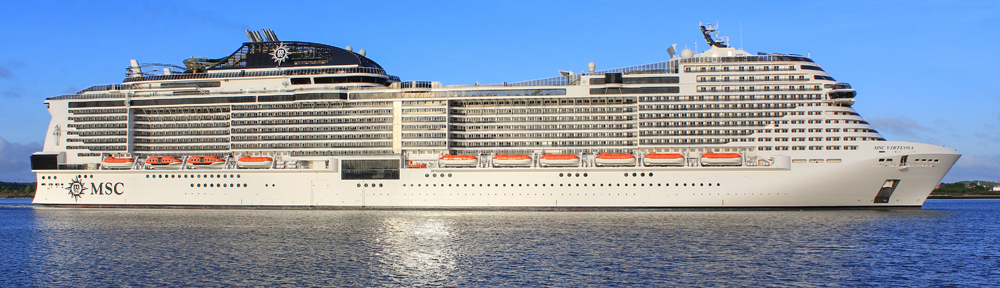
The venue was introduced onboard the MSC Virtuosa in 2021 and was later rolled out to other new buildings.
“You order your drink on a list of pre-defined cocktails and, while you wait for it to be prepared by the robotic bartender, you get immersed in a kind of experience that brings you to outer space,” Pugliese explained.
Pugliese highlighted the uniqueness of the cruise industry, which allows cruise lines to collect more data than other companies.
“We start collecting data from the very beginning when passengers purchase their cruise and want to personalize it. Once they get onboard, they usually stay seven days with us, so this means you can collect a huge amount of data,” he explained.
Artificial Intelligence (AI) can help in the process of understanding and analyzing this information, Pugliese added.


 Wetravel2u's Weblog