Venice bans cruise ships from the historic centre

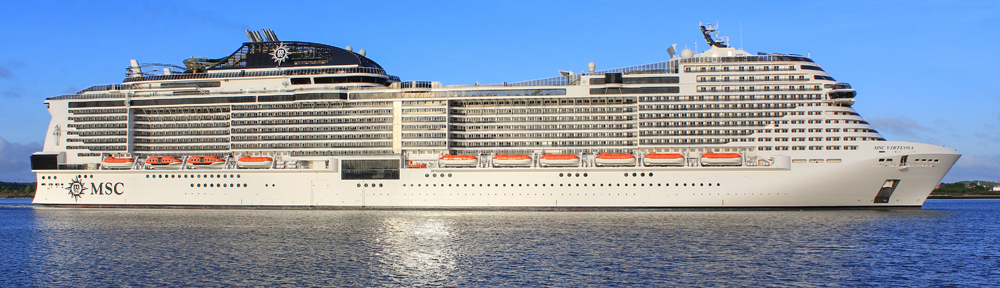
Italian authorities have approved a ban on cruise ships entering the historic centre of Venice.

The country’s culture minister said on Wednesday, ‘that the decision came in response to UN cultural body Unesco’.

Large ships will now have to dock at the city’s industrial port until a permanent solution is found.

Critics argue the ships cause pollution and erode the foundations of the city, which suffers from regular flooding.

On Wednesday, Italian ministers agreed that large cruise and container ships would no longer be able to enter the city’s Giudecca canal, which leads to the historic St Mark’s Square.

Culture Minister Dario Franceschini hailed the move, which he described as “a correct decision, awaited for years”.

The government will hold a “call for ideas” for an alternative cruise terminal in the city.

Cruise ships are currently unable to enter Venice due to coronavirus restrictions but their absence since has been credited with improving water quality in the lagoons.

Pressure to pass a ban on large vessels mounted in 2019 after a cruise ship crashed into a harbour in the city, injuring five people. However, no permanent solution was found.

Previous initiatives to stop cruise ship traffic have also failed. In 2013, the government banned ships weighing more than 96,000 tonnes from the Giudecca canal, but the legislation was later overturned.

Other plans to divert cruise ships from the centre of Venice were announced in 2017 but were never fully implemented.

Flooding closes Venice to cruise ships

Image result for venice flooding"

Near-record flooding has temporarily closed Venice to cruise passengers.

Cruises that had been scheduled to stop in Venice have been rerouted to Trieste or Ravenna, CLIA Europe spokesman Martyn Griffiths said.

Tides six feet above normal have left many parts of Venice underwater, beached water taxis and boats along the quays, and damaged many tourism businesses and sites.

Cruise calls were rerouted at the request of the operators of the cruise terminal in Venice, Griffiths said. The terminal is open and being used as a transfer point for passengers if needed. For the moment, it is also being used as a shelter for Venice residents displaced by the flooding.

No ships are expected to call in Venice before Nov. 21, Griffiths said.

Doing some water-level damage control

By Michelle Baran

Any river cruise enthusiasts who saw the images of France’s Seine River creeping towards the tops of Paris’ elegant bridges last week probably had the same thought I did — this can’t be good for the river cruise business.
River cruise lines admit that the Nov. 13 terror attacks in Paris dealt a pretty harsh blow to their 2016 France bookings and that the March attacks in Brussels didn’t help either. But slowly, sales were coming back.
And then the rains came, pushing the Seine so high last week that iconic institutions such as the Louvre and Musee d’Orsay museums in Paris temporarily closed.
Obviously, no river cruise vessels were able to sail under those Paris bridges for a time.
But as it turns out, the flooding was relatively short-lived and the water levels are receding. The Louvre reopened on Wednesday, and the river cruise lines reported minimal disruptions and anticipated that sailings would return to normal in line with the receding water levels.
What was likely more disruptive were the images of the floodwaters in Paris, which isn’t the kind of marketing the river cruise industry — especially in France where bookings are still fragile — needs right now.
But river cruise lines have been learning how to cope. Over the past several years they have taken a fair amount of flak for a lack of transparency and clear communication about water level issues, and they are working on being much more open about exactly how high and low waters are impacting their sailings.
Viking, for example, now how has a dedicated page on its website where travel agents and passengers can see all updates on disruptions, no matter how big or small. Because the Viking fleet is so large and its operations so vast, this page can actually serve as a comprehensive resource for anyone with concerns about water levels that wants to check up on a river they plan to sail.
A river cruise tour guide has also put together a website documenting water levels in Europe throughout the season. Though by no means a comprehensive or official source, this is another good place for concerned passengers and travel sellers to check.
But ultimately, river cruise lines themselves should be and increasingly are the go-to source for questions about high and low waters and specific changes to itineraries, as each line has different contingency plans in place. The good news is that while water levels will always be a nagging problem on rivers, at least river cruise lines are learning how to do more and better damage control, which will ultimately mean smoother sailing through the issue than in the past.