Everllence and Plastic Fischer Fight Against Plastic Waste

Everllence and Plastic Fischer Fight Against Plastic Waste

Everllence has signed a three-year sponsorship agreement with social enterprise Plastic Fischer, which will see the clearing of rivers near Everllence locations in India of plastic waste.

Plastic Fischer is a Cologne-based startup that combats ocean plastic pollution while creating jobs in emerging countries. As part of the partnership, regular joint-collection campaigns with employees will take place at Everllence locations in India.

Everllence said in a press release that the partnership will enable Plastic Fischer to collect and recycle between 450 and 500 tons of plastic over the next three years.

A total of seven floating barriers will be installed in Vadodara and Bangalore to capture plastic from the river. The startup will also use the funding to open two material-recovery facilities to sort and recycle the collected materials.

In the first year, these measures are expected to create 20 local jobs.

Uwe Lauber, CEO of Everllence, said: “Protecting oceans and waterways is especially important to us. Plastic Fischer has been carrying out impressive work in this field for many years, and we are proud and happy to support their mission.”

Karsten Hirsch, CEO and founder of Plastic Fischer, said: “We are very pleased to take our next big step with Everllence and expand into two new locations at once.”

“This long-term support will help us build infrastructure and drive sustainable change on-site. We are proud to have earned Everllence’s trust to build a flagship project with a strong local impact together,” Hirsch added.

Michael Melzer, head of experience communications and responsible for donations and sponsorships at Everllence, said: “What convinced us about Plastic Fischer, in addition to our shared commitment to protecting waterways, was its local approach.”

“Together, not only can we fight plastic waste, but we can also make a contribution to local economic development around our Indian sites. Furthermore, our employees in Bangalore and Vadodara can volunteer in the cleanups; it’s a great cooperation,” added Melzer.

Plastic Fischer uses barriers called TrashBooms to capture plastic directly in rivers.

Non-recyclable waste is processed in cement plants, serving as a more environmentally friendly alternative to landfill or incineration, as it produces no residues like ash and simultaneously replaces fossil fuels.

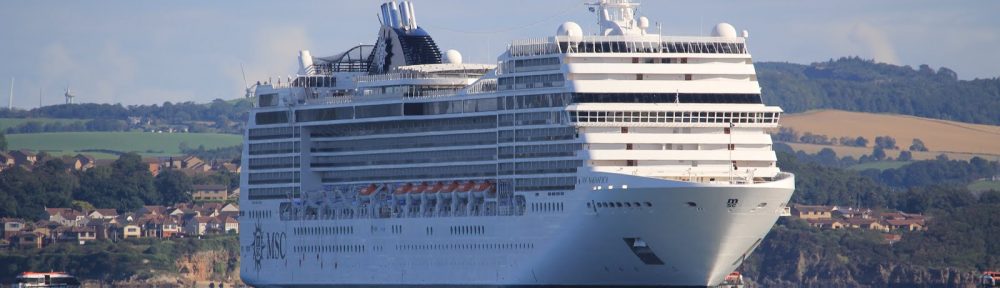
Amsterdam bans cruise ships to limit visitors and curb pollution

Costa Medditrannia berthed in Amsterdam photo credit Spacejunkie2 (Flickr)

Amsterdam’s council has banned cruise ships from the city centre as the Dutch capital tries to limit visitor numbers and curb pollution.

Politicians said the vessels were not in line with the city’s sustainable ambitions.

It means the central cruise terminal on the River IJ near Amsterdam’s main train station will close.

It is the latest measure to clamp down on mass tourism in the city.

Cruise ships have become a symbol of the problem, with more than 100 mooring in the capital every year.

The council has been trying to scrub up the city, banning cannabis smoking on the streets of the red-light district.

In March the city launched an online campaign urging young British men considering holding their bachelor parties in Amsterdam to stay away.

Amsterdam has become a victim of its own popularity, attracting 20 million annual visitors – some drawn by its party city reputation.

“Cruise ships in the centre of the city don’t fit in with Amsterdam’s task of cutting the number of tourists,” said Ilana Rooderkerk of the liberal D66 party, which runs the city along with the Labour party and environmentalists.

Ms Rooderkerk recently compared cruise tourists to a type of “plague of locusts” descending all at once on the city.

Iconic buildings in Amsterdam are great for Photographers credit Spacejunkie2 (Flickr)Other Amsterdam officials have baulked at that kind of language. But Mayor Femke Halsema complained last year that cruise tourists were let loose for a couple of hours, ate at international chains and had no time to visit a museum, consuming the city but doing little for it.

The other key reason for removing cruise ships is to lower air pollution levels in Amsterdam. A 2021 study of one big cruise ship found that it had produced the same levels of nitrogen oxides (NOx) in one day as 30,000 trucks.

Other mooring sites away from the city centre have been under consideration for some time but no decision has yet been taken.

In a separate development, Amsterdam has announced plans to beef up night-time culture for young people.

The city has outlined its aim to find nightclub locations such as disused tunnels and garages to develop the talent of “creative young people who want to organise something at night”.

Venice bans cruise ships from the historic centre

Italian authorities have approved a ban on cruise ships entering the historic centre of Venice.

The country’s culture minister said on Wednesday, ‘that the decision came in response to UN cultural body Unesco’.

Large ships will now have to dock at the city’s industrial port until a permanent solution is found.

Critics argue the ships cause pollution and erode the foundations of the city, which suffers from regular flooding.

On Wednesday, Italian ministers agreed that large cruise and container ships would no longer be able to enter the city’s Giudecca canal, which leads to the historic St Mark’s Square.

Culture Minister Dario Franceschini hailed the move, which he described as “a correct decision, awaited for years”.

The government will hold a “call for ideas” for an alternative cruise terminal in the city.

Cruise ships are currently unable to enter Venice due to coronavirus restrictions but their absence since has been credited with improving water quality in the lagoons.

Pressure to pass a ban on large vessels mounted in 2019 after a cruise ship crashed into a harbour in the city, injuring five people. However, no permanent solution was found.

Previous initiatives to stop cruise ship traffic have also failed. In 2013, the government banned ships weighing more than 96,000 tonnes from the Giudecca canal, but the legislation was later overturned.

Other plans to divert cruise ships from the centre of Venice were announced in 2017 but were never fully implemented.