Carnival Corp. CEO: Demand should be ‘more than adequate’ at the restart

Carnival Corp. CEO Arnold Donald at a Cruise3Sixty event in 2018.

Carnival Corp. expects demand to be “more than adequate to fill ships in a staggered restart,” said CEO Arnold Donald during a business update call with analysts.

Donald said he was not concerned about achieving this without substantial bookings from the new-to-cruise market, because two-thirds of its global guests, 8 million each year, are repeat cruisers. He said Carnival Corp. has an active database of nearly 40 million past guests, and the average frequency of cruisers to repeat is every two to three years.

“Clearly cruise will not come back all at once,” Donald said. “We intend to resume with a small percentage of the fleet, which inherently makes us less reliant on new-to-cruise in the early days.”

As opposed to other down cycles, the limited capacity will help achieve stronger pricing when cruising initially resumes.

“Historically we had only two levers to pull in a down cycle: occupancy and rate,” Donald said. “In this environment, we’ll have a third: capacity.”

Donald said Carnival is very encouraged by the booking patterns it is seeing. He said that this week, when it announced that Aida Cruises would resume service in Germany in August, it had over 1,000 bookings in one day, “taking up a significant portion of the first sailings and on a very short notice period.”
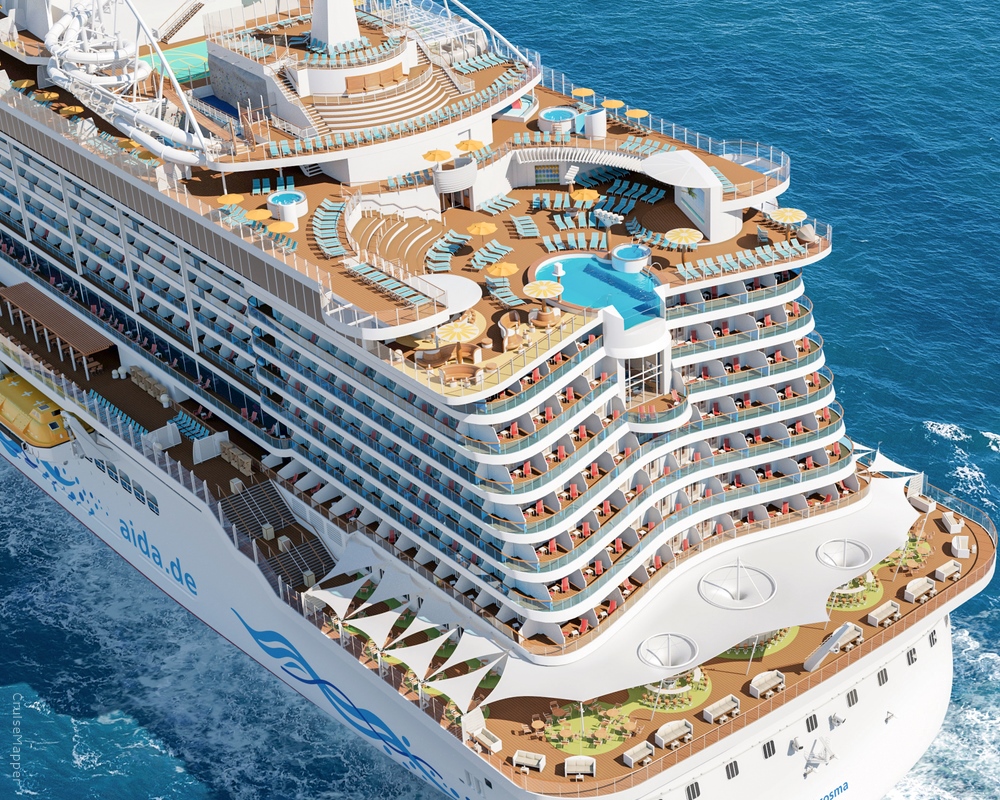
AIDA Cruises - Ships and Itineraries 2020, 2021, 2022 | CruiseMapper

He said forward bookings include not only a number of future cruise credits (FCCs) but “substantial new bookings and even new-to-cruise bookings, which given the current state of the environment in the world is really a good testament to how strong a vacation experience and value cruising really is.”

When asked if brands that were more badly tarnished by the media attention on cruise ship outbreaks in the early days of the pandemic, such as Princess, were being disproportionately affected in terms of consumers’ preference, Donald said the line is “trending with all the other brands in the industry.”

In fact, he said that none of the brands in the industry had reached what he called “the trough” of 2012 or 2013 when a number of negative, high-profile incidents. such as the engine room fire on the Carnival Triumph and the sinking of the Costa Concordia, rocked the cruise industry and Carnival Corp. specifically.

“None of the brands in the industry, ours or others, have gone to the low levels that we experienced at that time,” he said. “The trough in this period has been higher than the trough in that period.

“So there is a lot of pent-up demand, a lot of latent demand,” he continued. “That doesn’t mean we don’t have work to do once we start cruising with much larger volumes of capacity to attract new to cruise. Of course, we will have work to do, but right now the brands are strong, the bookings are encouraging, and with the staggered start we’re going to have in the resumption of cruising, there should be plenty of pent-up, latent demand with previous cruisegoers to fill the ships.”

Donald also said that having national brands in its portfolio is “clearly an asset” in this situation because as nations reintroduce social gathering and cruising, they are “most likely initially to restrict reactivation to their own residents exclusively.”
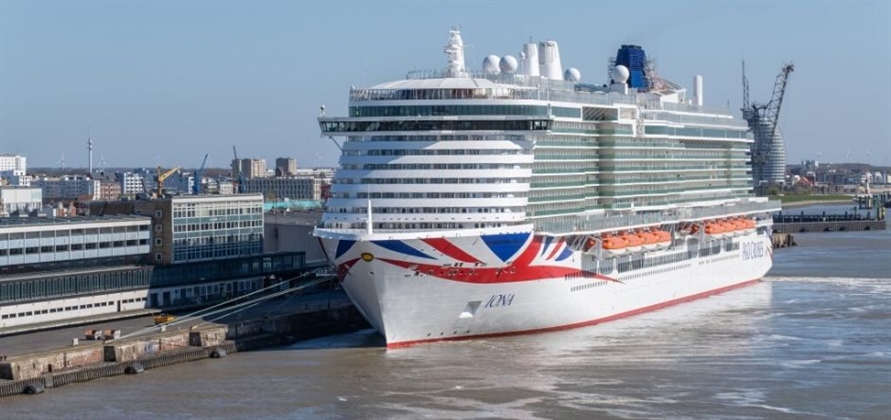
P&O Cruises' Iona arrives in Rotterdam
P&O Iona waiting for delivery.

Carnival’s German brand sources 95% from Germany; P&O UK is 98% British-sourced; Costa Europe is 80% continental Europe-sourced; P&O Australia is more than 99% sourced from Australia and New Zealand, and Carnival Cruise Line is 92% U.S.-sourced, Donald said.

“We are very well positioned,” Donald said. “Additionally, the fact that these brands are characterized by ready access, with the drive-to market and prevalence of shorter duration cruises, strengthens the possibility for success in today’s environment.”

Donald said that in general, longer cruises such as world cruises are not booking as well as shorter ones, which he said makes sense given the uncertainty of whether ports are open or closed in different regions.

For the second quarter, which ended May 31, Carnival reported a loss of $2.4 billion on revenue of $740 million,  compared with $451 million in net income on $4.8 billion in revenue during the same period in 2019.
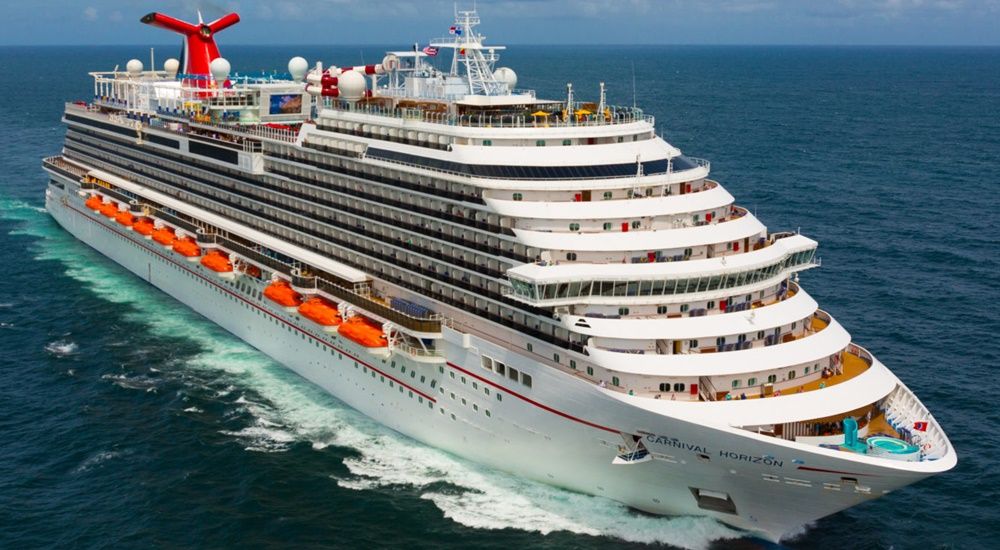
Carnival Panorama wins the “Best New Cruise Ship of 2019” Award ...

2021 bookings  

As of June 21, Carnival reported that approximately half of the guests on cancelled cruises requested cash refunds. The company also said that despite substantially reduced marketing and selling spend, it continues to see new 2021 bookings.

During the first three weeks in June, almost 60% of 2021 bookings were new bookings, Carnival said, with the remaining booking volumes from guests applying FCCs to specific future cruises.

Advanced 2021 bookings are currently within historical ranges at prices that are down in the low- to the mid-single-digits range, which included the negative yield impact of FCCs and onboard credits applied.

Carnival said the majority of its customer deposits of $2.6 billion are in FCCs, and $121 million in third-quarter sailings and $353 million in fourth-quarter sailings.
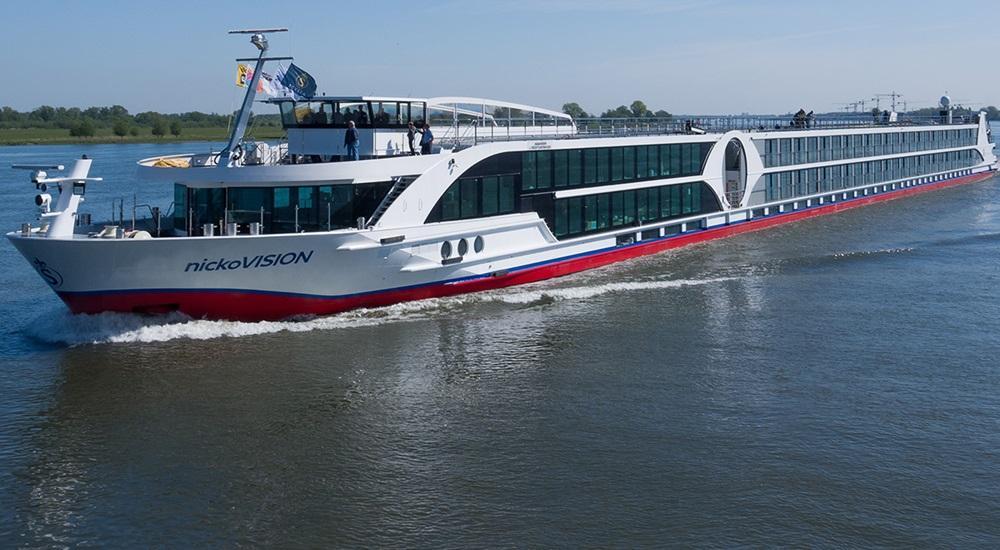
First river cruise with Covid-19 regulations completes sailing

MS nickoVISION Itinerary, Current Position, Ship Review | CruiseMapper

nickoVision cruising down the Danube

Scylla has completed the first river cruise to take place with new Covid-19 safety regulations.

The Swiss line’s nickoVISION ship has docked in Dusseldorf, Germany, after a 13-day sailing along the Danube, Main and Rhine rivers.

The ship set sail on June 1 with regular temperature checks carried out on passengers and crew, and a one-way system in corridors to maintain social distancing.

“Both guests and crew mastered these challenges with flying colours,” said chief executive Arno Reitsma. “Our first post-lockdown river cruise went without a hitch. All passengers were very satisfied with the cruise experience, they felt completely safe with the new measures and said they had a really pleasant time with us.”

Scylla, which has a fleet of 35 river ships carrying between 88 and 220 passengers, will now continue with its European river cruise programme this summer.

Reitsma added: “After a very successful start, the river cruise season can now be continued. This means that guests will once again be able to enjoy a variety of river cruises on Europe’s most popular waterways, even though travel itself is now slightly different.

“We are not yet able to operate on all the European rivers we used to, but we will be gradually adding new routes and expanding our offer.”

Lufthansa warns aircraft to remain grounded until 2022

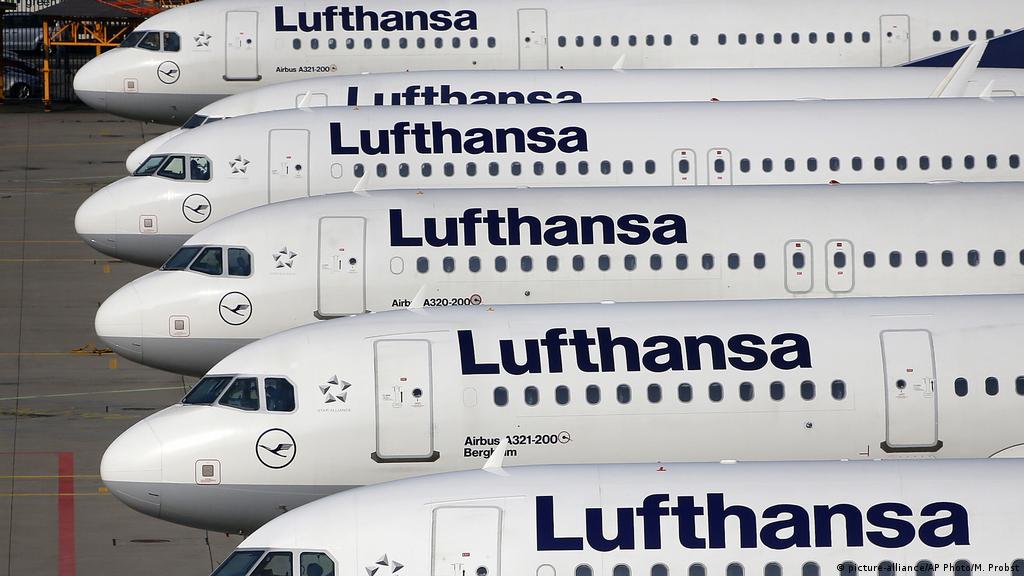
Lufthansa: Cabin crew trade union calls strike | News | DW | 14.10 ...

Lufthansa expects air passenger demand to return so slowly that it plans to have 300 of the group’s aircraft still parked in 2021 and 200 in 2022.

Europe’s largest airline group, Lufthansa currently has 700 of its 763 aircraft grounded.

More: Cash refund demands ‘endangering entire travel industry’ – Lufthansa boss

‘Demand won’t return quickly’, warns Lufthansa chief

It reported: “Even after the end of the crisis, expected in 2023, the group expects its fleet to remain 100 aircraft smaller.”

Lufthansa secured €9 billion in German state aid this week after agreeing to EC demands to surrender slots at Frankfurt and Munich, but it plans to downsize sharply.

The group revealed customer demands for refunds are adding to the pressure to slash jobs, with hundreds of millions of euros per month been paid out on top of operating costs.

Thorsten Dirks, Lufthansa finance and digital chief officer reported: “Our [operating] cash burns runs at around €800 million a month. We expect cash consumption to run at a similar level for months. New bookings will remain far below normal.”

But in addition, he warned: “Cancellations mean customers can claim up to €2.5 billion in refunds.”

In the circumstances, Dirks said: “The stabilisation package we have secured in Germany marks a milestone.

“In order to repay the loans quickly, we will have to significantly increase our cash flow though global demand for flights will remain below pre-crisis levels for years.”

Lufthansa to cancel up to 25% of flights due to virus

Group chief executive Carsten Spohr warned: “We have to make cash flow our focus and this has to be tough. We will carry an annual additional burden of €1 billion in interest and repayments. We will have to go through significant restructuring.”

Spohr insisted: “We want to avoid lay-offs as much as we can. But the business will become much smaller, [and] we have to share by everybody working less and making less money. The more we can do this, the fewer jobs will have to go.”

He insisted Lufthansa would “not give any concessions” to one group over another.

Restructuring is already underway at group carriers Brussels Airlines, which plans to cut its workforce by 25%, and Austrian Airlines which will reduce wage costs by 20%.

Spohr added: “The impact of the crisis on aviation will stay for some time, but at least the complete grounding of our fleet is behind us. Countries have begun to relax travel restrictions and travel bans. Demand continues to be far below normal standards.

“Our aim is to serve many destinations, using smaller aircraft and fewer frequencies.”

Lufthansa increased its schedule for June and July this week and plans to operate up to 40% of its original schedule by September, with services to 90% of its previous short-haul destinations and 70% of long haul.

The German state-aid package will see the German government take a 20% equity stake in Lufthansa and two places on the supervisory board.

Spohr said: “Before the coronavirus, a 20% government stake was nowhere in our plans. But we still have a smaller government stake than any of our three [main] competitors – Air France-KLM, IAG and Turkish Airlines.”

The governments of France and the Netherlands hold more than 28% of Air France-KLM, Qatar Airways – which is wholly state-owned – holds a 25% stake in British Airways and Iberia parent IAG, and the Turkish government owns 49% of Turkish Airlines.

Lufthansa Group reported an adjusted operating loss of €1.2 billion for the first quarter to the end of March and a net loss of €2.1 billion.