Royal Caribbean and Norwegian: Differing Strategies on Caribbean Cruises

Royal Caribbean International and Norwegian Cruise Line are taking different business approaches when it comes to Caribbean deployment.

Caribbean itineraries will make up roughly 65 per cent of Royal Caribbean’s deployment this year, compared to approximately 33 per cent for Norwegian Cruise Line, according to the 2023 Cruise Industry News Annual Report.

Next year those numbers should climb for Royal Caribbean, which will put the Icon of the Seas in the year-round Caribbean market, sailing week-long cruises from Miami in January. That will be followed by the Utopia of the Seas, which will sail short voyages year-round from Port Canaveral, with the Miami-based cruise line betting big on the Caribbean cruise market, including the short cruise business.

“Utopia will be the first Oasis-class ship that will be entirely focused on short cruises in the Caribbean, supporting our strategy of competing with land-based vacation alternatives and driving new-to-cruise customers into our vacation ecosystem as we seek to close the value gap,” said Jason Liberty, president and CEO of Royal Caribbean Group, on the company’s second-quarter earnings call in July.

Norwegian Cruise Line has taken the opposite approach.

Norwegian’s short cruise portfolio, which account for 25 per cent of its deployment in 2019, will make up just seven per cent of cruises in 2023, according to the company’s second-quarter earnings presentation.

It also means Caribbean deployment is down some nine per cent this year when compared to 2023.

“We strategically shifted our deployment to longer, more immersive itineraries at the Norwegian Cruise Line brand and increased our concentration of premium destinations while reducing our Caribbean deployment,” said Harry Sommer, president and CEO of Norwegian Cruise Line Holdings, speaking on the company’s second-quarter earnings call.

“This was designed to attract a higher quality guest and maximize our competitive position.”

CFO Mark Kempa noted: “This is really about yield and EBITDA where we believe being in more premium itineraries that are booked further in advance, giving us a much longer booking curve and a more stable and predictable demand profile, which allows us to manage demand, manage our marketing a little bit more effectively and not rely so much on close-in, unstable and unpredictable demand is really key to our success.”
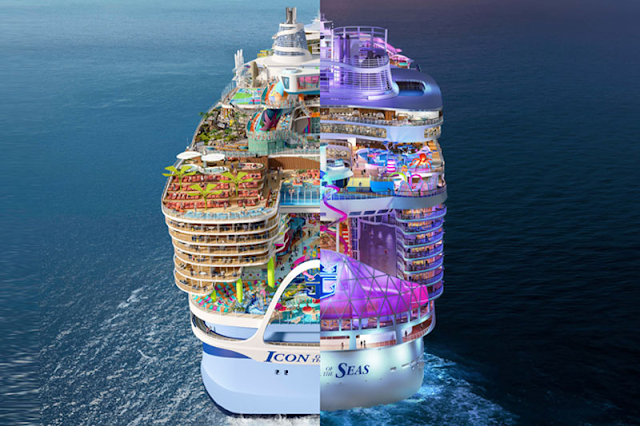
Fun Facts: Royal Caribbean’s Icon of the Seas vs. Utopia of the Seas

Royal Caribbean International is reaching a significant milestone next year when it debuts its two largest cruise ships in the world in 2024, the Icon of the Seas and the Utopia of the Seas.

Here are some quick facts comparing the cruise line’s two newest ships:

Launch Date:
Icon of the Seas: January 2024
Utopia of the Seas: July 2024

Class:
The Icon of the Seas: Icon Class
The Utopia of the Seas: Oasis Class

Powered by:
Icon of the Seas: Liquefied natural gas (LNG)
Utopia of the Seas: Liquefied natural gas (LNG)

Capacity:
Icon of the Seas: 5,610 passengers
Utopia of the Seas: 5,668 passengers

Sailing from:
Icon of the Seas: Miami, Florida
Utopia of the Seas: Port Canaveral, Florida

Itineraries:
Icon of the Seas: Seven-day sailings
Utopia of the Seas: Three-and-four-night weekend getaways

Vacation style:
Icon of the Seas: Dubbed “the world’s best family vacation”
Utopia of the Seas: Dubbed “the world’s biggest weekend”

Inside the Construction of Royal Caribbean’s Icon of the Seas

Northern Europe’s largest gantry crane, nicknamed “Baby” at the Meyer Turku shipyard, lifted a single block of cabins for Royal Caribbean’s new Icon of the Seas, weighing more than 900 tons recently, Royal Caribbean Group officials said Tuesday.

The nine-deck, roughly 60-meter-wide block was moved in one day. It was the largest ever lifted in Europe, as far as shipyard officials knew.

Meyer Turku CEO Tim Meyer said there were no nerves in the move. His team had done a detailed study of how the steel would flex while being lifted and knew exactly how it should be handled while being moved into place.

“It’s very easy,” Meyer deadpanned. “It’s like building a Lego ship.”

While hoisting the cross-section of cruise ship cabins was a feat of engineering, it was also an example of Icon’s aggressive build schedule. Putting the blocks together shoreside is much faster than doing so on the ship, so the larger the block moved, the less schedule burden.

In all, the Icon consisted of 201 blocks, with roughly one installed a day. Each block required about 100 meters of welding once in place.

Building the world’s largest cruise ship meant roughly 2,600 workers a day coming to the Turku, Finland shipyard, representing some 20 nationalities from countless subcontractors. The ship will debut in Miami next January.

The Turku shipyard opened in 1737 — 58 years before the Meyer family started building ships.

Royal Caribbean Group President and CEO Jason Liberty called the yard the “tip of the spear” of innovation.

In their seventh generation of ownership and 228th year in operation, the Meyer family remains both focused and humble.

Patriarch Bernard Meyer, CEO of Meyer Werft, declined to spend much time looking backwards.

“We have no time to be proud; we have work to do,” he said.