Royal Caribbean Cruises Ltd posts $1.4bn Q1 loss

Royal Caribbean Hurricane Irma & Maria Relief - Make a Donation

Royal Caribbean Cruises Ltd has reported a net loss of US$1.4 billion for the first quarter of 2020.

The parent company of Royal Caribbean International, Celebrity Cruises, Azamara and Silversea paused all operations amid the global Covid-19 pandemic on March 13.

In a trading update today,  the company said the pandemic was expected to have hit production at shipyards, meaning delays to new-build Royal ships.

RCCL said the pandemic had led to the cancellation of 130 sailings, which equated to a 20% reduction on its planned sailings and was 17% down on last year’s programme.

The company posted a profit of $249.7 million in the first quarter of 2019 and said it expects to report an overall net loss in 2020.

RCCL withdrew its full-year trading guidance in March, and the update noted: “The magnitude, duration and speed of Covid-19 remain uncertain. As a consequence, the company cannot estimate the impact of Covid-19 on its business, financial condition or near or longer-term financial or operational results with reasonable certainty.”

It expects non-operating expenses of between $590 million and $610 million for the remainder of the year.

Bookings for the remainder of 2020 are “meaningfully lower” than 2019 with lower prices, RCCL reported but noted that before the pandemic took hold it was in “a strong booked position and at higher prices” than 2019.

Looking ahead, it said “the booked position for 2021 is within historical ranges when compared to the same time last year” with 2021 prices “up mid-single digits compared to 2020”. The company stressed it was “still early in the booking cycle”.

RCCL brands had offered customers booked on cancelled cruises either a cash refund or future cruise credit note and said that, as of April 30, 2020, approximately 45% of guests had requested cash refunds.

As of March 31, 2020, the company had $2.4 billion of cash in customer deposits.

RCCL estimates its cash burn to be, on average, in the range of approximately $250 million to $275 million per month while operations are suspended but noted it had “taken significant actions to enhance its liquidity, preserve cash and secure additional financing”. These included securing a $4 billion increase in financing and knocking $3 billion off its 2020 capital expenditure.

“We have taken swift and substantial actions to bolster our financial position by significantly reducing our operating and capital spend and leveraging our strong balance sheet to raise additional capital,” said Jason Liberty, executive vice president and chief financial officer.

As of April 30, 2020, the company had liquidity of approximately $2.3 billion all in the form of cash and cash equivalents, RCCL reported. And on May 19, 2020, it completed a $3.3 billion senior secured notes offering, improving its liquidity position by approximately $1 billion.

RCCL noted that as of May 19, 2020, the expected debt maturities for the remainder of 2020 and 2021, are $0.4 billion and $0.9 billion, respectively.

“Responding to the dramatic change in business conditions caused by COVID-19 has required focus, dedication, ingenuity and improvisation from all our people, and their efforts have been nonstop,” said chairman and chief executive Richard Fain. “We understand that when our ships return to service, they will be sailing in a changing world.  How well we anticipate and solve for this new environment will play a critical role in keeping our guests and crew safe and healthy, as well as position our business and that of our travel agent partners to return to growth.”

RCCL is due to complete its repatriation of crew members to their home countries, and said the company’s future focus now turns to four key principles:

  • Ensuring the safety of guests and crew
  • Proactively enhancing liquidity
  • Protecting the Company’s brands, and
  • Defining and preparing for a “new normal.”
Royal Caribbean Updates Measures Taken to Weather COVID-19 Pandemic

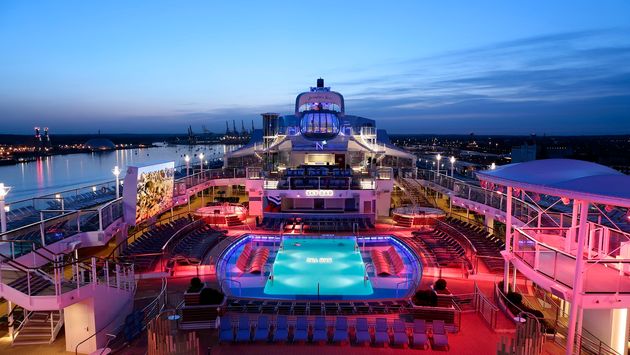
Anthem of the Seas
PHOTO: Anthem of the Seas’ pool deck at sunset. (photo courtesy of Royal Caribbean International)
Royal Caribbean Cruises Ltd. (RCCL) on May 8 provided a business update on how it is shoring up liquidity, reducing expenses, and upgrading cleaning and disinfection protocols amid the Covid-19 pandemic.

“These are unprecedented times for all of us. Travel restrictions and stay-at-home orders are important to slowing the spread of the virus, but they have severely impacted our operations,” said Chairman and CEO Richard D. Fain. “We are taking decisive actions to prioritize the safety of our guests and crew while protecting our fleet and bolstering liquidity.”

RCCL brands – including Royal Caribbean International, Celebrity Cruises, Azamara and Silversea Cruises – have suspended operations through at least June 11. The corporation said continued disruptions to travel and port operations may result in further suspensions.

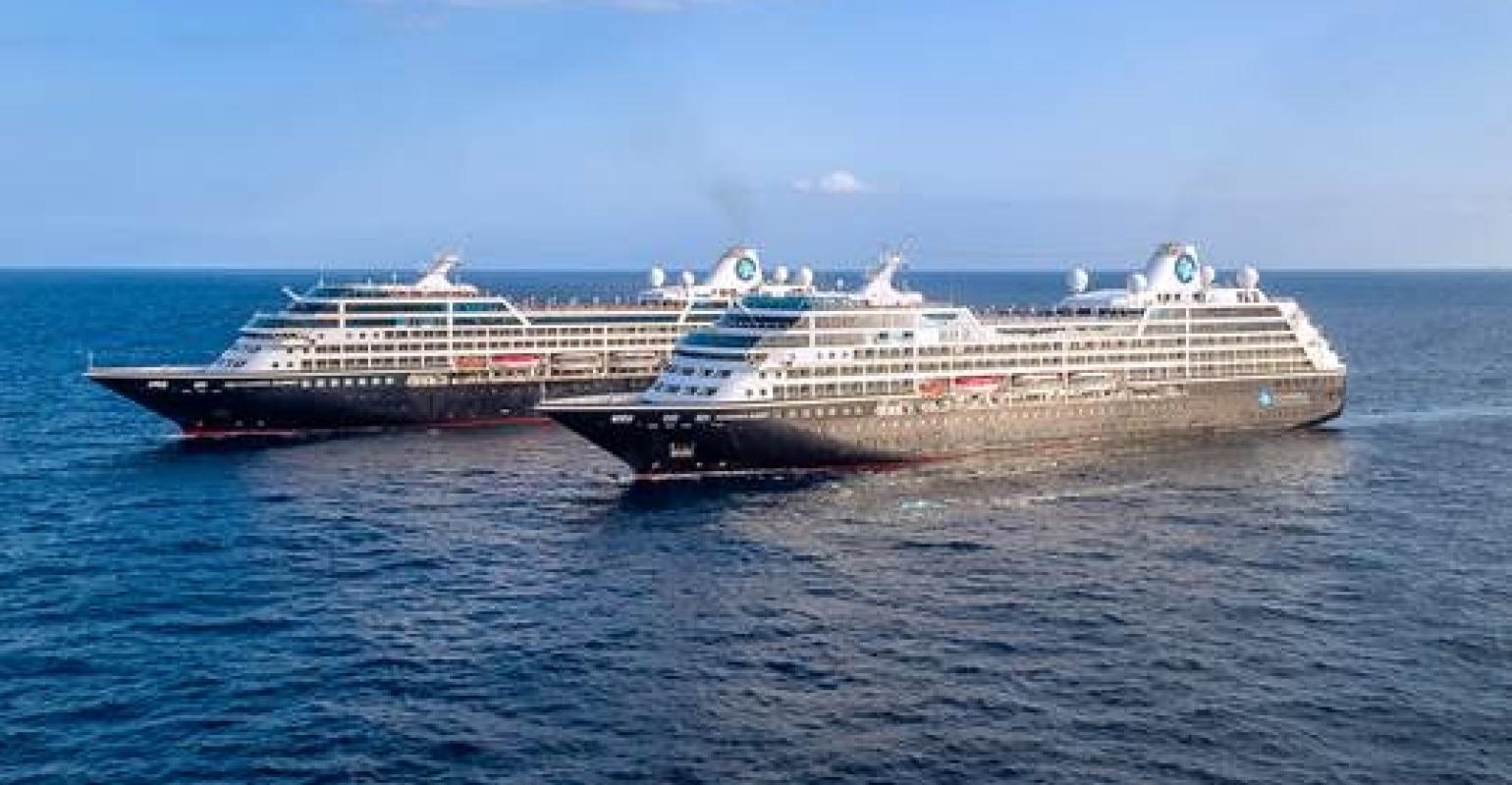
As Azamara #SistersMeet, social fans can earn on-board credit ...

“Our top priority is to ensure the safety of our guests and crew during the suspension period and when we resume operations,” Fain said. “The company’s fleet is now either in port or at anchor and we have developed strict protocols to protect our crew that is still on board our ships.”

RCCL also has arranging to shore up its liquidity and, as of April 30, had liquidity of approximately $2.3 billion in cash and cash equivalents. On May 4, the company increased the 364-day senior secured credit facility and drew $150 million, further enhancing the company’s liquidity profile.

“Since late January, we have undertaken several proactive measures to mitigate the financial and operational impacts of COVID-19,” said Jason T. Liberty, executive vice president and CFO. “Our focus is on bolstering liquidity through significant cost-cutting, capital spends reductions, and other cash conservation measures. In addition, the company is considering additional financing sources. We continue to evaluate all options available to us to further enhance liquidity.”

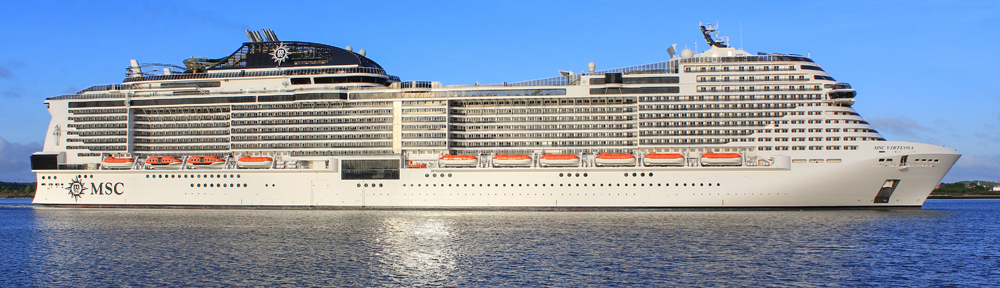
Royal Caribbean Ships by Size [2020] with Comparison Chart

To reduce expenses, RCCL has significantly reduced ship operating expenses, including crew payroll, food, fuel, insurance and port charges.

The company reduced its workforce by about 26 per cent, eliminated or significantly reduced marketing and selling expenses for the remainder of 2020, and suspended travel and instituted a hiring freeze.

“The company estimates that its average ongoing ship operating expenses and administrative expenses is approximately $150 million to $170 million per month during the suspension of operations,” the business update said. “The company may seek to further reduce this average monthly requirement under a prolonged non-revenue scenario.”

The company also has identified approximately $3 billion and $1.4 billion of capital expenditure reductions or deferrals in 2020 and 2021, respectively. Shipyard operations have been impacted, so there will be delays of new ships previously planned for delivery in 2020 and 2021.

The company estimates its cash burn to be, on average, in the range of approximately $250 million to $275 million per month during a suspension of operations.

At the beginning of 2020, RCCL was looking at a strong booking pattern at higher prices than the previous year.

“Given the impact of Covid-19, booking volumes for the remainder of 2020 are meaningfully lower than the same time last year at prices that are down low-single digits,” the RCCL statement said. “Due to the suspension in sailings, booking trends reflect elevated cancellations for 2020 and more typical levels for 2021 and beyond. Although still early in the booking cycle, the booked position for 2021 is within historical ranges when compared to the same time last year with 2021 prices up mid-single digits compared to 2020.”

Royal Caribbean Ship Classes Explained - Cruise International

As of March 31, the company had $2.4 billion in customer deposits. This includes approximately $800 million of future cruise credits related to voyage cancellations through June 11. The company also continues to take future bookings for 2020, 2021 and 2022, and receive new customer deposits and final payments on these bookings.

The company previously withdrew its first-quarter and full-year 2020 guidance. “The magnitude, duration and speed of Covid-19 remain uncertain. As a consequence, we cannot estimate the impact of Covid-19 on our business, financial condition or near- or longer-term financial or operational results with reasonable certainty, but we expect to incur a net loss” for the first quarter and the 2020 fiscal year, “the extent of which will depend on the timing and extent of our return to service.”

Meanwhile, the company has been developing a plan to address the health challenges posed by Covid-19. It includes enhanced screening, upgraded cleaning and disinfection protocols, and plans for social distancing.

RCCL continues to work with the Centers for Disease Control and Prevention, global public health authorities, and national and local governments to enhance measures to protect the health, safety and security of guests, crew and the communities visited when operations resume.

Under stress, NCL Holdings hit a liquidity grand slam

T1112DELRIO1_JB_HR
Arnie Weissmann (left) and Frank Del Rio at Travel Weekly’s CruiseWorld in 2018. Photo Credit: Jamie Biesiada

In the first of two parts of a wide-ranging interview with Travel Weekly editor in chief Arnie Weissmann, Norwegian Cruise Line Holdings CEO Frank Del Rio gave the back story on closing a $2.4 billion round in tough times. Part 2: Del Rio on relaunching and the importance of travel advisors in cruising’s recovery. 

On March 13, Norwegian Cruise Line Holdings CEO Frank Del Rio learned that to stem the spread of Covid-19 on cruise ships, the Centers for Disease Control and Prevention (CDC) had issued a no-sail order, effectively halting cruising out of U.S. ports.

No cruising, no revenue. No revenue, no assurance of the liquidity needed to survive for an unknowable amount of time. “I knew our world was going to change,” Del Rio told Travel Weekly in an interview on Thursday.

Del Rio sees the journey from potential ruin to bountiful liquidity as a testimony to the resiliency of cruising and NCLH’s unique position in the cruising ecosystem.

On Wednesday, Del Rio finished what would be considered a remarkable round of funding even during the best of times. His underwriter, Goldman Sachs, told him it was the first simultaneous “quad” it had seen: releasing a private placement memorandum and at the same time announcing three different kinds of public capital. And, as icing on the cake of the $2.23 billion initially announced, an oversubscription in each tranche triggered what Wall Street calls a “greenshoe” event, allowing additional shares to be sold, bringing the total above $2.4 billion.

Wall Street heavyweights get green light to start their own stock ...

What should have been an unqualified grand slam was temporarily dampened when some investors and media noticed two sentences in a 59-page public filing on Tuesday which seemed to disclose “substantial doubt” about the company’s ability to continue “as a going concern,” and another warning that, should investment not be forthcoming, “it may be necessary for us to reorganize our company in its entirety, including through bankruptcy proceedings.”

The language, Del Rio said, was a “mandatory, technical accounting reporting requirement that our auditor, Price Waterhouse, was required to issue in conjunction with the offering memorandum.” Though the details the following day about the success of the offering would render the point moot, NCL stock dropped 22% the day before the full scope of the investments were announced.

The $2.4 billion, combined with $1.1 billion in cash the company already had, “probably gives us the biggest liquidity cushion — the longest runway — of any company in the cruise space,” Del Rio said. “I challenge you to find another company in any industry that can say that they can withstand a 100% cessation of operations with zero revenue for more than 18 months.”

When this is all over, Del Rio asserts, “Norwegian will be one of the survivors, one of the success stories. This was truly a team effort. Yesterday I addressed them all, and it was a very emotional moment because what was being saved was a great institution. We invented the cruise industry more than 50 years ago and I would be damned if, under my watch, that was going to change.”