Bolidt has added to its Bolideck range of ship deck covering solutions, with the first delivery of Bolideck LED leading to follow up orders from several owners.
Bolideck LED features integral LED lighting, and its first installation was on board 2,894-passenger capacity TUI Cruises vessel Mein Schiff 2.
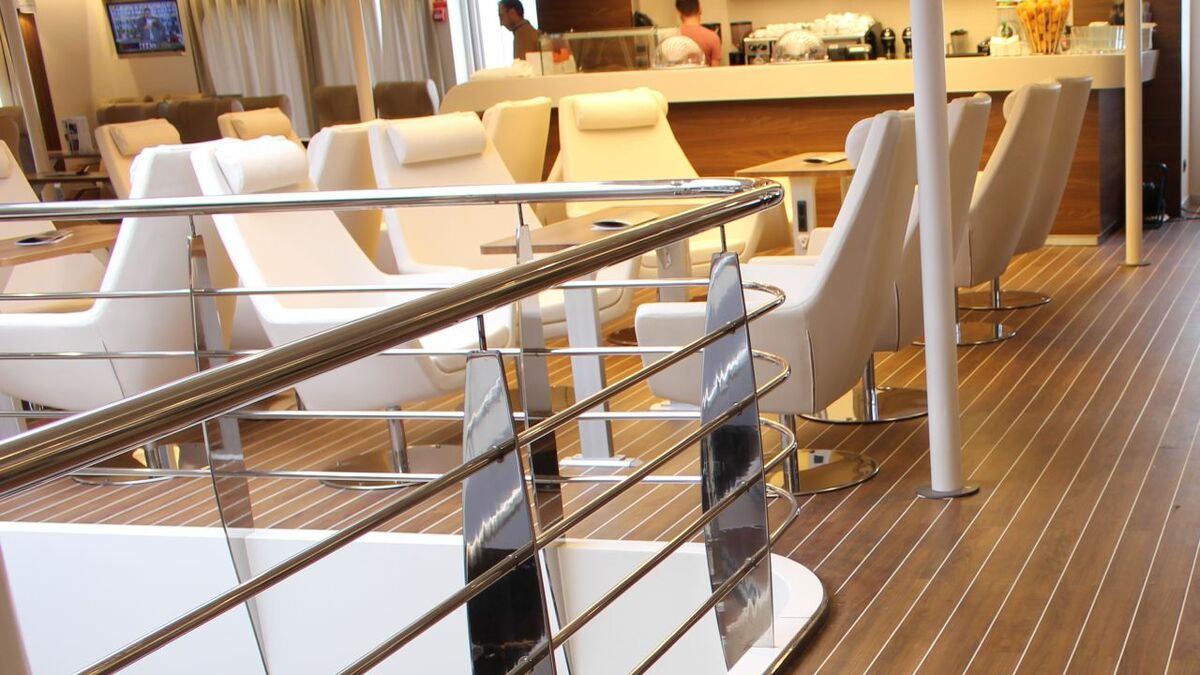
Bolideck LED has been deployed in a bar and passenger access areas on Mein Schiff 2. It is also part of a ‘floor diamonds’ artwork on the ship, developed in partnership with ICArt and design studio SOFTlab.
The novel artwork floor installation required close co–operation between the shipyard Meyer Turku, Bolidt and SPT Finland, while the vessel was under construction at the Finnish yard. The project’s success depended on fitting the LED lighting with the right sequencing and at the optimum time in the production process to enable Bolidt to complete the striking flush decking finish.
“Feedback from passengers and crew on Mein Schiff 2 has been very positive,” says Bolidt maritime division director Jacco van Overbeek. “Following on from this initial installation, Bolideck LED has attracted a lot of interest within the market and has been specified for several additional cruise vessel projects, with installations due to take place over the coming year or so.”
He says Bolideck LED offers designers a high degree of flexibility as it is available in a wide range of different formats. This allows the client to integrate LED lighting within a larger deck space or deck design, or alternatively to create specific functional features, in sports courts or exits for example. Bolideck LED also allows deck lighting to be programmed to form different patterns or to vary the intensity of individual LEDs. Bolideck LED lighting can also be made invisible when turned off.
“With any number of lighting patterns possible, Bolideck LED brings additional freedom of expression for cruise ship interior designers. But it could also be used to enhance safety,” adds Mr van Overbeek. “As with all our products the important thing is it can be seamlessly integrated with other systems onboard.”
Along with Bolideck LED, Mein Schiff 2 features over 10,000 m2 of Bolidt products on board. Other products used include Bolideck Future Teak, Bolideck Select Soft and Bolideck Select Hard.
Bolideck LED was developed in-house at the company’s research and development centre. Mr Van Overbeek says “In these uncertain times we need innovation more than ever before and, in this regard, Bolidt has a unique track record that will help it and its partners in the maritime sector find a way forward.”
Brittany Ferries, MSC, Ultramar
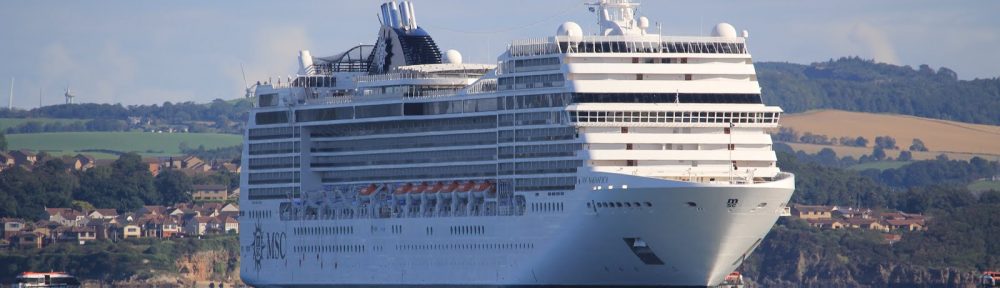
Elsewhere, Gerflor has supplied its Streamo floorings to cruise and ferry passengers, with its recent projects spanning the Mustay Karim Russian river cruise ship, the new LNG-powered ferry for Brittany ferries, Ultramar’s two latest fast ferries and MSC Grandiosa.
Gerflor product manager Karine Bouttier tells sister magazine Passenger Ship Interiors & Refurbishment Review “Their interiors will be enhanced with Streamo Karavel luxury vinyl tiles, offering a wide palette of wood and mineral designs but also with homogeneous floorings, available in more than 60 colours.”
Streamo is Gerflor’s dedicated range for marine IMO applications. This includes homogeneous floorings with patented surface treatment, decorative luxury vinyl tiles and a wide offering of additional finishes and accessories (skirtings, stair nosings etc). Gerflor can also supply wall protection, entrance matting and all the tools needed for optimal installation.
The company is expanding its products with a soon-to-launch IMO adhesive, a new non-directional homogeneous flooring and a rubber studded tile.
The sustainability trend within the passenger ship industry can also be seen in Gerflor’s processes. Ms Bouttier says “In line with our strong commitment to sustainable development and a focus on innovative solutions, Gerflor can supply pre–cut pieces for all crew cabins, enabling our customers to facilitate the installation process, save time and costs, and significantly minimise waste.”
She highlights how the company is forging links between onshore and maritime flooring. “Working in close co-operation with our customers and our internal group studio design, we try to bring more designs and reduce the frontiers between land-based buildings and the marine market to make the passengers and crew feel at home.”
Creating green solutions
Last year Sika launched a new visco-elastic technology, VEM X, used for damping structure-borne noise. Sikafloor Marine VEM X is a one-component polymer modified cementitious product that can be used instead of polyurethane-based products bringing identical product damping characteristics.
Using Sikafloor Marine VEM X also means delivery to the shipyard is easier as there are no dangerous goods to transfer. Polyurethane-based products must be delivered to special waste stations as they are a chemical product.
Sikafloor Marine VEM X is patented by Sika, which is in the process of phasing out its polyurethane–based PU-Red solution and replacing it.
Sika Services corporate head of marine Oscar Ovejero says “The idea was to create a green solution. Companies in the past used PU, but this is no longer welcome in the industry, so we started this project. What we have now is a one-component, elastic cementitious compound with an acoustic performance at the same level as before. The new product is faster to install and uses cheaper raw materials, benefiting the customer, and the waste is a paper bag and not metal.”
“We have provided a new solution in sustainability, price, installation and service.”
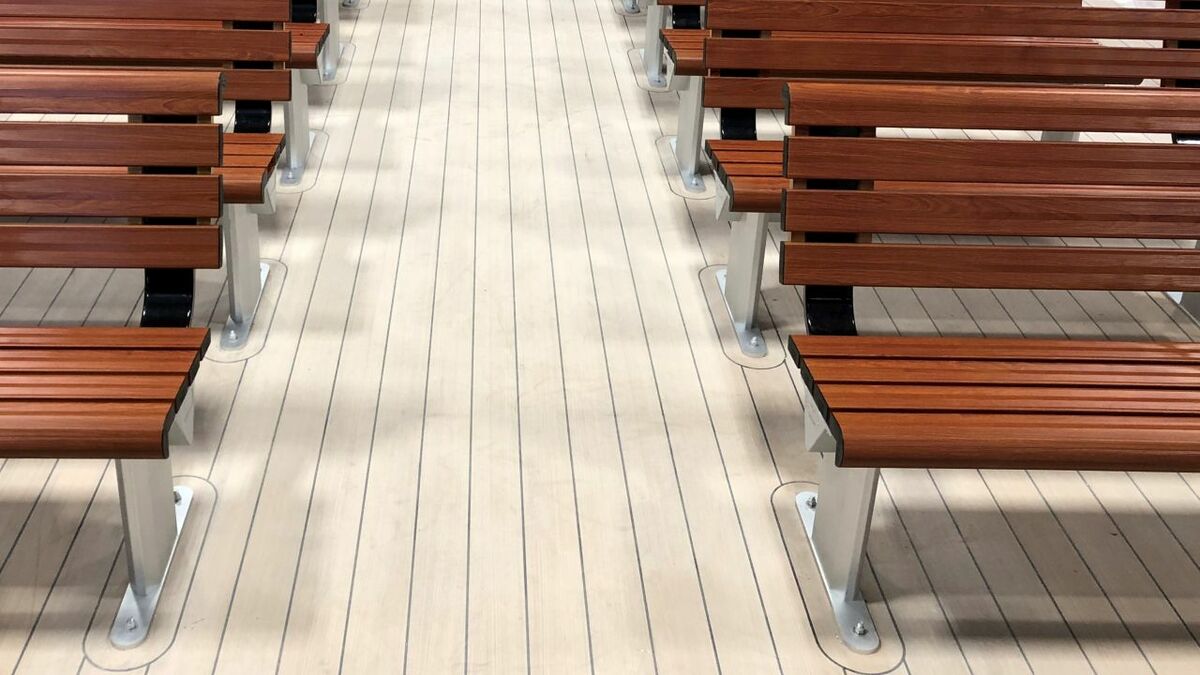
The company has also developed a complete product line of artificial teak exterior floors and interior decorative floors, constructed from resin. These have recently been installed on the passenger tourist ship Enhydra in San Francisco, carried out with Canada-headquartered A&A Installations, and have also been installed on cruise ships being built at Meyer Turku.
Mr Ovejero says “Our resin exterior artificial floors offer faster application than PVC or wood as there are no joints in between. The continuous waterproof membrane can also be used as a levelling compound.
He highlights the freedom of design and colours for the floors. “There is a lot of freedom in design in term of logos and cutting plane. We have 15 colours in total, and different colours can be combined.”
He says the colours have been tested by Sika for over 5,000 hours and the results show the “colours are stable, there are no surface cracks and it is easy to refresh the surface.”


 Wetravel2u's Weblog