The Great ‘Norwegian Escape’

Norwegian Escape reverse’s out from its hanger. Photo captured from TV stream from Myer Werft.
The largest cruise ship ever built by Norwegian Cruise Line, Norwegian Escape at 164,000 gross tons, was floated out at the Meyer Werft shipyard in Germany on Saturday 15/08/2015.

Project Breakaway Plus ships are two new passenger cruise ships to be constructed by Meyer Werft, for Norwegian Cruise Line (NCL). Upon delivery, the two ships will become the biggest German-built passenger cruise ships in NCL’s fleet.

The order for the first Breakaway Plus vessel was placed in October 2012 and The second ship was ordered in July 2013. They are scheduled to be delivered in October 2015 and mid-2017 respectively.

In September 2013, the two ships were named Norwegian Escape and Norwegian Bliss, through an online campaign held in the US, Canada (excluding Quebec), Spain, Germany and the UK.

The contract value of the project is estimated to be €1.4bn ($1.92bn). NCL has arranged for 80% of export credit financing through KfW IPEX-Bank of Germany.

Breakaway Plus ship design

NCL’s new Breakaway Plus ships will be similar in design to its Breakaway Class vessels, Norwegian Breakaway and Norwegian Getaway.

The Breakaway Plus class vessels will feature interiors with innovative designs, plush staterooms and world-class amenities surpassing NCL’s existing fleet of cruise ships. The new vessels will be approximately 10% bigger than the Breakaway class ships.


Photo captured from TV stream from Myer Werft.

An additional deck will be built to incorporate any new innovations. The total length of each cruise liner will be approximately 325m, width 42m and gross tonnage 163,000t. Each ship will have 4,200 passenger berths.

Bolidt will collaborate with Swedish company Tillberg Design and SMC Design to design synthetic floors and deck surfaces for the two Breakaway Plus cruise ships.

Breakaway Plus propulsion and machinery

Each Breakaway Plus vessel will be fitted with five tier II-type V48/60CR engines to be supplied by MAN Diesel & Turbo. Two of the five engines will have a power capacity of 14V each and the remaining three will have a capacity of 12V each.

“The engines will have a total power capacity of 76,800kW and use common-rail injection system, which is suited for both heavy fuel oil and distillate fuels, and helps reduce fuel consumption and gas emissions.”

The engines will have a total power capacity of 76,800kW and use common-rail injection system, which is suited for both heavy fuel oil and distillate fuels, and helps reduce fuel consumption and gas emissions.

Four propulsion transformers of 11,250kVA each and four distribution transformers of 2,500kVA each will be fitted. The remaining 11 transformers, whose efficiency will be between 550kVA and 2,500kVA, will be fitted in different parts of the ship.

The Breakaway Plus vessels will be fitted with transformers, azipods, converters, switchgears and motors supplied by ABB. A total of 19 transformers will be manufactured at ABB’s transformer plant in Brilon, Germany. ABB’s Turgi plant in Switzerland will manufacture the converters, while its facilities in Finland and Italy will manufacture the azipods and switchgears.

Advanced scrubber technology

Advanced scrubber technology developed by Green Tech Marine (GTM) will be used by the Breakaway Plus ships. GTM will provide five scrubbers for each ship.

These GTM-R scrubbers are small and occupy little cabin space and other service areas. The scrubbers will enable the ships to comply with the 0.1% sulphur limit in emission control areas (ECA), which is set to take effect in 2015. 

Norwegian Escape

Photo courtesy of cruisehive.com

Undocking the Norwegian Escape

Meyer Werft: Undocking the Norwegian Escape 

expected on 08/15/2015

Norwegian Escape in shipyard
Report thanks to
Undocking the Norwegian Escape: ship leaves the covered building dock of Meyer Werft on Saturday (15.08.2015) against 08.30 Clock

As the second ship in this year is the new cruise ship, the Norwegian ESCAPE leave the covered building dock of MEYER WERFT on Saturday, August 15, 2015. Extensive testing of security systems, mechanical and plant trials and completion of interior work had determined in the last few weeks the course in building dock II. The undocking of the ship that will be built for the American company Norwegian Cruise Line (Miami) starts at about 8:30 clock. After undocking and subsequent testing of thrusters, stabilizers and launching of lifeboats the ship will moor at the pier in the shipyard harbor.There, the lining of the chimney and the mast is fitted with a mobile crane.

Weather-related changes over time when undocking possible.

To facilitate the application of the Norwegian Escape at the pier, which is currently located at the fitting first swimming part of the Ovation of the Seas will be hauled. The second float member, which is currently in the building dock II shipyard is expected undocked on Friday afternoon and then also within the shipyard harbor. After undocking the Norwegian Escape are the two parts of the swimming Ovation of the Seas, which will be completed in spring 2016 maneuvered for further construction in the building dock II free.

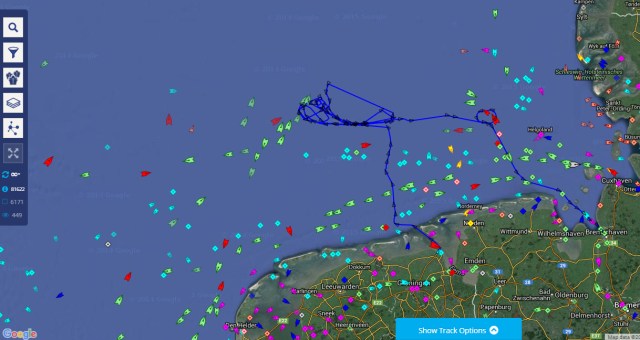
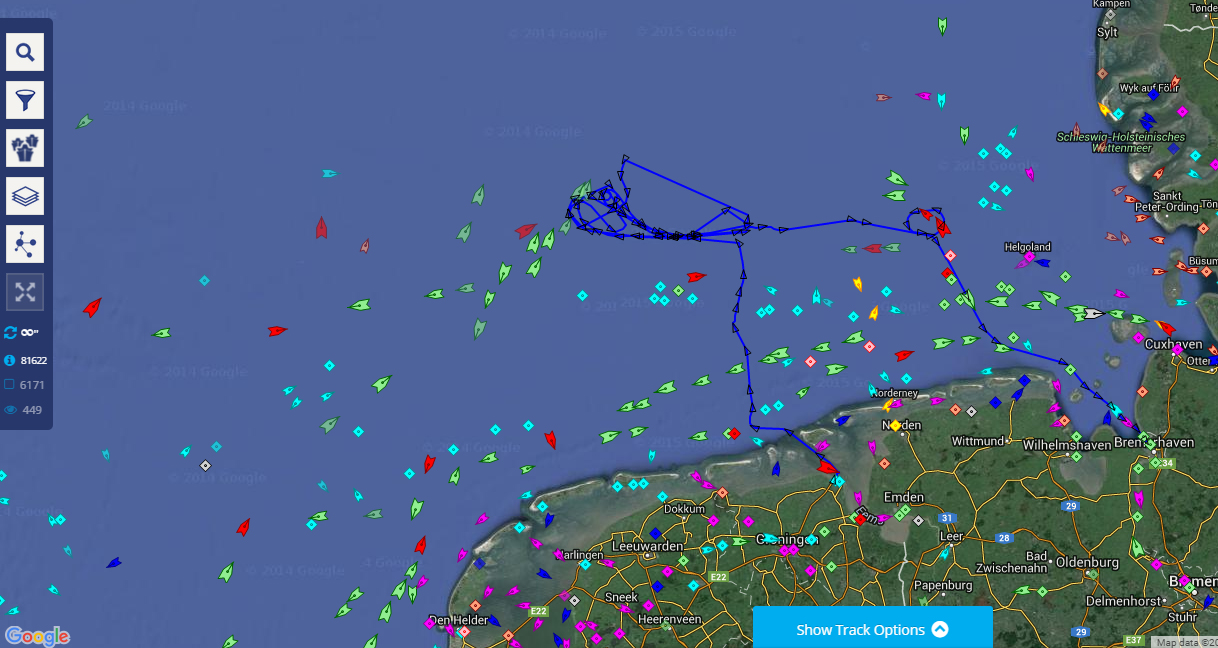
At the fitting of the MEYER WERFT the final work and tests are carried out on the ship in the following days. Few days later, the first members of the crew then relate their cabins on the ship and familiarize yourself with the ship and its various systems and equipment. Already in mid-September will start their EMS overpass towards the North Sea, to ask where their seaworthiness prove the Norwegian ESCAPE. On September 5, we will make the ship nor the backdrop for this year’s NDR 2 Papenburg Festival.

The 164,600-gt construction has an overall length of 324 meters and is 41.4 meters wide. It is built to meet current safety regulations and meets all known environmental regulations.

A webcam is under www.meyerwerft.de transmit the undocking.

Should river lines be worried about Crystal?


By Michelle Baran

Throughout the last several years of seemingly unstoppable growth in the river cruise market, ocean cruise lines have resisted getting in on the river action, a segment of the cruise market that, while clearly very popular, represents entirely different economics of scale (in other words, much lower passenger volumes) than ocean cruising.

So when Crystal Cruises announced a massive expansion initiative, including plans for two new river cruise vessels, it effectively became the first ocean line to cross into the river world.

Until the Crystal announcement, the only significant crossover in Europe had been in the opposite direction: river cruise heavyweight Viking Cruises launched its first ocean-going vessel this year (there are several smaller scale examples, such as Haimark, which has both river cruise vessels and a coastal cruise vessel, as well as the now-defunct Peter Deilmann Cruises and Cruise West, both of which dabbled in river and coastal cruising). And Crystal has been involved on the rivers before, via a marketing partnership with AmaWaterways.

Crystal hasn’t revealed much detail about the river cruise piece of its ocean-yacht-river-jet expansion plan. Lloyd Werft, the German shipyard that will construct Crystal’s new ocean ships, is also building two luxury, Crystal-branded river cruise vessels that will operate in Europe. (Crystal CEO Edie Rodriguez told Travel Weekly’s Tom Stieghorst that Crystal will reveal additional information about its river cruise product at a later date for competitive reasons.)

Looking at all of this, should river cruise lines be somewhat nervous? Could Crystal entering the river cruise business put a dent into the all the hard work they’ve put into creating, growing and developing the market these past years?

Well, Crystal still has to fit those plans into the same 38-by-410-foot dimensions that all river cruise vessels are limited to, due to the locks and bridges along Europe’s inland waterways. In that regard, Crystal will be up against the same innovation challenges the river lines have been grappling with through these growth years: how to maximize space and onboard offerings when square footage is so limited.

Additionally, for now at least, it’s only talking about two vessels, a tiny fraction of the overall river cruise inventory in Europe.

But under its new ownership of Genting Hong Kong, which clearly has ambitious plans for the company, Crystal could have enough resources at its fingertips to at least make some waves in the river cruise market, both from a hardware as well as from a marketing point of view.

“I think Crystal is doing a very smart thing,” said Donald Baasch of American Canyon, Calif.-based LastCallCruises. “They might as well make money on their customers instead of letting someone else have them, especially if they believe that a lot of them will inevitably want to try a river cruise.”

So, all told, surely the highly competitive river cruise industry has its eye on Crystal’s plans, but I doubt they are shaking in their boots quite yet.