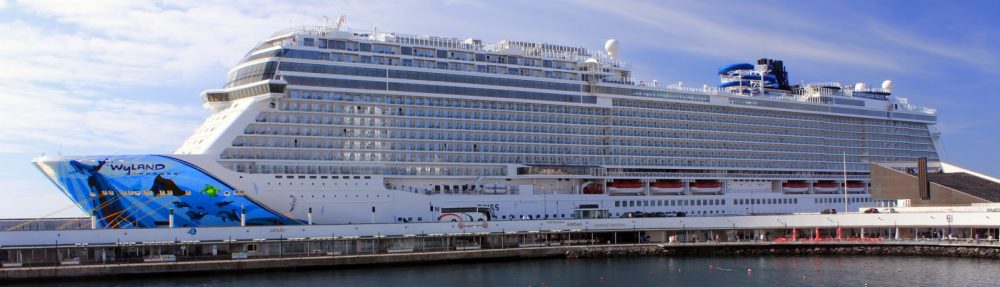
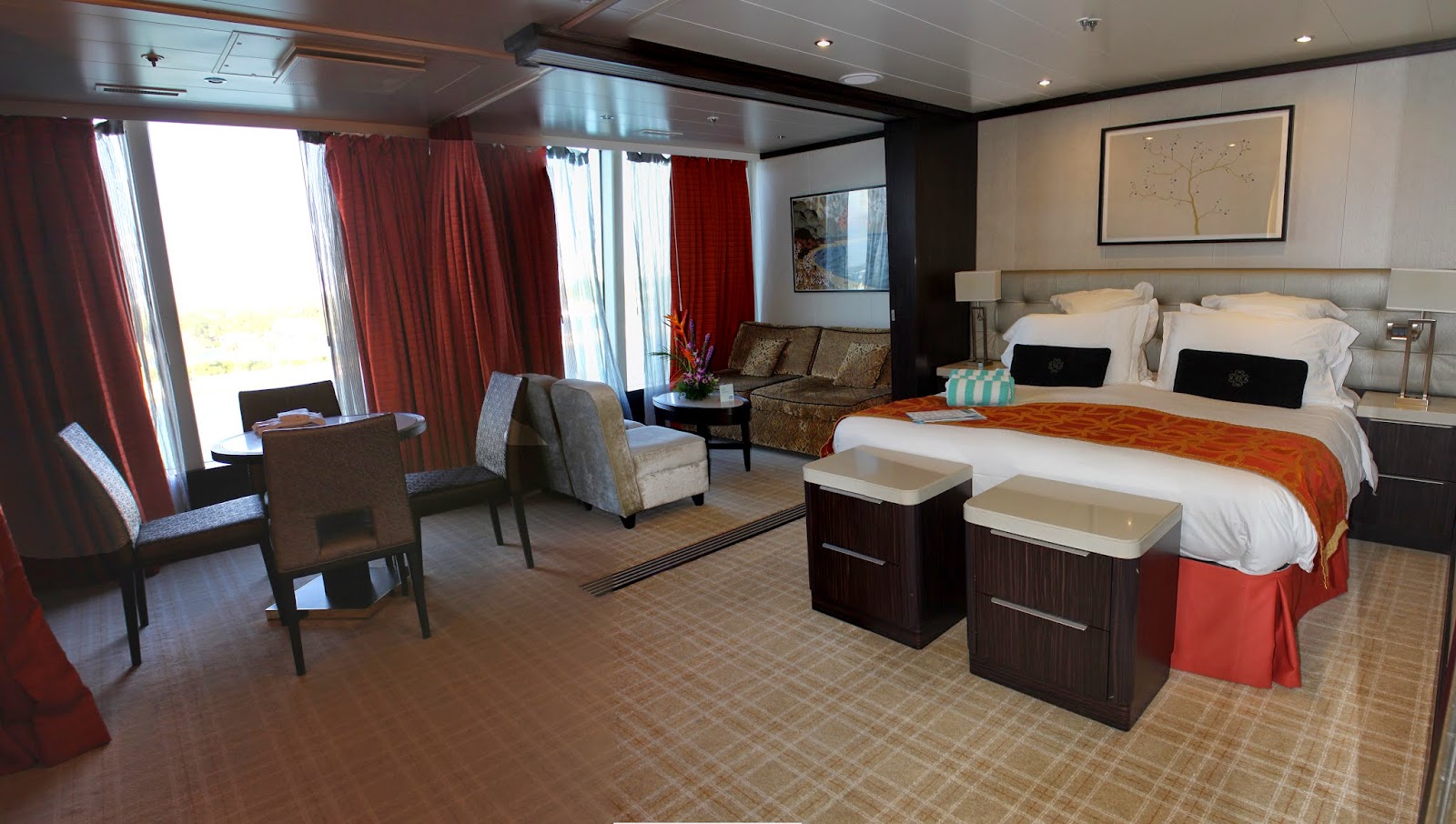
Norwegian Star Suite, photo by Dave Jones
Royal Caribbean International is the latest cruise line to develop a suite class, extending the privileges that come with upper-level stateroom bookings beyond the four walls of the suite itself.
Suite guests now constitute a special class on brands ranging from deluxe Cunard Line and Celebrity Cruises to mass-market players such as Norwegian Cruise Line, MSC Cruises and, soon, Royal Caribbean.
Royal Caribbean president Michael Bayley told travel agents attending the Vacation.com annual conference onboard Oasis of the Seas that Royal is working on a Suite Class package of amenities and will roll it out sometime in 2016.
Bayley said the general idea was to make it an all-inclusive product, though Royal spokesman Harrison Liu said the exact list of all-inclusive elements is still being determined.
Bayley was president of Celebrity Cruises when that line conceived its suite class. The category became operational last month on all Celebrity ships except the Xpedition.

Suites have always been larger, nicer and more expensive than ordinary cruise staterooms. What is new is the effort to make areas outside the suite itself exclusive to suite guests and to generally raise the level of service, value and privilege that go with suites.
Celebrity’s new suite class, for example, includes a 120-seat restaurant, Luminae, reserved exclusively for suite guests.
Those in higher category suites, such as Celebrity suites and above, have exclusive access to Michael’s Club, a lounge that was originally a pub-style venue on Celebrity ships.
And in top quarters — Royal, Penthouse, and Reflection suites — guests get more perks including a free premium beverage package, unlimited specialty dining, free unlimited Internet access and a minibar restocked daily with beer, soda and water.
Suite class on some brands, including Norwegian Cruise Line and MSC Cruises, includes segregation from the rest of the ship in an enclave of cabins behind a key-card access point.
The top suites on Celebrity Cruises’ newest ship, the Reflection, also have this feature.
Beth Butzlaff, managing director of cruise at the Virtuoso luxury consortium, said that the spread of suite class is mainly a result of non-luxury cruise lines trying to retain their top-shelf customers.
“I think it’s a trend because all these premium [lines] aren’t trying to pretend to be luxury, but they all have luxury travelers,” Butzlaff said, referring to passengers who are susceptible to pitches from lines higher on the luxury food chain.
Keeping guests loyal by carving out areas of the ship where they can congregate with other luxury customers is an attempt to forestall such defections.
“It’s been successful, from what we can see,” Butzlaff said.
Another factor has been the growing recognition of the revenue brought in by the highest-value passengers on a ship.

“The premiums are finding this type of client is more loyal, they spend more onboard, they obviously book the higher suites and they take more shore excursions, so the investment they’re making is going to pay off,” Butzlaff said.
A third wrinkle is the growth of multi-generational travel and the desire of some customers who would typically go on small, luxury ships to travel with extended families.
Suite classes respond to that. Butzlaff said The Haven or SeaPass, a gold-colored version of a key card now used by Royal Caribbean for suite guests, “accommodates that luxury client [who] is wanting to travel with their families and still have a luxury experience.”
As to whether the addition of suite class perks gives cruise lines cover for raising suite prices, Butzlaff said it wasn’t clear.
“There’s different models for different lines,” she said. “With these suites, there is some comparison with the luxury lines as far as price, but the value is still very strong.”
Travel agents can make lucrative bookings from suite products, so the spread of the suite class concept is a boon for agent commissions. Butzlaff said the suite class idea goes back at least as far as the 2004 introduction of Cunard Line’s Queen Mary 2, which resurrected the liner concept and its formal class structure.
Cunard offers Grill Class on its ships, which gives suite customers access or priority seating at its Queen’s Grill and Princess Grill restaurants and associated lounges. On Queen Elizabeth and Queen Victoria, Cunard offers suite guests an outdoor courtyard area for exclusive al fresco dining.
Around the same time, Norwegian began building a separate suite section on its ships that eventually came to be called the Haven. The concept has been picked up by MSC as the MSC Yacht Club starting in 2008 with the launch of its four Fantasia-class ships.

On MSC, the concept includes a separate lounge, pool area, bar, concierge reception area and restaurant, as well as a private entrance to the ship’s spa. Royal Caribbean has built increasingly elaborate suites as its new ships bulked up and passenger counts rose.
The 5,400-passenger Oasis of the Sea and Allure of the Sea offer Royal Loft Suites, duplex accommodations that are a feature of Cunard and some other luxury lines. Already, Royal offers an exclusive concierge lounge to senior-suite guests on most ships and a private area of the pool deck to suite guests beginning with Voyager-class ships and those built afterward.
It also provides private breakfast and lunch seating in specialty restaurants on Voyager- and Freedom-class ships, as well as a separate restaurant on Quantum-class ships, with plans to add them to Oasis-class ships.
 Cruise lines have long been loath to depart from the traditional business model of sailing at 100% occupancy. But recently they have started to test moves away from that paradigm.
 In the third quarter of 2013, Carnival Cruise Line adopted a strategy of holding firm on pricing even if its ships sail at slightly lower occupancies.
 Rick Sasso, president of MSC Cruises USA, said a new pricing structure introduced at MSC last year was meant in part to encourage early bookings.
 Wetravel2u's Weblog