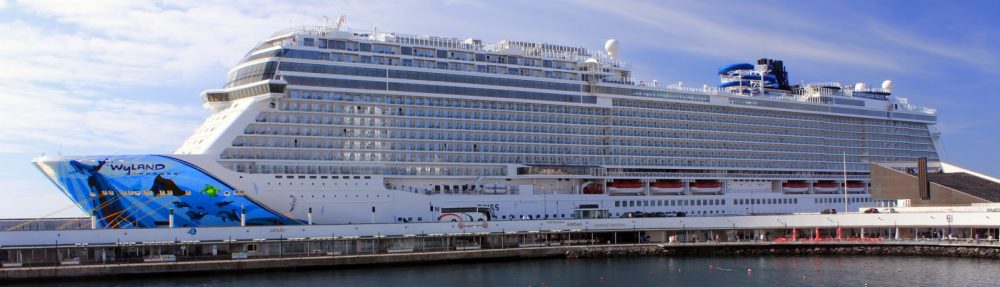
Cruise companies increase focus on pricing discipline

Cruise lines have long been loath to depart from the traditional business model of sailing at 100% occupancy. But recently they have started to test moves away from that paradigm.

In the latest attempt by cruise lines to break the cycle of last-minute discounting to fill ships, Royal Caribbean Cruises Ltd. Chairman Richard Fain said that starting in March, the company had stopped cutting prices on close-in sailing dates for all of its brands, including Celebrity and Royal Caribbean International.

Last-minute pricing discipline has become increasingly important because cruise lines admit that late discounting undermines their marketing assertions that only by booking early will passengers get the best fares.

“Depending on the type of cruise, that last minute may be 10, 20 or 30 days out,” Fain said in a conference call with Wall Street analysts. “But from that point on, we will hold our price at the prior level.”

Fain’s pledge applies only to North American itineraries and excludes the two- to four-day cruises, where last-minute sales are part of the typical booking dynamic.

Fain conceded that in the short term, it would mean that some RCCL ships would depart less than full. But he said that in the long run, price integrity would boost the brand and lead to higher revenue.

“It was really important to strengthen our brand, because in the long run it is our brand that is going to drive our yield improvements,” Fain said.

In the third quarter of 2013, Carnival Cruise Line adopted a strategy of holding firm on pricing even if its ships sail at slightly lower occupancies.

“We believe this will make Carnival’s pricing recovery more achievable as we move through 2014,” Carnival Corp.’s then-vice chairman, Howard Frank, said at the time.

Other lines, while stopping short of a pledge to halt last-minute discounting, said they have been doing everything possible to persuade customers to book cruises earlier.

“We don’t have a specific pricing promise, but I can absolutely tell you that our goal is to raise pricing as we get closer to sailing,” said Andy Stuart, president of Norwegian Cruise Line. “It’s a philosophy that my boss, Frank Del Rio, has lived by — a strategy of marketing to fill rather than pricing to fill.”

The time could be ripe for such a strategy. One factor driving last-minute discounting has been the glut of capacity in the Caribbean over the past 12 to 18 months. But starting this month, industrywide capacity in the region began to shrink year over year. With some berths shifting to other markets, cruise lines might have a better shot at maintaining a no-discounting model going forward.

Fain said last-minute discounts have a disproportionately large impact on sales efforts.

“They upset many of our most loyal customers by creating an uncertainty about the prices they pay,” he said. “They cause headaches for our travel agency partners, who don’t know what price they should rely on, and they undermine our brand image.”

Some travel agents have taken note of the philosophy shift at several lines.

“I think Norwegian and Royal are both trying to discount less,” said Debbie Fiorino, senior vice president of CruiseOne/Cruises Inc.

Fiorino said that agencies doing business under the CruiseOne/Cruises Inc. banner have more business on the books for 2016 than they did for 2015 at this point last year, and efforts to encourage early bookings by the cruise lines was one reason.

Other agents said Royal still has room to improve its policy.

“Almost all of our price-drop issues occur in the 30- to 60-day window before sailing, when everyone who booked early is in penalty because that is when Royal is most aggressive,” said Don Baasch, president of Last Call Cruises in the San Francisco Bay area.

Vicki Freed, Royal Caribbean International’s senior vice president of sales, trade support and services, said that by eliminating last-minute discounts, Royal expected to affect the whole psychology of the purchase decision, encouraging earlier action at every stage of the booking cycle.

Beyond eliminating discounts, several lines said they were taking a variety of steps to encourage early booking. These include announcing itineraries earlier, opening ships for booking further in advance and using yield management to encourage early demand.

Rick Sasso, president of MSC Cruises USA, said a new pricing structure introduced at MSC last year was meant in part to encourage early bookings.

“We came out with very aggressive group pricing, which is typically your most advanced cycle of bookings,” Sasso said. “It allows you to be fuller sooner. Then, you come out with an added-value pricing strategy. That has probably become the basis of what most lines are trying to do. So you’re not discounting the price, you’re giving more added value.”

Fain said it is too early to measure the success of the change in close-in discounting practices. But he indicated that the policy is here to stay.

“We think that getting our customers out of this sort of used-car-salesman type of mentality will be good for the brand, good for their experience and therefore lead to larger yields in the long run,” he said.

Wall Street analysts responded favorably to the idea.

In a note to investors, Susquehanna Financial Group analyst Rachael Rothman wrote: “While holding near-in price will cause near-term pain, given it is too late for [RCCL] to make up the difference by marketing its 2015 itineraries earlier, we believe this is the appropriate strategy to reinforce the brand image and improve profitability over the long term.”

Patrick Scholes, an analyst with SunTrust Robinson Humphries, said benefits from Royal’s move could be widespread.

“Getting rid of the ‘used-car-salesman mentality’ and eliminating last-minute deals dovetails with [Frank Del Rio’s] New Deal at Norwegian Cruise Line Holdings and could buoy the industry at large,” Scholes said.

Royal Caribbean boss vows to cut out last-minute discounting

By Lucy Huxley

The chief executive of Royal Caribbean is stamping out last-minute discounts on his cruises in the US and says he would look to extend the new policy to other markets including the UK if it is a success.

The line currently reduces fares 30, 20 and 10 days from departure, a practice that Michael Bayley says “devalues the whole product”.

“From 2016, the price will never drop. There will be no discounts beyond 30 days from departure,” he said.

Bayley accepted the new stance could lead agents to sell other cruise lines which “continue to discount all the way to departure”, but said he would rather lose that business and improve his yields and margins.

“Last-minute discounting just devalues the product and nobody, neither us nor the travel agents, is making any money,” he told Travel Weekly during the two-day naming celebrations of Anthem of the Seas in Southampton.

“We are not doing anybody any favours by discounting. We work too hard developing these phenomenal products to then charge too little for them,” Bayley added.

“We believe we have the best vacation products in the entire industry, offering customer the best value anywhere, and we believe it’s time for our customers to pay a little more for them.”

Asked if he felt this would encourage the whole cruise sector to stop devaluing its product, Bayley replied: “This is not about cruising in general. This is purely a focus on Royal Caribbean and what we feel is right for our brand.”

Royal Caribbean launched Anthem of the Seas this week and also has Explorer of the Seas coming back from a multi-million dollar refit tomorrow (Thursday).

The line also has Harmony of the Seas launching in spring 2016 and a third Quantum-class ship, Ovation of Seas, coming into service in 2018.

PhoCusWright report on mobile bookings shows rapid growth

PhoCusWright report on mobile bookings shows rapid growth

By Danny King

Plane and phoneIn the U.S. travel industry, where 2% to 3% growth is considered solid and 5% is exceptional, mobile booking continues to surge at exponential rates, according to a recent study by PhoCusWright.

In 2015, Americans will book $39.5 billion worth of reservations on their mobile devices, accounting for 12% of all travel sales, PhoCusWright reported in its annual Online Travel Overview last month.

Those numbers represent more than a fivefold jump from the $6.15 billion in sales and 2% market share that mobile represented in 2012, and they illustrate the growing ubiquity of the smartphone- and tablet-toting traveler.

“The channel is getting a lot of attention from both OTAs [online travel agencies]and suppliers,” PhoCusWright wrote in its 90-page report. “Every serious player in the online travel space is prioritizing mobile technology development and pushing hard for travelers’ attention in the form of traffic, transactions and app downloads.”

PhoCusWright is owned by Northstar Travel Media, the publisher of Travel Weekly.

Within the travel industry, the hotel sector is leading the way with regard to mobile booking, and that trend is shortening the booking window considerably.

At the annual PhoCusWright Conference in Florida last month, RBC Capital Markets’ managing director, Mark Mahaney, said that as more travelers book with smartphones, the idea of booking either a same-day or day-prior reservation is becoming more of a rule than an exception.

And while surging airfares and the ever-shrinking seat capacity will make many travelers gun-shy about rolling the dice with a last-minute airline booking, a number of hoteliers have demonstrated a propensity to offer last-minute discounts in order to unload unused inventory for the night.

As a result, about 12% of the online bookings directly with hoteliers will be via a mobile device this year, compared with about 8% of car rental bookings and about 6% of airline ticket reservations, PhoCusWright said. And by 2015, about a third of the bookings U.S. hoteliers process online will be made using mobile devices.

“Mobile is creating a new growth engine,” Mahaney said.

Still, airlines are investing big in mobile-distribution technology to capitalize on more computer-tablet use by travelers. As a result, airlines are expected to overtake car rental companies when it comes to the percentage of supplier-direct online bookings transacted on mobile devices.

Additionally, mobile growth has further pitted suppliers, especially hoteliers, airlines and car rental companies, against OTAs. While suppliers have started investing in expanding their mobile presence as a way to limit bookings through the OTA distribution channel, which remains far more expensive for the them, onine giants Expedia, Priceline and Orbitz have managed to stay a step ahead of the suppliers.

Indeed, while OTAs’ mobile U.S. bookings growth between 2012 and 2015 will be slightly slower than total mobile bookings growth, mobile bookings will account for 29% of the OTA market by 2015, compared with 27% for the total online market.

And those numbers may actually be conservative. At Orbitz Worldwide, which accounts for about a fifth of OTA bookings by Americans, 27% of hotel bookings were via mobile devices, CEO Barney Harford said at the PhoCusWright Conference.

What’s more, the mobile booking numbers for hotels don’t include smartphone owners who use “click-to-call” features that provide direct phone access to a hotelier’s call center. So for every hotel booking via smartphone, there were three or four cases where the user clicked through to a call center or booked via another distribution channel, according to PhoCusWright.

Still, PhoCusWright suggested that carriers and hoteliers have left money on the table by not creating online content quickly enough to meet the growing number of both searches and bookings from smartphone and tablet users.

As a result, newer companies like Hotel Tonight have capitalized by creating smartphone apps geared to streamline last-minute hotel reservations. The 3-year-old company had a $45 million funding round in September.

“Mobile is beginning to take off, but there is still much to be done to drive transactions,” PhoCusWright asserted in its report. “For the most part, entrenched players from airlines to hotels to OTAs have not been on the cutting edge of the devices’ capabilities.”

What effect such a surge will have on supplier pricing remains unclear, as the mobile market appears bifurcated. For example, people who book via smartphones appear to be far more likely to make a spur-of-the-moment travel decision. As a result, Harford said that the percentage of Orbitz’s hotel bookings that were same-night reservations had risen to 20% in the third quarter, with 60% of those being last-minute bookings made on mobile devices.

Meanwhile, the behavior of a prospective traveler using an iPad, Nexus or other tablet is more similar to a desktop or laptop user, as the larger screen allows for better pricing comparisons as well as more facility to coordinate a multi-supplier trip. As a result, airline and cruise line suppliers are emphasizing interface redesigns for their websites to better serve tablet users.

Either way, the buzz at the PhoCusWright Conference among both attendees and suppliers was the sense that the proliferation of mobile searches and bookings will eventually enable suppliers and distributors to get past the booking stage.

Sabre Labs’ director, Sarah Kennedy Ellis, told conference members that hoteliers will be able to use GPS-based location features on customers’ smartphones to better locate incoming guests in order to greet them and prepare their rooms accordingly.

Suppliers have another chance to improve the smartphone users’ travel experience via voice-command features, Hudson Crossing analyst Henry Harteveldt said.

“Travel companies’ abilities to make better use of travelers’ locations, to send ‘right time, right place, right price’ offers, will help, as well, especially for ancillary purchases at hotels and resorts and for in-destination services like shopping, dining and entertainment,” he said.

Additionally, more mobile booking may force suppliers and OTAs to better cooperate and share traveler information.

“One possible opportunity is to offer itinerary management that serves the entire trip experience,” PhoCusWright suggested in the report. “Some of the most convenient and fastest-growing mobile travel tools, such as mobile boarding passes and car rental unlocking, will require suppliers’ cooperation in order for OTAs to provide them.”