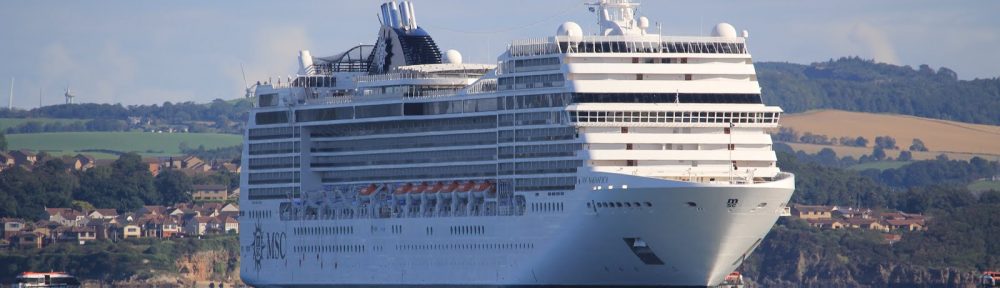
MSC Expands Cruise Shore Power Plan to More Ports

MSC Euribia is 100% green-powered, the industry’s first.

MSC Group has unveiled what it said was the next phase of its shore power plan for both MSC Cruises and Explora Journeys.

At least 15 new ports between 2024 and 2026 will be added to the existing use for its vessels to plug into shoreside electricity grids to further demonstrate its commitment to, and continued progress towards, decarbonization, as well as reducing emissions from its fleet of ships while berthed in ports, the company said.

The new 2024-26 shore power plan includes at least five Italian ports; Barcelona and Valencia in Spain; Stavanger and Norfjordied, Norway; Miami, USA; Copenhagen, Denmark; Marseille, France; Rotterdam, the Netherlands; Valletta, Malta and Stockholm, Sweden.

The company intends for its ships, both MSC Cruises and Explora Journeys, to fully utilise shore power facilities at all other ports where it operates throughout Europe and the rest of the world when they are made available.

MSC Cruises ships have since February 2023 successfully used shore power at the ports of Southampton, UK and Kristiansand, Norway and later this summer the company will test the facilities at the Norwegian port of Haugesund. Other European trials this year are planned for a range of MSC Cruises’ ships at Bergen and Alesund in Norway and Warnemunde in Germany.

MSC Virtuosa taking shorepower in Alesund, Norway, photo credit Spacejunkie2(Flickr)

MSC Cruises will also use shore power in the German ports of Hamburg this winter and at Kiel in the summer of 2024.

MSC Cruises last year signed a memorandum of understanding with Cruise Baltic for shore power in the Baltic Sea area. Cruise Baltic has 32 ports and destinations in its region that are committed to increasing the number of shore power facilities, the company said.

Shore power capability has been fitted on all MSC Cruises’ new ships as standard since 2017 and together with retrofits completed on other vessels, 67 per cent of MSC Cruises’ total capacity is equipped with the technology. More ships will be retrofitted as the ports on their sailing itineraries make shore power available.

All Explora Journeys’ ships will also feature shore power capabilities. Explora I, the first ship in the new brand’s fleet, will first come into service on July 17 this year.

Linden Coppell, VP of Sustainability & ESG, MSC Cruises, said, “Shore power is an essential factor on our journey towards net zero greenhouse gas (GHG) operations. All of our newbuilds since 2017 are equipped with the ability to plug into local power grids and we are rolling out retrofits on the other vessels in our fleet.

“Our shore power plan actively demonstrates our ambition and that we are fully committed to reducing emissions from our ships, including while in ports,” she said.

“We have invested heavily in hybrid exhaust gas cleaning systems to substantially reduce local air quality emissions and we now need more ports across Europe and beyond to introduce shore power as quickly as possible. By making significant reductions to emissions in ports, we are fulfilling our responsibility to the docks and coastal communities that our ships visit and serve.

“Together with the use of LNG fuel, improving energy efficiency, utilizing innovative wastewater treatment and waste recycling, we are making positive strides in playing our part to address climate change and protect ocean biodiversity.”

Princess Ship Completes Drydock in Rotterdam

The Sky Princess successfully completed a routine drydock at the Damen Verolme in Rotterdam earlier this month.

According to the Dutch shipyard, the Princess Cruises vessel spent a total of 16 days in the facility undergoing regular maintenance, in addition to technical upgrades.

The scope of work included the installation of class-certified parts for a new air lubrication system and a full hull painting program, Damen said.

A total of 1,200 crew members and 700 contractors worked around the clock to complete the project, which the shipyard called a logistical challenge.

Following the successful drydock, the Sky Princess resumed service on May 5.

Spending the summer in Northern Europe, the 2019-built vessel is presently offering a series of cruises departing from Southampton, England.

The program includes itineraries to Western Europe, the Norwegian Fjords, the Mediterranean, the Baltic and more.

In May, for instance, the ship is offering a seven-night cruise to Scandinavia, in addition to a special 14-night cruise to Iceland and Norway.

Also sailing roundtrip from Southampton, the two-week cruise features visits to Akureyri, Isafjord and Grundarfjordur in Iceland, as well as Skjolden, Olden and Alesund, in Norway.

Following its summer program in Europe, the Sky Princess is set to return to North America in November.

Starting on Nov. 25, the vessel offers a series of itineraries to the Caribbean and the Bahamas departing from Princess’ cruise terminal in Port Everglades, Florida.

Fourth in a series of six ships known as Royal Class, the Sky Princess originally entered service in 2019.

Built by the Fincantieri shipyard in Italy, the 141,000-ton cruise ship was followed, in 2020, by the Enchanted Princess – which also completed a drydock recently.

After arriving in Europe in March, the 3,660-guest vessel underwent routine work at a facility of the Fincantieri Shipyard in Palermo, Italy.

A third ship also spent time at a shipyard recently, as the Sapphire Princess visited the Vigor Shipyard on the U.S. West Coast for regular maintenance in April.

AIDA Reaches Milestone in Decarbonization Efforts

AIDA Cruises has expanded the use of shore power in its fleet, reaching a significant milestone in its decarbonization efforts, according to a press release.

The AIDAsol was recently connected to shore power in nearly all ports during its recent voyage from April 16 to 21, 2023.

The ship was supplied with green energy from shore in Rostock-Warnemünde, Aarhus (Denmark), Kristiansand (Norway), and Hamburg.

The growing shore power infrastructure in Northern Europe has made it possible for AIDA Cruises to achieve this milestone.

AIDA President Felix Eichhorn stated that the company’s goal is to use shore power in all ports where port infrastructure is available. He added that the company’s investments in clean technology are actively supporting the goals of the EU’s “Fit for 55” program to build a corresponding infrastructure in all major EU ports by 2030.

During its recent voyage, AIDAsol made history by being the first cruise ship to conduct shore-side and shipboard integration tests on a newly built facility in Aarhus, Denmark. The official opening of Denmark’s first shore power plant for cruise ships is scheduled for later this year.

The AIDAsol was also supplied with energy from shore during its stop in Kristiansand, Norway, which it already did in 2022.

AIDA Cruises has been investing in sustainable cruising for many years, with a goal to achieve carbon-neutral ship operation for its fleet by 2050.

The company has been considering the use of environmentally friendly technology since 2004, and more than ten years have passed since it was able to start the usage of shore power in regular operation with an AIDA ship in Hamburg Altona in 2017. The company signed a memorandum of understanding in April 2022 with Cruise Baltic, a network of 31 ports and destinations, to use shore power in the ports of the Baltic Sea region.

AIDAsol’s arrival in Hamburg, its home port for this year’s summer season, marked another significant moment in AIDA Cruises’ decarbonization efforts. The ship was connected to Europe’s first shore power plant for cruise ships and switched off its main engines shortly after docking at the Cruise Center Altona.

The expansion of the use of shore power is part of AIDA Cruises’ efforts to use low-emission liquefied natural gas (LNG) and other alternative energy sources such as batteries and fuel cells. The company is working with various partners to find solutions for the use of regenerative and synthetic fuels.

“AIDA Cruises shows what can already be possible today,” said Eichhorn. “We can only achieve the energy transition together.”