The Port of San Francisco is dedicating its new cruise terminal, which will accommodate longer cruise ships, in a Sept. 25 ceremony.
Situated on the city’s famed Embarcadero, Terminal 27 totals 88,000 square feet on two levels. An older maritime shed was demolished to make space for the terminal, which had a soft opening with the arrival of a Princess Cruises ship last week.
The new terminal comes with an overhead gangway for boarding passengers along the Pier 27 apron and shoreside power infrastructure to permit docked ships to shut down their onboard engines.
A three-acre triangular paved area between Pier 27 and Pier 29 has been developed as a ground transportation and provisioning area.
The existing terminal at Pier 35 will continue as a secondary terminal when there is more than one cruise ship in port.
The port currently gets between 40 and 80 calls a year. That is not expected to change, although the passenger count will grow because the ships docking at the pier are getting larger.
Redevelopment of Pier 27 has been in the works since 2007.
: £2.4bn poured into Britain’s coffers last year with more than 1m passengers getting on boardIndustry’s
contribution to country’s economy highlighted at Barcelona convention
Ship shape: the port at Southampton welcomes a cruise liner
The cruise industry contributed £2.4billion to Britain’s economy last year, with passengers spending an average of £80 a day each during visits to UK ports such as Southampton and Dover
Latest figures compiled by CruiseBritain show that in 2013 there was a 10% year-on-year increase in cruise embarkations, to 1.04 million, and a 20% increase in day visits, to 866,000. The spend includes crew expenditure, cruise line purchases, ship repair, and employee salaries.
“Cruise tourism is a valuable source of income to ports and destinations across Britain and is increasingly being factored into local and regional tourism,” said Daren Taylor, chair of CruiseBritain, speaking at the Seatrade Med convention in Barcelona.
In the Mediterranean, while other tourism sectors have seen no increase in performance, cruising has grown in volume by 43% since the global recession struck in 2008.
Across the region, there were 27 million passenger movements: 19 million in the Western Med, five million in the Adriatic, and – reduced by concerns over violence in the Middle East – three million in the Eastern Med.
Referring to the fact that most cruise calls to ports in Ukraine have been cancelled this summer, David Dingle, chairman of Carnival UK, said political conflict in the Black Sea area dates back centuries. “They are a fact if life we just live with,” he said.
A proposal to provide an alternative to dredging a new channel for cruise ships visiting Venice was submitted to the Italian government this week.
Lagoon show: a cruise ship sails past St Mark’s Square in Venice
A £101million floating jetty, capable of handling up to five ships at a time, would be set up in the sea near Bocca di Lido, and passengers would be transported into the city’s cruise terminal by a large, environmentally-friendly catamaran.
Carnival’s David Dingle still believes the deep channel proposal to be the preferred option, and told Seatrade Med: “What we want is certainty, but we want to do the right thing by all the stakeholders in this debate.”
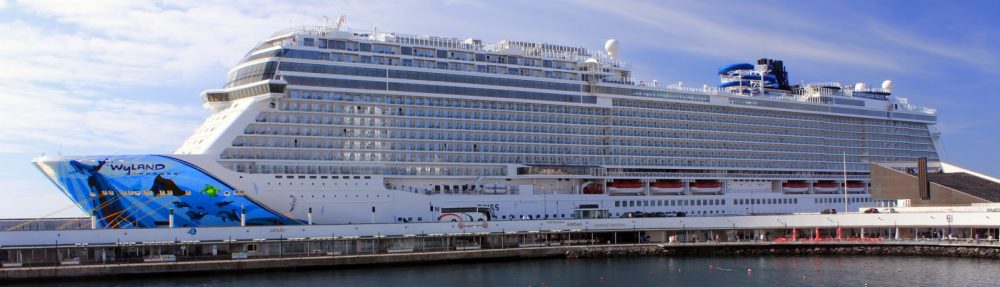
 The Port of San Francisco is dedicating its new cruise terminal, which will accommodate longer cruise ships, in a Sept. 25 ceremony.


 Wetravel2u's Weblog