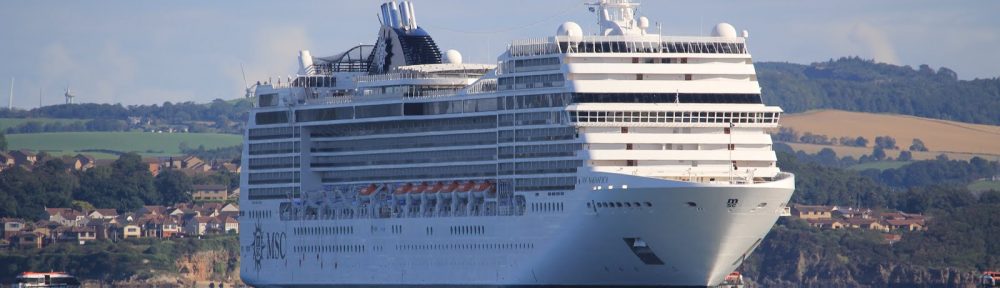
Write downs a factor in lower Q3 earnings for Carnival Corp.

Write downs a factor in lower Q3 earnings for Carnival Corp.

By Tom Stieghorst
Carnival Corp. earned $934 million in the key third quarter, down 28% from the $1.3 billion earned in the same quarter last year.

Revenue of $4.7 billion was in line with last year, Carnival said.

Carnival said it had impairment charges of $203 million to write down the value of two older Costa ships, its Ibero Cruises trademark and other items. Those were partly offset by a gain on fuel derivative contracts.

Like other cruise lines, Carnival earns the bulk of its annual profits in the third quarter, which at Carnival includes the months of June, July and August.

For all of 2013, Carnival said it expects to earn $1.2 billion.

Carnival also reported income on a non-GAAP accounting basis, a method favored by some investors. By that measure, it earned $1.1 billion, down from $1.2 billion a year ago.

Carnival CEO Steps Down and Carnivals Recovery Period.

Arison steps down as CEO of Carnival Corp.; remains chairman

By Tom Stieghorst
Arnold Donald will take over from Micky Arison as CEO of Carnival Corp.Micky Arison will give up the job as CEO of Carnival Corp., but remain chairman of the cruise company his father founded 40 years ago.

Carnival said Arnold Donald, a board member for the past 12 years, will become CEO effective July 3.

“I have been discussing this with the board for sometime now and feel the timing is right to align our company with corporate governance best practices and turn over the reins after 34 years as CEO,” Arison said. “Arnold is an exceptional professional with extensive experience in organizational leadership who will bring a fresh perspective to the company.”

Arnold has been an senior executive at Monsanto Corp., and founded and led Merisant, a company whose products include tabletop sweetener brands Equal and Canderel.

He also is former president and CEO of the Executive Leadership Council, a professional network and leadership forum for African-American executives of Fortune 500 companies.

Carnival Corp.’s Frank talks recovery period for Carnival brand

By Tom Stieghorst
Howard FrankA full recovery at the Carnival Cruise Lines (CCL) brand will take two to three years, Carnival Corp. Vice Chairman Howard Frank said in a call with Wall Street analysts.

In discussing Q2 results, Frank presented an analysis of yields both including CCL and excluding CCL, the way Carnival had previously done for Costa Cruises after the Costa Concordia accident. In answering a later question, however, Frank said the two were different situations and markets.

He said the two- to three-year full recovery period was based on consultants who looked at two negative events outside the cruise industry as models. “Their view is that although we’re a very different industry, it’s likely we will follow the same pattern.”

The impact of the Carnival Triumph and subsequent incidents tied to CCL ships will reduce Carnival Corp.’s 2013 results by about $388 million, Frank said, including $124 million for canceled sailings, $210 million in lower revenue yields, and about $54 million in vessel enhancements and extra marketing.

Frank said the extra marketing would come in three areas: funds directed at travel agents, including cooperative advertising; social media; and possibly more TV ads. In the fall, Carnival will look at marketing for particular brands, he said.

Frank explicitly thanked travel agents during the call. “Many of our travel agent partners have been very supportive during this challenging period, and for that we are very grateful,” he said.

Research finds two thirds of holidaymakers will book online

Research finds two thirds of holidaymakers will book online

By Ian Taylor

Research finds two thirds of holidaymakers will book onlineThe latest TNS consumer insight for Travel Weekly underlines the popularity of digital channels. Ian Taylor reports

Two thirds of UK adults planning an overseas holiday or break intend to book online this year, according to research for Travel Weekly.

A survey of more than 2,000 adults by TNS in early February suggests up to 20 million could book their travel online, compared with more than eight million with a high street agent or by phone.

Researchers found that 42% of respondents (including those not planning an overseas holiday) said they would book online, 12% on the high street and 5% by phone.

Of course, booking online does not have to mean going direct or buying from someone outside the trade. Few high street retailers fail to sell online; Tui Travel reported 37% of its summer 2013 bookings were made online up to early February and expects this proportion to increase this year.

However, the results confirm consumers are increasingly at ease booking all kinds of holidays – including package holidays – on the internet.

Young adults are clearly most at ease: 55% of 16 to 34-year-olds said they would book a holiday or break online, against 25% of over‑55s. The proportion of student online-travel bookers (60%) was three times higher than those of retired age (20%).

More than half (54%) of adults in better-off households expected to book online, as did a similar proportion (52%) of those with children living at home.

Londoners and those in the southeast showed a similar propensity to book on the internet (54%), while less than one-third did so in Yorkshire, the East Midlands and Scotland and just 36% across the north – suggesting a digital divide.

However, the greatest variation in the survey results was in the proportion planning to take an overseas holiday, rather than how they would book it.

TNS found more than one third (36%) of respondents did not expect to go overseas in 2013 and a further 4% were undecided.

That suggests 60% intend to have a holiday abroad – a healthy market in light of previous research showing less than half the adult population (44%) are likely to go away in any year.

It is important to note people often express an intention to go abroad at this time of year but subsequently fail to do so – the young being especially prone to this.

February’s TNS survey found three-quarters of 16 to 24-year-olds planned an overseas holiday (and 56% intended to book online). Yet previous TNS research which asked 16 to 24-year-olds whether they had a holiday abroad in the past 12 months found 60% had not.

Almost half (48%) of adults over 55 said they were not planning an overseas holiday this year; neither were half the adults in less well-off households (47%).

Most adults with children did plan a holiday (68%), compared with 56% of those with no children. But the former appear more dependent on finding a cheap holiday – 38% of those with children identifying price as an important factor in whether they go away, against 28% of those without children.

TNS group director of travel Tom Costley noted “significant age variations” in online booking habits but said: “The proportion choosing to book via a high street agent does not vary to any significant extent, irrespective of age.”

He added: “It’s evident that being able to access a cheap price allows some to go on a holiday which might otherwise not be available to them.”