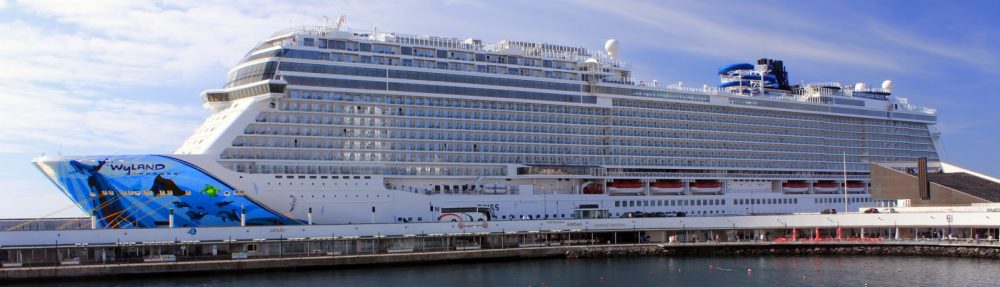
Royal Caribbean International’s new smartship creates a better cruise
By: Marilyn Green

The technology on Royal Caribbean International’s (RCI) new Quantum of the Seas is so smoothly, logically blended into life onboard that it makes returning home a bit of a shocker — you actually have to take a key and open your door. Guests on the November inaugural cruise were confronted by technological miracles; the designers of Quantum have been able to create a space where spectacular technical strides create a smooth cruise, rather than demand the focus of attention.
Take the online digital check-in. It needs a bit of time (you must create your own photo ID), but if you complete it, there is virtually nothing to do at embarkation — just collect a Radio Frequency Identification (RFID) wristband that functions as your ID/room key. You can also track your own bag to your stateroom via RIFD tags, and new guests of all ages quickly mastered the Royal IQ app, clustering around the kiosks or downloading it to set up their appointments, reservations and plans.
New onboard experiences are, of course, technology-driven and incredible feats, but they seem perfectly normal within the world that is Quantum. People simply accepted technological magic and got on with enjoying features such as the North Star gondola that looks enough like the London Eye to seem familiar. And the guests trying out the skydiving simulator merely remarked that it took a lot more effort than it appeared, instead of marveling at the technology that produced the experience.
One of the life-changing features is RCI’s new onboard Wi-Fi access, satisfyingly fast and priced at moderate rates, which is expected to attract many who would otherwise not cruise, such as the huge millennial market.
“For millennials, it’s not a real vacation experience unless they can share it,” said Bill Martin, chief information officer for Royal Caribbean Cruises.
Another popular smartship feature is the Robotic Bartenders at the Bionic Bar, but even those seemed eerily familiar (I couldn’t watch them without looking around to see the alien patrons from Star Wars’ famous cantina scene). The Robotic Bartenders B1-0 and N1-C are programmed to the movements of American Ballet Theater’s principal dancer, but their shapes somewhat resemble aquatic creatures. Drinks are ordered tableside with a tablet, mixed briskly by the robots and brought to the customers by a live waiter.
Two70, the performance space, is backed by six RoboScreens that add an extra troupe of performers or coalesce into one impressive image. The room’s Vistarama transforms floor-to-ceiling glass walls into very real backdrops, shown off in the performance of the Cirque-like spectacle “StarWater.” Although the effects are dramatic, the space somehow is very friendly, and several groups remained chatting and sipping drinks for an hour afterward the show.
When you hear about the 80-inch “virtual balcony” LED screens in the inside cabins, it sounds like a gimmick. But in fact, it opens up the whole space and gives occupants a true vision of the weather and surroundings. The smartship elements also have increased efficiency and environmental responsibility; computer modeling is used to reduce Quantum’s energy consumption, including efficient hull configuration, engine design and energy saving devices.
Even the crew’s superb service has been given a boost with tablets carrying custom apps that help them track guest preferences. And those same personal tablets enable the crew to Skype their families. They can now be a part of key occasions and see for themselves how their relatives are doing. The rest of the RCI crews will also be given these tablets without charge as the technology is installed across the fleet — 40,000 personal tablets in total.
“This isn’t about technology for its own sake,” one guest said, mirroring my own thoughts. “This is technology for making things better.”
 Royal Caribbean Cruises Ltd. (RCCL) has named Michael Bayley president and CEO of Royal Caribbean International, transferring to the company’s largest brand from the helm of Celebrity Cruises.
 been Celebrity’s president and CEO since July 2012. At that time, Bayley had been promoted from his position as Royal Caribbean’s executive vice president of operations, and Lutoff-Perlo was promoted to replace Bayley.
 St. Thomas is moving ahead with plans to build a new pier at the Havensight cruise terminal, which would enable the busy port to accommodate more ships, including the industry’s largest ships.
 Wetravel2u's Weblog