A tale of two cruise lines

Image result for silverseas muse

Two European businessmen created two different cruise lines in the 1990s. Both have been successful in their own terms, but one formula for success has a lot more scale than the other one.

The two lines are Silversea Cruises and MSC Cruises. Silversea was formed in 1994 by building two new ships straight out of the gate for the luxury market. It was marketed primarily, if not exclusively, in North America.

MSC took a different route. Created from the leftovers of the Lauro Lines in 1995, MSC operated used, some would say very used, tonnage. Like Carnival Cruise Line, it deployed its older ships to cater to the mass market. It was marketed primarily to Europeans, with a few winter itineraries in the Caribbean.

Silversea’s first newly built ship, the Silver Cloud, was a thing of beauty. It was instantly competitive with other luxury vessels.

MSC’s first newly built ship didn’t arrive until a decade after the Silver Cloud was delivered and it was a takeover of an option that couldn’t be exercised by the Greek line Festival Cruises when it went into bankruptcy.

Since launching, Silversea has acquired a fleet of nine ships, with two more vessels on order.

With the delivery of the MSC Seaview, MSC has 15 ships in its fleet, with another nine on order through 2026.

Image result for msc seaview christening

Last week, Silversea and Royal Caribbean announced an agreement in which Royal will get a 67% equity stake for $1 billion. Silversea gives up its autonomy as a private company in exchange for continued growth and investment in its brand.

MSC is investing in its own future with a $10.5 billion newbuild program, and its autonomy is not in doubt.

MSC took a slower, less glamorous route to success but in the end, it is the company that stands independent.

Two major differences steered MSC and Silversea towards different outcomes. The first is that MSC Cruises was a side project for MSC chairman Gianluigi Aponte, whose main business, container shipping, made it easier to secure the financing that kept MSC’s order book growing.

The second is that MSC operates in the low-price, high-profit segment of the cruise business. Catering to the mass market may not be where the glamour is, but it is where the money is. The finances of both MSC and Silversea are private, so it is perhaps unfair to say one is more profitable than the other.
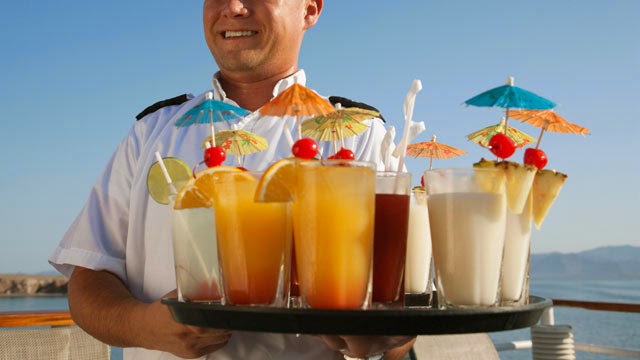
Royal Caribbean announces a brand-wide withdrawal of single-use plastic straws

Image result for royal caribbean drinks

Single-use plastic straws are to be withdrawn across all 50 ships across Royal Caribbean Cruises brands by the end of the year.

The move is the first step towards a comprehensive plastics elimination across Royal Caribbean International, Celebrity Cruises, Azamara Club Cruises, Tui Cruises and Pullmantur.

A “straws upon request” policy running for more than a year will see paper straws replacing plastic versions by early next year.

Passengers will start to see Forest Stewardship Council-certified wood coffee stirrers and bamboo garnish picks as part of the company’s plastic reduction strategy.

The focus will then switch to other single-use plastics such as condiment packets, cups, and bags.

A full plastics audit is underway, with the overall plan to be completed in phases by 2020.

Chairman and chief executive Richard Fain said: “Healthy oceans are vital to the success of our company.

“For over 25 years, our Save the Waves programme has guided us to reduce, reuse, and recycle everything we can. Eliminating single-use plastics is another step in that programme.”

Royal Caribbean: ‘Very Aggressive’ on Tech Infrastructure

Ovation of the Seas in Hong Kong

At Royal Caribbean Cruises, the idea is to anticipate the future of technology and get ready for it now.

“I believe that the largest challenges for us are the things that we don’t even know will be coming in the next five to 10 years. There are revolutions coming, things like virtual reality and other things that we don’t even imagine. We need to look at the historical growth of those technologies in the past, focusing on the future,” said Guillermo Muniz, director of satellite and network engineering, Royal Caribbean Cruises.

While cruise lines may plan into the 2020s on the technology front, challenges still remain when it comes to internet aboard today’s fleet.

“Royal Caribbean is being very aggressive regarding infrastructure within the ship. We are investing to make sure we have the infrastructure on our ships to have the correct Wi-Fi and the latest technologies to be able to not worry about connectivity over the next decade,” Muniz said.

The newer Royal Caribbean ships are using a new technology, marketed as Voom, that has significantly improved internet access aboard, helped in part by SES Networks.

“On those ships, the connection is comparable to our home experience. You can stream and watch videos on your devices easily. The amount of bandwidth that we provide to a single user today is the same amount of bandwidth that we provided for our entire fleet in 2000,” Muniz noted.

Royal Caribbean is working on a new boarding process that uses facial recognition to speed up the embarkation. Muniz explained that guests will be able to take a selfie at home, upload it via an app, and then be recognized at the cruise terminal by special facial recognition cameras. The cruise line plans to launch the system over the next few years.