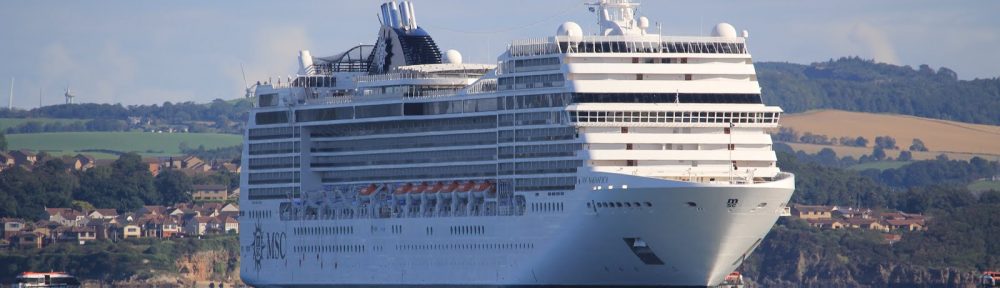
Special Report: The great cruise gratuities debate


I took this Photo on the Norwegian Jade, the gentleman in the front has gained a promotion. The crew that you see and don’t see work hard to make sure that we have the best possible cruise experience, they deserve our Gratuities and more.

A hike in rates by Royal Caribbean and Celebrity Cruises reignited the debate about onboard tipping. Amie Keelie and Harry Kemble report

News that Royal Caribbean International and Celebrity Cruises have upped their gratuities by 7% prompted dozens of responses from cruisers on consumer forums (Travel Weekly, January 4).

Some questioned whether the service they receive justified the hike. Some asked if charging gratuities meant cruise lines get away with paying staff low basic salaries. And some wondered if the tips even went to the staff.

Others said they were happy to reward hardworking crew for the long hours they put in to make their holidays as good as possible.

So which lines charge the most, why do gratuities even exist and are they justified?

Why do gratuities exist?

The concept of automatic gratuities stemmed from cruise ships being a cashless environment. Generally, passengers did not carry wads of cash and so were unable to reward crew members for excellent service.

It also became a way to distribute tips fairly to all the crew, including those behind the scenes working just as hard as the butler that passengers saw every day.

Lines justify the cost by claiming a superior level of customer service guests receives on a cruise ship compared with a hotel or resort on land.

“When we do our survey of guests, one of their top reasons they give to cruise is the service levels, so we stand up well against other sectors,” says Andy Harmer, Clia’s senior vice-president for membership.

“In cruise, you get to build up a relationship with the crew – you see them several times a day – compared to a hotel where you might not see the person turning down your bed at all.”

Ben Bouldin, associate vice-president of Royal Caribbean International and managing director for the UK and Ireland, agrees. “Gratuities are something our customers are comfortable with because they understand the outstanding level of service.”

However, as one agent told Travel Weekly: “If a cruise line is going to increase its gratuities, it had better make sure its customer service is impeccable”.

It is accepted that American cruisers are more than happy to pay automatic gratuities, often in advance of their cruise, but Brits much less so. Cruise lines have adapted their policies to reflect the different markets they sell in, allowing cruise customers to opt out of paying auto-gratuities at the end of their cruise when they pay their final bill.

“[In Britain] we don’t have a history of tipping in the way other cultures have,” says Harmer. “What a lot of passengers don’t realise is that if they do have issues, they should raise these on the ship so they can be dealt with and if they’re not happy they can have [the gratuity] taken off.”

Mike Hall, Cruise & Maritime Voyages’ head of marketing, says: “The reason why gratuities are such an issue is because of that cultural difference. Americans will give a staff member $50, while here in the UK, a conversation about gratuities is one we do not want to have.”

Gratuity rates

Royal and Celebrity Cruises’ recent increases now mean passengers pay $14.50 a day in standard accommodation, making it one of the highest in the sector.

“Royal and Celebrity need to be careful because it could put customers off,” the cruise agent added. “For a couple travelling on a 14-night cruise that’s an extra $400, so it needs to be better than a hotel which doesn’t have auto-gratuities.”

The agent also warned that if gratuities continued to rise on mainstream lines, luxury cruise brands, which more often than not include them in the price, would become more appealing.

By comparison, discretionary gratuity fees for P&O Cruises, MSC Cruises, Fred Olsen Cruise Lines, CMV and Carnival Cruise Line range from £4 to €13 per passenger per night and continue to be automatically added to onboard accounts. The majority of river cruise lines suggest a recommended amount to give the crew at the end of their cruise.

Last year, Norwegian Cruise Line became the first mainstream line to incorporate gratuities, among a host of other ‘extras’, into its fares, when it rolled out its Premium All Inclusive concept.

NCL’s Nick Wilkinson said: “Premium All Inclusive has driven greater simplicity for agents having to explain and sell cruises, and greater confidence in consumers having to budget.

“The biggest change since introducing Premium All-Inclusive is double-digit growth we’ve seen in the long-tail of agents we’ve never worked with before, now selling Norwegian. They are comfortable selling us.”

So could other mainstream lines follow suit? Wilkinson added: “I think it’s very telling how many mainstream lines are using the term ‘all-inclusive’ in their wave campaigns as they recognise it appeals to agents and consumers.

“But we are the only mainstream line offering a truly all-inclusive product, including gratuities.”

Full breakdown by cruise line here

Views on gratuities

“Gratuity fees should be phased out, not increased. They are an archaic way of paying salaries, they should be included in the fare.”

David Speakman, chairman, Travel Counsellors

“I wish all cruise companies would include them [gratuities], then everyone would pay the same. It would stop a lot of people asking for them to be taken off once on board.”

Travel agent, name withheld

“As customers, we would never take off service and hotel charges but, in a way, I hope many do. You never know, we might yet see the dawn of non-deductible service or all-inclusive charges on cruises. If all passengers paid their gratuities on a two-week cruise, that would be $578,000 on Eclipse – getting a little silly, don’t you think? The cruise lines are cutting back and increasing gratuities.”

What the year ahead holds for the industry

Image result for Future cruising
Next Gen. Cruise ship for MSC.

Until recently, expedition cruising was a quiet corner of the ocean cruise business, with occasional new tonnage added to a small fleet of spartan ships sailing to wild and majestic places.

The ships are still small, but some are not so spartan anymore, and the expedition niche in 2018 is trending bigger.

By one estimate, at least 18 new expedition vessels are ready to debut over the next 24 months.

Setting the tone was the transfer in 2017 of the original Silversea Cruises ship, the Silver Cloud, to the line’s expedition fleet after conversion to an ice-hardened vessel capable of visiting both polar regions.

In 2018, the parade of new expedition builds begins in June with Le Laperouse, the start of a new class for the luxury expedition brand Ponant, which will add three more of the 180-passenger vessels by mid-2019.

The French brand will be joined this year by Norway’s Hurtigruten, which is expecting a new prototype, the 530-passenger Roald Amundsen, in August. Soon after, Scenic Cruises will take delivery of the 228-passenger Scenic Eclipse, another expedition-style vessel.

And by year’s end, Quark Expeditions plans to take delivery of a 176-passenger ship, currently under construction in Portugal, capable of polar sailing.

The boom is underway in part because small ships for expedition cruising are easier to finance than the $1 billion behemoths now being ordered by contemporary ocean cruise brands. And there is a greater variety of shipyards able to take on the projects.

Companies like Lindblad Expeditions have gone public and are tapping into public equity to finance expansion.
Expedition cruise lines expect that many consumers who have been introduced to cruise vacations by the larger lines in recent years are now familiar with the concept and will be receptive to trying a different kind of cruising.

New technologies

In addition to a bumper crop of expedition ships, 2018 will also see the advancement of technology on larger ships designed to save time and smooth out the points of friction to make cruising more enjoyable.

The technologies go by disparate names: Royal Caribbean International calls its package Excalibur, MSC Cruises has MSC for Me and Carnival has its Ocean platform, which includes the Ocean Medallion and Ocean Compass app. Luca Pronzati, MSC’s chief business innovation officer, said MSC’s technology will provide wayfinding onboard the ships, a reservations function and a more convenient way to access and personalize an activities agenda.

“You can schedule your day in an easy way,” Pronzati said. “It’s really changing the paradigm.”

Passengers can access the information through smartphones, on their in-cabin TVs or at screens in public areas of the ship. Pronzati said that the current functionality of MSC for Me, which is available on the MSC Meraviglia and the MSC Seaside, is a foundation and that the line is working on expanded capabilities, such as a digital concierge service.

Carnival’s Ocean platform, although it debuted for a limited number of passengers on Princess Cruises’ Regal Princess in November, will be rolled out onboard five more ships by the end of 2018.

Carnival expects its phased activation of the Ocean Medallion and Ocean Compass app onboard the Regal Princess to be finished by the first quarter of 2018, with all passengers being able to use it simultaneously thereafter. The two technologies are designed to give each cruise customer a more personalized vacation. It will, for example, provide suggestions for activities, drinks and meals based on stored preferences and proximity to venues on the ship.

Royal Caribbean’s package of onboard technologies, Excalibur, is expected to be on 15% of its fleet, starting with its most-recently delivered ships, within the first few months of 2018. It will be on a majority of Royal’s 25 ships by the end of the year.

One focus of Excalibur is expedited embarkation, which Royal calls “frictionless arrival.” It will allow passengers who input information before arrival come aboard without stopping at a check-in counter. Other applications include using it to order room service, open cabin doors and connect with friends and family onboard.

One of the ships that will benefit from Excalibur is Celebrity’s new Celebrity Edge, the first in a class of four ships ordered so far that will be a prototype for the design of Celebrity’s fleet.

The innovations already announced for the ship include “infinite verandas” in which balcony space is incorporated into a cabin and the Magic Carpet, a 90-ton platform that hangs off one side of the ship and will move between four decks, including the embarkation deck, where it will serve as a shore excursion platform.

Following a December 2018 christening in Fort Lauderdale by Nobel Peace Prize laureate Malala Yousafzai, the Edge will make its first seven-day Caribbean cruise.

Celebrity plans to spend $400 million over the next six years to make the rest of its fleet look more like the Edge class.

The Cuba connection

Some of the oldest ships in the cruise industry will also be part of its newest trend in 2018: expanded cruises to Cuba. Norwegian Cruise Line has tapped the Norwegian Sun for four-day cruises to Cuba from Port Canaveral next summer. The Sun is joining Norwegian’s oldest ship, the Norwegian Sky, which does the itinerary from Miami.

Royal Caribbean is also expanding its capacity to Cuba, putting the 28-year-old Empress of the Seas in Miami for five-, seven- and eight-day trips that for the first time include Cienfuegos and Santiago de Cuba, while its second-oldest ship, the Majesty of the Seas, will provide four- and five-night Cuba itineraries from Tampa.

Royal Caribbean raises gratuity charge

Royal Caribbean International on Jan. 2 is implementing a $1 increase to the daily gratuity, to $14.50 per guest, for cruise passengers in stateroom accommodations.

Suite guests will pay $17.50 per day, also a $1 increase.

Guests who book before Jan. 2 can pre-pay gratuities before their sailing at the current rate.

The daily gratuity, automatically added to guest accounts, is shared among dining and bar servers, stateroom attendants, and hotel services teams who work behind the scenes.