Class warfare: The rise of luxury enclaves at sea

Several cruise lines employ butlers in their exclusive accommodations. Onboard Royal Caribbean International’s ships, they are called Royal Genies.As the co-owner and president of a Virtuoso-affiliated agency, Paul Largay never had much interest in Norwegian Cruise Line. The Waterbury, Conn., travel seller had cultivated a luxury clientele who preferred upscale lines such as Silversea Cruises, Regent Seven Seas Cruises and Seabourn.

But after Norwegian added the Haven to its ships, Largay began selling the line.

“It’s a very viable alternative,” he said.

The Haven, a secured enclave of luxury cabins around a courtyard, has re-engineered Norwegian into a line with both a mass-market and a luxury clientele, and its arrival on the scene has led almost every other operator of large cruise ships to tout some sort of exclusive accommodation.

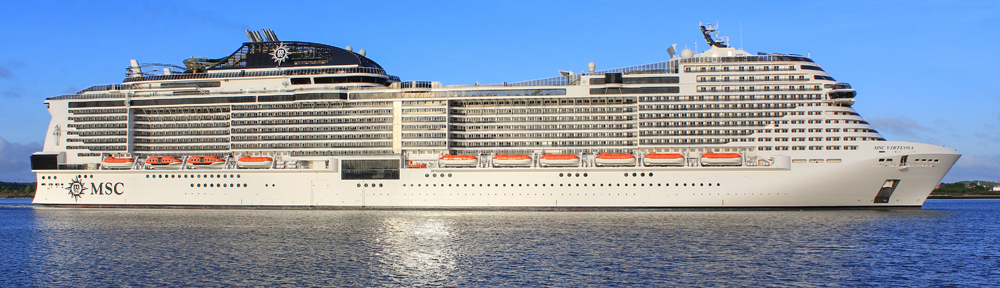
Each has its own variation: MSC Cruises has the MSC Yacht Club, Royal Caribbean International and Celebrity Cruises have Suite Class, Disney has Concierge Level and Holland America Line offers the Neptune Lounge.

Even Carnival Cruise Line, the most egalitarian of the bunch, offers the Havana Cabana enclave on its newest ships.

The reasons that luxury enclaves have evolved on ships are many, but a common thread is the premium pricing that cruise lines can command by creating an aura of exclusivity to which guests can aspire.

Suites in the enclaves tend to be among the largest at sea, an attraction for some guests and yet another revenue enhancement.

In most cases, these cabins come with exclusive use of other areas, such as private pools, restaurants and lounges.

Guests with Suite Class accommodations aboard the Celebrity Silhouette have access to the exclusive Michael’s Club lounge.


Kimberly Wilson Wetty, co-president of Valerie Wilson Travel, said, “I think it has created the aspiration for people to say, ‘How do I get to that next level? I want that perk, that experience. What do I have to do to get there?'”

Several agents compared the rise of luxury enclaves at sea to similar choices in other hospitality sectors, such as a business class on international airlines or private luxury railcars added to trains.

Airlines have started opening unadvertised invitation-only dining venues in some airports for their best customers. And hotels-within-hotels are proliferating, especially in Las Vegas. At the Wynn Tower Suites, located in the 2,716-room Wynn Las Vegas, guests have a private entrance, a personal shopper, an exclusive restaurant and a private pool, with amenities.

Gaming also played a role in the creation of the Haven, which can trace its origins to large villa suites built for Star Cruises, an Asian line that shares common ownership interests with Norwegian through parent company Genting Group.

After acquiring Norwegian in 2000, Genting began to swap ships intended for Star Cruises into the Norwegian fleet. Ships such as Norwegian Dawn have a pair of three-bedroom, $25,000-a-week Garden Villas on the top deck. Those evolved into the Courtyard Villa, an enclave of 12 access-controlled suites when Norwegian launched its Jewel class of ships in 2005.

The exclusivity of the Courtyard Villas was one component of a package of extras that has continued to evolve. Rebranded as the Haven in 2011, the enclave cabins now come with access to a private restaurant, a private sun deck, private pool and a dedicated lounge and bar, all within the complex.

When Norwegian Cruise Line began offering the Courtyard Villa enclave in 2005, it opened the mass-market line to luxury clientele and prompted other cruise lines to follow suit. The Villa concept evolved into the Haven by 2011.

Other benefits include the services of a concierge and butler, priority embarkation, debarkation and tendering and preference for seating at shows and for shipwide dining reservations.

In-suite amenities include a cappuccino machine, white-tablecloth room-service dining and sparkling wine, fruit and bottled water on embarkation day.

Bathrobes, linens, bath products and mattresses are all top of the line.

Enclaves such as the Haven tend to be found on mass-market ships, or at least ships above a certain size. One reason is that smaller luxury ships have no need for a separate high-end product. Just as important, they don’t have the real estate.

Holland America Line, whose largest ship is the 2,650-passenger Koningsdam, does not offer a luxury enclave but does have the Neptune Lounge, a midship social area with refreshments and concierge service. It is reserved for guests booking the top Neptune and Pinnacle suite categories, who also get exclusive access to the ship’s premier Pinnacle Grill for breakfast.

Sally Andrews, vice president of public relations for Holland America, said it’s a question of economics.

“Dedicating private space for a segment of guests related to their accommodations really comes down to [return on investment] on use of that space for a small versus a larger number of guests,” Andrews said.

A table in the Queens Grill on Cunard Line’s Queen Victoria, which offers a sweeping view. Photo Credit: TW photo by Tom Stieghorst

A table in the Queens Grill on Cunard Line’s Queen Victoria, which offers a sweeping view. Photo Credit: TW photo by Tom Stieghorst

It began with 20 penthouses

Some observers trace the origins of the enclave idea to Queen Elizabeth 2.

In 1972, a refurbishment of the Cunard Line ship resulted in the addition of 20 penthouses to the 70,000-ton ship. A nearby bar/nightclub was converted to an exclusive restaurant called the Queen’s Grill.

By the time Carnival Corp. commissioned a successor for the ship in 1998, the Queen’s Grill accommodations had become a status symbol, and Carnival incorporated them into the Queen Mary 2, as well as into later ships Queen Elizabeth and Queen Victoria.

Larry Pimentel, one-time president of Cunard and currently president and CEO of Azamara Club Cruises, said Cunard was a bridge between the transport era of passenger shipping and modern cruising.

Queen Elizabeth 2 was designed with separate classes in mind, with segregated spaces for each price level.

“They represented a bygone era of cruising, a bygone era of transport, actually,” Pimentel said.

Ships designed for cruising post-Queen Elizabeth 2 were one-class ships, Pimentel said. Only recently have separate classes crept back into the equation, in part to attract and keep a discerning type of customer.

The creation of a ship within a ship enables mass-market lines to pitch their cruises to more-affluent guests.

“While it is not strictly class-communicated, the reality is that there is a group of people who always want the best,” Pimentel said. “What’s happened in the industry is that there’s going to be a bigger and bigger play for these people who have these desires to have the most space, to have the most in elegance and luxury, have their own space, their own pools, their own restaurants, etc.”

The premium for staying in an enclave like the Haven can be five to 10 times the cost of an inside cabin, depending on deployment and time of year. MSC Cruises calculates that the per-person cost of staying in its Yacht Club enclave averages about $1,500 more than for a standard cabin.

One longtime observer of luxury cruising said it might or might not be worth the price.

“Theoretically, it’s good,” said Mark Conroy, managing director of the Americas for Silversea Cruises.

Conroy said one of the most appealing parts of the enclave idea is the ability to offer two ships in one. There’s an “uptown” sanctuary with refined furnishings and service and a “downtown” for energy, variety and scale. But to make it work, the “downtown” has to be worth going to, he said.

“The challenge is in the execution, and some companies have been better than others,” Conroy said.

Another way the uptown/downtown idea plays out is in attracting large family groups.

“It’s been wonderful for the multigen families,” said Valerie Wilson’s Wetty. “If you have a very luxury client, let’s say it’s grandparents, or mom and dad, but they might want to take the whole family, they’re not willing to compromise their standards.”

With an enclave, the luxury client can afford luxury accommodations without springing for a luxury ship for the entire group, she said.

A staircase embedded with Swarovski crystals connects two decks in MSC Cruises’ exclusive section, the MSC Yacht Club. Access to a concierge desk and the Top Sail Lounge are some of the perks for Yacht Club guests.

MSC Cruises has earned a reputation for affordable family cruising with its kids-sail-free promotion. Its Miami-based ship, the MSC Divina, is one of five in its fleet equipped with an MSC Yacht Club enclave.

The enclave includes 66 suites arrayed over two decks connected by spiral staircases with embedded Swarovski crystals. There is a private lounge, a library and butler service for all Yacht Club guests. They also get an adjacent private pool, access to a VIP area of the disco and special access to the spa.

Bernard Stacher, vice president of hotel operations for MSC, said guests are paying for more than exclusivity.

“That’s a portion of it, but it’s not the majority,” Stacher said. “It also comes down to the personalized, tailored service, to really unique and fast access to the ship on and off, the choice of the finishings we choose and the no-questions-asked attitude from the staff in the Yacht Club. I think that plays a big part.

“Yes, you are away from the crowds, you have your own private pool, but it’s the sum of all the parts that make the Yacht Club so exciting,” Stacher said. “It’s not one thing.”

In marketing the enclaves, cruise executives walk a fine line between appealing to discriminating customers and coming off as elitist.

Wetty said exclusivity inevitably rubs some people the wrong way.

“There was a pushback in the industry of saying, ‘Hey, that doesn’t feel fair or right,'” she said. “How can you create a ship that you pay a certain price and you only get access to a certain part of the ship?”

Wetty said the key for lines that have made an enclave product successful was positioning it as an extra to an already handsome package.

“Those lines are creating a consistent experience for everybody, so nobody feels they got less than somebody else,” Wetty said. “But then if you pay more, you get something a little extra special.”

The Royal Loft Suite on the Anthem of the Seas.
Not every line offering exclusive luxury accommodations has gone the route of building a full enclave.

Celebrity Cruises and Royal Caribbean International, both brands owned by Royal Caribbean Cruises Ltd., offer guests a Suite Class package of benefits that includes a separate lounge and restaurant, among other perks.

Suites are in different areas depending on which of Royal’s eight ship sizes they are sailing.

On Celebrity, Suite Class guests have the Luminae restaurant and Michael’s Club to themselves. On Royal, Suite Class includes a suite lounge and sun deck and the Coastal Kitchen restaurant on some ships.

Top suites come with Royal Genies, a name for what other cruise lines call butlers.

“We thought it was a fun twist on this idea of a butler,” Royal Caribbean president Michael Bayley said. “We think part of our success is not taking ourselves too seriously.”Bayley said that Royal has the same package of amenities that competitors do, but “we just haven’t put them in one place.”  Royal guests, he said, “want to be engaging with the world around them.” Still, he said, he wouldn’t rule out building a dedicated luxury enclave area on future ships.

Even Carnival Cruise Line, which prides itself on being unpretentious, has cosied up to the enclave concept. On its latest ship, the Carnival Vista, it has created the Havana Cabana, an area of 61 cabins with a lounge and pool area with a tropical-leisure theme.

Most of the cabins are on deck five and feature a sliding door that opens to a 100-square-foot patio with a swing chair. A key-card gate keeps the aft part of the promenade that encircles Deck Five closed during the day. Also behind the gate is the aft pool and hot tub area. A few Havana cabins are located on decks six and seven and have enlarged balconies rather than patios; these cabins also include access to the pool.

In the Havana Cabana section onboard the Carnival Vista, guests have exclusive access to an aft pool area and a promenade. Carnival is expanding the 61-cabin exclusive section on the Horizon, due next year. Photo Credit: TW photo by Tom Stieghorst
In the Havana Cabana section onboard the Carnival Vista, guests have exclusive access to an aft pool area and a promenade. Carnival is expanding the 61-cabin exclusive section on the Horizon, due next year. Photo Credit: TW photo by Tom Stieghorst

Carnival Cruise Line president Christine Duffy said that limiting access to the pool hasn’t caused any issues. The Havana Cabana is the only area on Carnival’s 25 ships that aren’t open to all passengers.

“We really haven’t had any complaints, as there are so many other options on the Carnival Vista,” Duffy said.

Carnival is expanding the area on the Horizon, due in April, by 18 cabins. Other luxury enclaves are also growing. The Yacht Club on MSC Seaside, which will be christened in Miami in December, will have 80 suites, the most ever.

In the future, cruise executives said, the enclave concept could be expanded to include more dedicated entertainment. MSC has a piano player in its Yacht Club, and it will rotate a violin duo into the mix on the Seaside.

Pimentel said that other ideas will percolate for small musical ensembles.

“I think it is possible that some of the units that have a lot of space begin to have venues for that space that could be a small, tiny jazz club,” Pimentel said. “I think the industry’s just going to push the edges on that one.”

Carnival Corporation strikes deal to tighten security

Image result for I-Checkit

Carnival Corporation is to strengthen its security procedures through an agreement with international criminal police organisation Interpol.

The deal, claimed as a first for the maritime industry, will see advanced security screening across the group’s 10 brands and fleet of 101 ships that carry almost 11 million passengers a year to more than 700 ports around the world.

Carnival Corporation is to integrate its global passenger check-in process with Interpol’s I-Checkit system, a secure method for screening travel document information against its Stolen and Lost Travel Documents (SLTD) database, containing more than 69 million records from 175 countries.

The agreement follows a three-month trial of I-Checkit on four Princess Cruises ships which included 34,000 travel documents that were successfully checked against the SLTD database to demonstrate the system’s ability to enhance security for the global cruise industry.

I-Checkit will be deployed across Carnival Cruise Line, Fathom, Holland America Line, Princess Cruises, Seabourn, AIDA Cruises, Costa Cruises, Cunard Line and P&O Cruises in the UK and Australia.

Image result for I-Checkit carnival cruise

Staff will be able to automatically query the SLTD database before and during the boarding process to see if any travel documents have been reported lost or stolen.

Interpol head of the I-Checkit system Micheal O’Connell said: “With its real-time secure global alert system, criminal intelligence potential and compliance framework, I-Checkit provides an invaluable preventative and investigative capability for global policing.

“I-Checkit’s initiative with Carnival Corporation offers an additional layer of safety in the travel sector by creating an international standard for security screening.”

Carnival Corporation chief maritime officer Bill Burke – a retired vice admiral of the US Navy – said: “One of our top priorities at Carnival Corporation is the safety and security of our guests, our crew and our ships.

“As the world’s largest cruise company carrying hundreds of thousands of daily passengers, having a highly effective and efficient security screening process is a crucial part of how we serve our guests every day.

Partnering with Interpol enables us to seamlessly enhance security across our global fleet while also maintaining our commitment to providing our guests with a great vacation experience.

“This is another important step for our company and industry as we continue taking proactive measures to enhance the safety and security of our passengers and crew members.”

A checklist of ocean and river cruising trends

I think midsummer, pre-election, is a good time to examine a few major trends we’re seeing in ocean and river cruising, though I’m going to concentrate on the upper ends of these markets.

The cruise market is growing at about 4% a year, despite some nasty weather, Zika concerns and the growing fear of terrorism. CLIA predicts that more than 24.2 million people will take an ocean cruise this year. The biggest one-year projected gains have been in Asia, which is up 24%, and Australia, up 14%.

As recently as 2010, China’s cruise market was still on the drawing board. Cruises in China tend to be sold as complete packages by middlemen who normally charter an entire ship or large portions of an available sailing.

Carnival Cruise Line will have six ships in China this year, and Princess has a new Chinese market subsidiary. Royal Caribbean has taken the biggest risk, placing the 4,905-guest Quantum of the Seas there, and Norwegian Cruise Line is building a ship specifically for the Chinese market.

The big question is how appropriate are these “Chinese-designed” cruises for the American traveler? To what extent will Mr. and Mrs. Mainstreet feel truly comfortable on a cruise designed for Chinese tourists?

In the meantime, I’m betting that luxury adventure cruising is poised to become this year’s industry growth leader. A 2013 report from the World Tourism Organization placed the value of the adventure market at more than $265 billion. If this is accurate, it means that expedition cruising has enjoyed a 24-month growth rate of something like 195%, a staggering figure. Get ready for the advent of the adventure yacht boom. Here are some of the key players in this growth:

Lindblad Expeditions-National Geographic went public last year and promptly ordered two 100-passenger vessels for U.S. coastal voyages. It also bought Via Australis and will place several of its ships in the Galapagos after major refurbishments.

Lindblad, which invented nonscientific expeditions to Antarctica 50 years ago, operates six vessels carrying between 28 and 148 passengers. Instead of casinos and lounge acts, its cruises are likely to include top-tier naturalists, undersea experts, historians and expedition leaders, plus a National Geographic photo instructor or photographer to ensure Pinterest-perfect photos. Lindblad has started including organic food sourcing whenever possible. But, alas, there is no bingo.

Crystal Cruises will be taking delivery of a polar-class, 200-passenger megayacht, the Crystal Endeavor, in August 2018. At 600 feet long and 25,000 gross tons, it will be the world’s “largest and most spacious” megayacht, capable of handling travel within polar regions. In its first season, it will follow migrating whales from the Arctic to Antarctica.

To offer guests the ability to truly explore some of the world’s most remote destinations, the Endeavor will carry equipment not previously seen on a luxury adventure vessel. These will include two helicopters to take guests for flyovers, two seven-person submarines for deep-sea dives to view underwater glaciers and coral reefs, an all-terrain vehicle, a fleet of personal watercraft and even a recompression chamber for serious scuba divers.

Silversea has been credited with leading the growth trajectory of luxury adventure cruising. It began with the Silver Explorer in 2007, and the line is now converting a five-star luxury ship, the 296-guest Silver Cloud, into a polar-class vessel. The goal is to offer guests a chance to explore some of the more extreme destinations on Earth with a one-to-one staff ratio and five restaurants onboard.

In 2017, the line will take delivery of the 596-guest Silver Muse, which is expected to have the industry’s best staff-to-guest ratio. In many ways, the line is redefining the way luxury travelers explore remote corners of the globe, with the assurance that a well-stocked wine cellar awaits them when they return to their ship.

Seabourn is approaching five-star adventure cruising with a different emphasis, having designed itineraries that highlight spots in the world high on every adventure traveler’s list, including Patagonia, Antarctica and the Amazon. Seabourn is getting two new ships: the Encore later this year and the Ovation in 2018. With these newbuilds, Seabourn has decided to up the passenger count from 450 on its current Odyssey class ships to 604.

Scenic, the upstart Australian luxury tour and cruise company, is launching what it calls “the world’s first discovery yacht” in August 2018. It will sail to the Mediterranean, Antarctica and the Arctic, which you would expect of a self-described “six-star” vessel whose smallest suites have a butler and a veranda and measure 345 square feet. Even more spacious will be a two-bedroom penthouse suite, at 1,775 square feet.

While it might sound like the routes through the ice in Antarctica will get rather crowded in the next several years, Scenic is also placing its “most technologically advanced yacht in the world” closer to home, with a series of cruises in the Americas that include two 14-day circumnavigations of Cuba from Miami.

River cruising on the Mekong River is increasingly seen as a sexy alternative to traditional river cruising.

The Amazon has the world’s greatest biodiversity, but the Mekong River is second, with more than 1,300 known species of fish along its 3,050-mile path through Southeast Asia. The Mekong is the next hot destination, and travelers will discover that the vessels deployed on this route are built locally and represent the highest levels of shipbuilding craft, with dark wood floors and original furnishing. AmaWaterways, Abercrombie & Kent and Aqua Expeditions are leaders in this market.


It has been said that if you want to vacation in style with good food, just figure out where the French are going these days. But Americans have another option. They can sail with the French to all seven continents on the laid-back, luxury French line Ponant.

The original Le Ponant still sails as a 64-guest cruise ship. But its four sisters, Le Boreal, Le Soleal, L’Austral and Le Lyrial, now form the bulk of the fleet. Ranging from 224 to 264 guests, they feature not only French style but ice-hardened hulls for polar exploration. Each of the vessels has several lounges, a theater, library and a pool. Ponant’s ships are heavily utilized by Tauck Tours’ escorted sailing itineraries.

In the meantime, river vessels have evolved to embrace luxury. There was a time when a ship sailing any of Europe’s major rivers was filled with 120-square-foot cabins, close to the mandated size of a prison cell in many states. But things are changing.

Since river ships must be less than 443 feet long to fit through locks and there are strict limitations on height because of low bridges, cruise lines have to get creative with cabin design.

Uniworld has a simple little switch that raises window glass to form an open-air solarium. Scenic Cruises has a “sun lounge,” a balcony surrounded by glass that can be easily opened to the river.

AmaWaterways has one-upped its competitors by designing twin balcony suites consisting of both a French balcony and a true balcony.

But perhaps the smartest and simplest innovation is that of Avalon’s panoramic suites, which constitute a majority of its cabins. Avalon has managed to turn the beds around so they face the window. A glass wall opens so guests get a sense of floating on the river from the comfort of their beds.

Seabourn added Penthouse Spa Suites on the Quest, and they will be added to the line’s other ships this year. Just one deck above the ship’s spa facilities, each of the suites is a bedroom with a sitting area, and they are decorated to match the spa below. They will feature specially designed, oversize showers, spa bath amenities and a soundtrack of soothing spa-influenced music.

Crystal is taking a different approach to health and wellness. The Serenity came out of drydock with 70 remodeled cabins that are cleaned using hypoallergenic products. Each cabin is also equipped with special air filters. The hotel industry has flirted with this “cleaned more proactively than our regular rooms” concept and decided to abandon it. It remains to be seen if Crystal will find an audience for environmentally treated cabins.