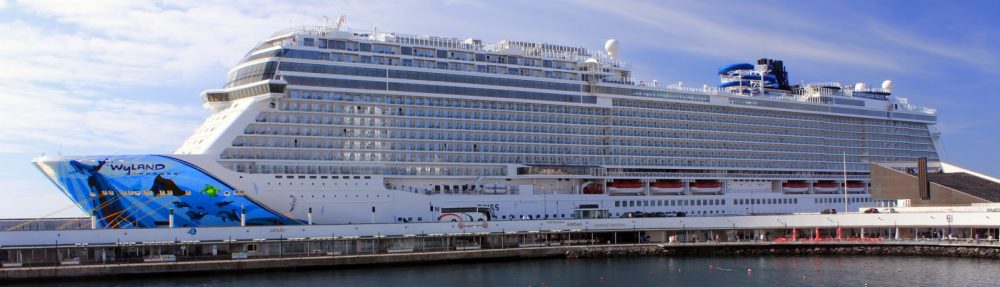
Zuiderdam Embarks on Holland America’s Grand World Voyage

The Zuiderdam is sailing from Port Everglades on Saturday for Holland America Line’s 2025 Grand World Voyage.

According to Holland America Line, the 124-night itinerary is highlighted by bucket-list destinations, including Machu Picchu, Easter Island and the Great Barrier Reef. The full itinerary includes ports in 34 different countries.

The cruise also features six overnight stays across the globe, including extended visits to Tahiti, Sydney, Cape Town and Barcelona.

After departing from Port Everglades, the Zuiderdam heads south for visits to destinations in the Caribbean before crossing the Panama Canal.

The 2,000-guest ship then heads to South America and the South Pacific, visiting destinations in Ecuador, Peru, Chile and French Polynesia.

Ports of call set to be visited during this segment include Manta, Easter Island, Callao, Moorea, and Raiatea.

The cruise continues with visits to additional island destinations in Polynesia and Melanesia, such as Tonga and New Caledonia, before arriving in Australia.

In late February, the Zuiderdam arrives in Southeast Asia for calls in Indonesia, Singapore, Malaysia, Thailand and more.

On its way back to the United States, the itinerary includes destinations in the Indian Ocean, such as the Maldives, the Seychelles and Mauritius.

The ship will also visit South Africa, Cape Verde, Namibia, and the Canaries before entering the Mediterranean.

After sailing to destinations in the United Kingdom, Spain, Malta, Egypt, Italy, Portugal and Morocco, the Zuiderdam finally crosses the Atlantic Ocean.

The vessel will return to Fort Lauderdale on May 9, 2025, after a visit to San Juan in Puerto Rico.

In addition to its Grand World Voyage onboard the Zuiderdam, Holland America is set to offer a second world cruise in 2025.

Sailing onboard the Volendam, the Pole to Pole Grand Voyage departs from Port Everglades on Jan. 25, 2025.

Cruise Lines 2024 Q3 Breakdown: By the Numbers

La Ponant and AIDA Cosmos both enjoying good passenger numbers, photo credit Spacejunkie2 Flickr

Cruise Industry News takes a look at the financial performance of the “big three” cruise corporations following the third quarter of 2024.

Traditionally, the third quarter has been the key part of the year for cruise operators, as it spans the summer months with more family travel and more deployment into higher-yielding markets such as Alaska and Europe.

Carnival Corporation, the world’s biggest cruise company, delivered the best net income performance with $1.8 billion, up from $1.1 billion in the third quarter a year prior.

The company also outpaced the gains year-over-year from Royal Caribbean Group and Norwegian Cruise Line Holdings.

Net income per passenger day was $61.96 for Carnival, Royal Caribbean Group had $75.14 of net income per passenger day, while Norwegian Cruise Line Holdings came in at $72.82

Of note, fuel cost was up for both Carnival and Royal Caribbean, but down for Norwegian, which continues to make deployment changes to published cruises for fuel efficiency.

Follow the link below to see all the numbers from the 3 leading Cruise companies:

First Panamax Containership Sprints Across Arctic Reaching China In Just Three Weeks

Container ship Flying Fish 1 is close to fully loaded. (Source: Courtesy of Peter Faas)

(gCaptain) – The first Arctic transit of a large container ship has gone off without a hitch. The 294 meter-long Panamax vessel Flying Fish 1, traveled from St. Petersburg in the Baltic Sea to China in just over three weeks, shaving around two weeks off a standard voyage via the Suez Canal. 

It is set to arrive at its destination in Shanghai early on September 26. The vessel is operated by EZ Safetrans Logistics out of Hong Kong. 

The proposition of regular summer season box shipping across Russia’s Northern Sea Route seemed impossible to most just a decade ago. This year the Arctic Ocean will see close to 20 transit voyages, all connecting Russian and Chinese ports via the Arctic shortcut.

Capable of carrying 4,890 twenty-foot equivalent containers it sets a new standard for Arctic container shipping. Prior to this summer only smaller box carriers holding around 1,500-2,000 gave the Arctic shortcut a try. Over the past three months, several larger feeder vessels have established a seasonal liner service between ports and China and Arkhangelsk and St. Petersburg.

Flying Fish 1 departed from St. Petersburg on September 3 and entered the Northern Sea Route at the top of Novaya Zemlya a week later. Shortly thereafter it crossed paths with another Chinese container ship, the first encounter of two large box carriers high in the Arctic. The nighttime rendezvous occurred just 850 nautical miles from the North Pole, with no sea ice in sight.

The vessel was able to maintain a speed of 16 knots across the entire length of the route, indicative of how Arctic ice conditions have dramatically changed over just the last two decades. Flying Fish 1 continued through the Laptev and East Siberian Sea, avoiding some late-summer ice near Wrangel Island. 

It exited from the route and passed through the Bering Strait near Alaska on September 17, without requiring any icebreaker assistance, just six days after entering the Russian Arctic.

Once complete, its journey from the Baltic Sea to Shanghai will measure approximately 8,000 nautical miles, around 4,000 nautical miles shorter than the traditional route via the Suez Canal. The current detour for most vessels around South Africa due to instability in the Red Sea adds another 4,000 miles to the standard route to Asia. 

For now, shipping services between Europe and Asia via the North remain limited to a 3-4 months summer window, but as sea ice retreats earlier in summer and returns later in winter, more operators will surely look to the Arctic for new opportunities.

Thank you to g-Captain for this article for more visit https://gcaptain.com/