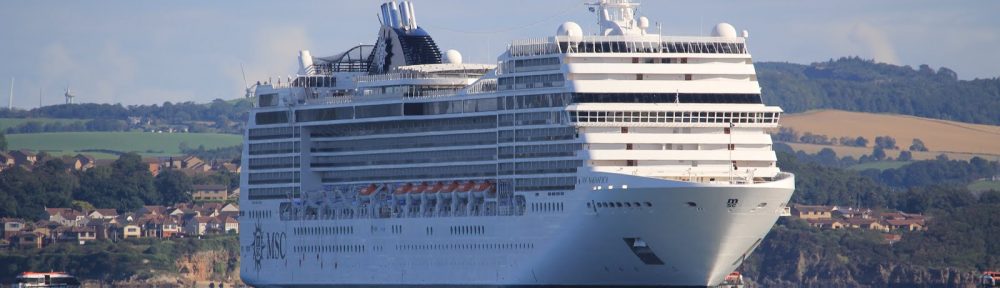
Larger cruise ships on local deployments expected to be first to return

Deck Plans | Azamara

Larger cruise ships with local deployments will be the first to come back on sale following Covid-19, the former boss of Azamara has predicted.

Larry Pimentel, who stepped aside from his role as president and chief executive in April as the line made plans to survive the pandemic, said he expected older, smaller ships with international deployments to “sit on the sidelines simply because of the air travel” as travel resumes.

Speaking on a Travel Weekly webcast, he said: “Think about taking a 10, 12 or 15-hour flight in coach and the denseness that you’d find on these carriers. I’m not going to do that at the moment.

Click on the image to watch the Chat.

Webcast: 'It's a matter of choice, we have to choose to persist ...

“We’re going to find big ships with local deployments are the first to come back,” Pimentel said. “You’re probably going to find short rotations out of the States and you’ll probably get three or four-day rotations going to private islands. Why? Private islands can secure the safety and health in all areas without a bunch of nonsensical politics layered in it, which makes things even more complex and, frankly, angers a lot of people.”

Pimentel said small luxury vessels sailing to less crowded destinations may also come back sooner, but said: “We still have an issue with social distancing in an industry that was all about the connection on the ships, so herein lies a paradoxical sort of scenario.”

Pimentel predicted many ships would not come back into the sector at as line battle with cash flow issues.

“Cruise lines need the cash right now,” he said, noting that the only income lines are bringing in is onboard revenue as cabins on 2021 sailings will be filled up with people who deferred from this year and used their future cruise credits to rebook. “So the cruise industry is going to have a terrible 2020, and a terrible economic 2021.”

Pimentel said: “The ships that come back are likely to fill up as there won’t be as many ships operating. Let’s face it, there will be some ships that will sit in the sidelines that won’t come back to the industry. The whole industry closed down in about three weeks. There is no way in hell we’re coming back in three weeks or even three months.”

He also predicted that “new cruise ship orders will slow so significantly that it will almost seem like they are stopping altogether, compared to we’ve seen over the last couple of years”.

“I fully expect a lot of options not to be secured,” he said. “This [recovery from the pandemic] is not months, this is a multi-year process.”

He pointed out that there are 19 new ocean ships on order this year, adding: “That’s a lot of vessels and right now, who needs more capacity? Nobody. But in the future, demand will be there. I’ve learned this about the consumer – once they feel even a little bit comfortable, and the value seems there, they will book.”
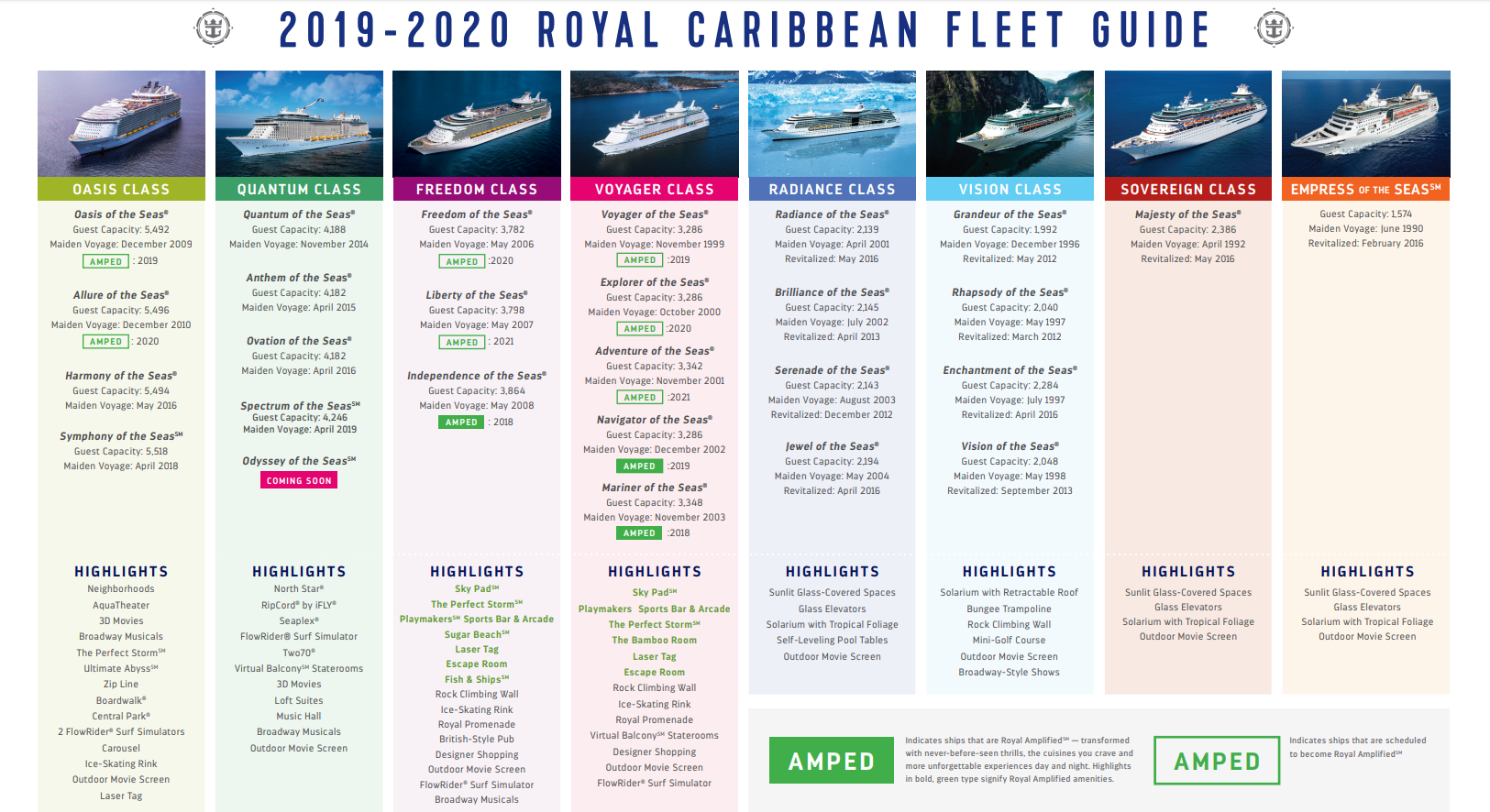
Royal Caribbean puts up 28 ships as collateral for $3.2bn bond

Fleet guide - Royal Caribbean Discussion - Royal Caribbean Blog
Royal Caribbean fleet fact sheet.

Royal Caribbean Cruises has launched a $3.2 billion bond offering while pledging 28 of its ships and “material intellectual property” as collateral.

The move followed the world’s second-largest cruise group forecasting heavy losses for the first quarter of the year as Covid-19 brought global sailings to a standstill.

The company expects to report a preliminary first-quarter net loss of $1.44 billion compared to a profit of $249.7 million a year earlier.

Royal Caribbean, which was forced to suspend its cruises globally and cut about 23% of its US workforce, said the health crisis has dented its quarterly net income by about $453 million.

Preliminary total revenue for the three months ended March 31 fell 16.7% to $2 billion against the same period last year.

Royal Caribbean declined to specify which ships it had pledged for its debt offering. It had vessels with a net book value of about $22.7 billion as of December 31, including Symphony of the Seas, the world’s largest cruise ship.

The net proceeds from the offering of the $3.3 billion notes will be used to repay a $2.35 billion 364-day loan.

The remainder will be used for “general corporate purposes, which may include repayment of additional indebtedness”.

The parent company of Royal Caribbean International, Celebrity Cruises, Azamara and Silversea, estimates its cash burn to be about $250 million to $275 million a month during a prolonged suspension of operations.

Carnival Corp: On Track to Slowly Remove Older Ships

Adonia in her Fathom livery during a 2016 turnaround day in Miami
Adona (Fathom) is set to join Azamara Cruise.

Carnival Corporation remains on pace to remove one to two older, less efficient ships from its fleet on an annual basis following two recent transactions.

Carnival announced earlier in the week the P&O Adonia has been sold to Azamara for a March 2018 delivery. The Adonia joins the neoClassica, which will leave the Costa fleet around the same time.

Newer ships are not only generally larger, but burn less fuel and generate higher ticket pricing and onboard revenue.

The 2001-built Adonia is one of the smallest ships in the Carnival fleet, at 684 passengers. The neoClassica is also on the smaller side, with capacity for 1,308 passengers, having been built in 1991.

The sales are part of the company’s broader corporate strategy to remove older, less efficient ships, while moderating capacity growth in line with demand, according to executives.

“We remain on track with our strategically enhancement program as we continue to deliver more efficient vessels, while replacing less efficient ones over time,” said Arnold Donald, president and CEO of Carnival Corporation, on the company’s third quarter earnings call.

Last year followed a similar beat as the 1988-built Pacific Pearl left the P&O Australia fleet for a new home with Cruise & Maritime Voyages. Her capacity was replaced by the much newer 1997-built Dawn Princess, which was transferred to P&O Australia and renamed the Pacific Explorer.

Image result for pacific explorer

“As demonstrated by our April sale of Pacific Pearl, as well as our recently announced sale of Costa neoClassica, expected to leave the fleet next April, and our P&O Adonia, expected to leave the fleet next March. We remain on pace with our historical average of removing one to two ships per year,” Donald added.

In 2014, the company moved a number of ships off its books as the Voyager, which was operating for Costa was sold to Bohai Ferry.The Celebration went to Bahamas Paradise after her stint with Iberocruceros. The Grand Holiday, another Ibero ship, was sold to Cruise & Maritime Voyages, and finally, the Ocean Princess was sold to Oceania, a deal in which Carnival even provided financing.