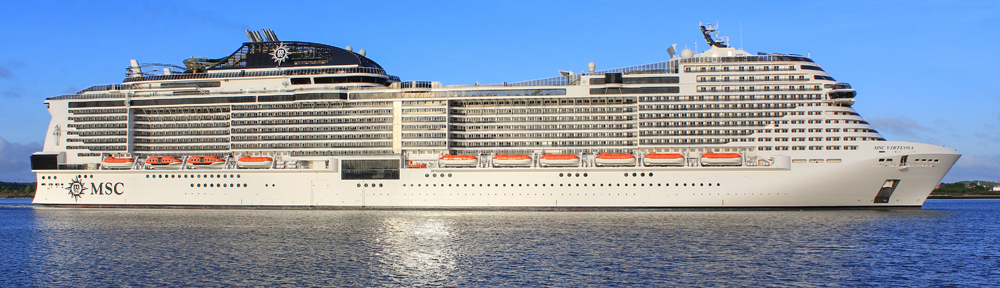

Larger cruise ships with local deployments will be the first to come back on sale following Covid-19, the former boss of Azamara has predicted.
Larry Pimentel, who stepped aside from his role as president and chief executive in April as the line made plans to survive the pandemic, said he expected older, smaller ships with international deployments to “sit on the sidelines simply because of the air travel” as travel resumes.
Speaking on a Travel Weekly webcast, he said: “Think about taking a 10, 12 or 15-hour flight in coach and the denseness that you’d find on these carriers. I’m not going to do that at the moment.
Click on the image to watch the Chat.

“We’re going to find big ships with local deployments are the first to come back,” Pimentel said. “You’re probably going to find short rotations out of the States and you’ll probably get three or four-day rotations going to private islands. Why? Private islands can secure the safety and health in all areas without a bunch of nonsensical politics layered in it, which makes things even more complex and, frankly, angers a lot of people.”
Pimentel said small luxury vessels sailing to less crowded destinations may also come back sooner, but said: “We still have an issue with social distancing in an industry that was all about the connection on the ships, so herein lies a paradoxical sort of scenario.”
Pimentel predicted many ships would not come back into the sector at as line battle with cash flow issues.
“Cruise lines need the cash right now,” he said, noting that the only income lines are bringing in is onboard revenue as cabins on 2021 sailings will be filled up with people who deferred from this year and used their future cruise credits to rebook. “So the cruise industry is going to have a terrible 2020, and a terrible economic 2021.”
Pimentel said: “The ships that come back are likely to fill up as there won’t be as many ships operating. Let’s face it, there will be some ships that will sit in the sidelines that won’t come back to the industry. The whole industry closed down in about three weeks. There is no way in hell we’re coming back in three weeks or even three months.”
He also predicted that “new cruise ship orders will slow so significantly that it will almost seem like they are stopping altogether, compared to we’ve seen over the last couple of years”.
“I fully expect a lot of options not to be secured,” he said. “This [recovery from the pandemic] is not months, this is a multi-year process.”
He pointed out that there are 19 new ocean ships on order this year, adding: “That’s a lot of vessels and right now, who needs more capacity? Nobody. But in the future, demand will be there. I’ve learned this about the consumer – once they feel even a little bit comfortable, and the value seems there, they will book.”


 Wetravel2u's Weblog