MSC Cruises to welcome UK passengers as soon as FCO allows

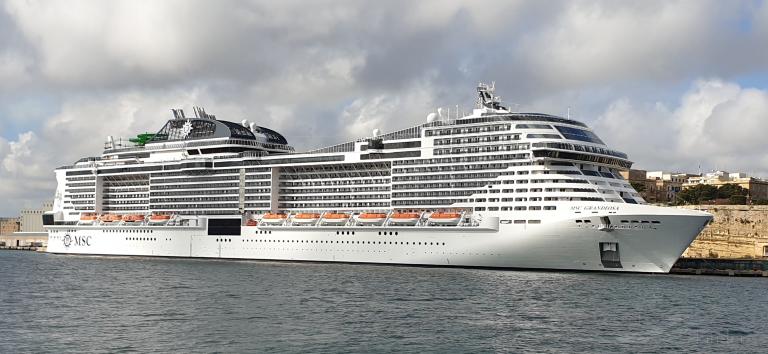
MSC GRANDIOSA, Passenger (Cruise) Ship - Details and current ...

British passengers will be able to board MSC Cruises ships as soon the UK Foreign Office’s advice against all ocean cruising is lifted.

The line’s UK managing director confirmed the plan to Travel Weekly ahead of the line’s resumption of sailings in the Mediterranean from this Sunday.

Currently, only passengers from Europe’s Schengen Area, and Switzerland, can board the sailings.

Flagship MSC Grandiosa will launch seven-night cruises in the Western Med from August 16 and MSC Magnifica seven-night itineraries in the Eastern Med from August 29.

All other cruises in the Mediterranean from August 16 through to October 31 have been cancelled, and cruises departing the US have also been suspended to October 31 in line with cruise association Clia’s recommendation.

Confirming that Brits would be welcome on board as soon as Foreign Office advice against cruising is lifted, Antonio Paradiso said: “As far as I am concerned, that is the only blocker.”

Larger cruise ships on local deployments expected to be first to return

Deck Plans | Azamara

Larger cruise ships with local deployments will be the first to come back on sale following Covid-19, the former boss of Azamara has predicted.

Larry Pimentel, who stepped aside from his role as president and chief executive in April as the line made plans to survive the pandemic, said he expected older, smaller ships with international deployments to “sit on the sidelines simply because of the air travel” as travel resumes.

Speaking on a Travel Weekly webcast, he said: “Think about taking a 10, 12 or 15-hour flight in coach and the denseness that you’d find on these carriers. I’m not going to do that at the moment.

Click on the image to watch the Chat.

Webcast: 'It's a matter of choice, we have to choose to persist ...

“We’re going to find big ships with local deployments are the first to come back,” Pimentel said. “You’re probably going to find short rotations out of the States and you’ll probably get three or four-day rotations going to private islands. Why? Private islands can secure the safety and health in all areas without a bunch of nonsensical politics layered in it, which makes things even more complex and, frankly, angers a lot of people.”

Pimentel said small luxury vessels sailing to less crowded destinations may also come back sooner, but said: “We still have an issue with social distancing in an industry that was all about the connection on the ships, so herein lies a paradoxical sort of scenario.”

Pimentel predicted many ships would not come back into the sector at as line battle with cash flow issues.

“Cruise lines need the cash right now,” he said, noting that the only income lines are bringing in is onboard revenue as cabins on 2021 sailings will be filled up with people who deferred from this year and used their future cruise credits to rebook. “So the cruise industry is going to have a terrible 2020, and a terrible economic 2021.”

Pimentel said: “The ships that come back are likely to fill up as there won’t be as many ships operating. Let’s face it, there will be some ships that will sit in the sidelines that won’t come back to the industry. The whole industry closed down in about three weeks. There is no way in hell we’re coming back in three weeks or even three months.”

He also predicted that “new cruise ship orders will slow so significantly that it will almost seem like they are stopping altogether, compared to we’ve seen over the last couple of years”.

“I fully expect a lot of options not to be secured,” he said. “This [recovery from the pandemic] is not months, this is a multi-year process.”

He pointed out that there are 19 new ocean ships on order this year, adding: “That’s a lot of vessels and right now, who needs more capacity? Nobody. But in the future, demand will be there. I’ve learned this about the consumer – once they feel even a little bit comfortable, and the value seems there, they will book.”

Carnival UK chief warns over tighter sulphur emissions rules

Carnival UK chief warns over tighter sulphur emissions rulesThe boss of Carnival UK has warned that cruising in northern Europe “is not sacrosanct” as the shipping industry cranks up pressure against tighter planned international rules on sulphur emissions.

Chief executive David Dingle told Travel Weekly that company brands P&O Cruises and Cunard Line have already planned a 28% cut in Baltic and Norway cruises between 2013 and 2015.

Despite a large increase in new ex-UK capacity targeting newcomers to cruise holidays next year, the Baltic region is not a strong draw for new to cruise passengers, suggesting further reductions could be possible.

Dingle spoke after a cross-party group of MPs last week lobbied the government to amend the rules to give the cruise and ferry sectors time to adapt their ships.

The sulphur content of fuel must fall to 0.1% in January 2015 in the North Sea and English Channel to cut pollution.

But Dingle calculated that there was only a “50-50” chance of getting the required breathing space to allow ships to be fitted with the scrubber technology required to clean existing fuel.

The UK Chamber of Shipping wants prime minister David Cameron to lobby Brussels to buy time to allow shipping companies to install the technology.

It estimates that it could take up to two years for every ship to be fitted with the new technology – so the January 1 deadline is seen by the industry as being “entirely unrealistic”.

Dingle said lobbying would be stepped up in the second half of the year ahead of the deadline and warned of the detrimental social and economic impact that would be incurred if ferry companies had to abandon routes and cruise lines were forced to alter itineraries away from regions such as the Baltics and Norway.

DFDS has already announced the closure of the Harwich to Esbjerg route and there are fears that 2,000 jobs could be lost across the country if other routes are forced to closed.

“Northern Europe is not sacrosanct even at a time when cruise lines are starting to grow capacity,” said Dingle.

UK Chamber of Shipping CEO Guy Platten said: “We support the move to reduce sulphur emissions and the introduction of tough new limits.

“But the sharp increase in demand for low sulphur fuel will see a massive spike in costs both for ship owners and potentially for ordinary diesel car users – so we need to use the new technology instead. But that technology is only now beginning to work, and could take up to two years to fit properly to all of our ships.

“Reducing sulphur is a job we agree needs doing, but it needs to be done in a pragmatic way that protects jobs as well as the environment. All we’re asking for is the EU to understand the practical realities we face and give us the time we need to comply.

“A report by [consultants] AMEC recently said if we implement new regulations before the technology is ready, then 2,000 UK jobs could be lost, thousands more lorries will clog up our roads and 12 million tonnes of additional Co2 will be emitted into our atmosphere unnecessarily every year (Travel Weekly June 12).

“We know other countries within the EU share our concerns – but they are waiting for leadership from the UK.

“So this is an issue in Europe where the prime minister can make a real difference, it is a real opportunity for him to stand up for British business in Europe and succeed. We are simply asking that he takes it.”