
The emergence of evening port stays as a defining feature for Azamara Club Cruises has focused a spotlight on the growing use of this alternate deployment strategy.
Traditionally, cruise lines have offered few if any overnight stays and generally leave ports of call before sunset. Large-ship lines in particular have made their vessels into evening playgrounds.
“The shipping industry as a whole has built massively beautiful, stunning ships … but oftentimes in many people’s minds the ship became the destination,” said Azamara President and CEO Larry Pimentel.
A number of lines are flipping that playbook, making the actual destination the evening focal point.
“We have to think not outside the box, but outside the ship,” Pimentel said.
Other lines that have embraced overnight stays include Crystal Cruises, Seabourn, Silversea Cruises and Oceania, whose fleet deploys some of the same type of ships that Azamara does.
By offering more overnight stays in port, cruise lines risk declines in some key sources of onboard revenue, such as casinos, duty-free shops, bars and alternative restaurants.
Almost all the lines pursuing the strategy are upscale, small-ship brands with inclusive amenity policies and worldwide itineraries with a preponderance of longer voyages.
Crystal Cruises, for example, is offering a 14-day Asian cruise next January that overnights both before it departs Singapore and after it terminates in Hong Kong, as well as a mid-cruise overnight in Ho Chi Minh City, Vietnam.
Overnights have practical benefits in addition to giving guests more sightseeing time.
“When you overnight the day you arrive at port, the number of bags that miss the cruise drops to zero,” said Thomas Mazloum, Crystal’s senior vice president for operations.
Crystal is offering some epic holiday port stays, including a 2016 New Year’s Eve overnight in Sydney, Australia, that includes chartered catamarans to see a fireworks display.
Another line that is increasing the number of overnight stays it offers is Silversea Cruises, which for 2014-15 has increased to two days each its overnights in Livorno and Sorrento, Italy; Bordeaux, France; and Leith, the port for Edinburgh, Scotland.
Silversea has also increased late-night departures in cities with desirable night-life scenes, including St. Tropez, Ibiza, Monaco, Portofino, St. Barts and Amsterdam, spokesman Brad Ball said.
Likewise, Oceania Cruises and Regent Seven Seas Cruises have a list of nearly two dozen ports where they conduct overnights, including stays of more than one night in Jerusalem, St. Petersburg, Shanghai and Yangon, Myanmar.
Pimentel said that because several cruise lines have acquired some of the former Renaissance Cruises R-class ships, it is hard to compete by claiming unique hardware. And some competitors have more luxurious vessels.
“I am not naive about the fact that the ships are 13 to 14 years old,” Pimentel conceded. “I do not have new tonnage.“
But as long as he can offer a unique experience, Pimentel said, people will seek it out.
That also is the thinking behind Costa Cruises’ neoCollection, a portfolio of older, smaller ships that Costa is promoting as “slow cruising.”
Many neoCollection itineraries are exclusive to the line’s smaller “neo” ships, which can sail to destinations inaccessible to larger vessels. Itineraries are designed with longer stopovers at each port — often overnight and part of the next day — to allow maximum time on shore.

Ships in the collection include the Costa neoRiviera (624 cabins) and Costa neoRomantica (789 cabins).
Pimentel acknowledged that other cruise lines are offering some overnights but said no one else offers at least one on every voyage. “Nobody hits as much of this as we do,” he said.
Building a collection of evening tours has taken time, Pimentel said, because tour operators weren’t accustomed to having ships in port so late.
Azamazing Evenings, Azamara’s first evening product announced last year, included special events such as an operatic recital at a castle in Tuscany.
Each cruise had one such evening, which was included in the base fare and was designed to accommodate all 694 passengers who can be accommodated at dual capacity on an Azamara ship.
Now, beginning with the summer season in Europe, Azamara will roll out Nights and Cool Places. Unlike Azamazing Evenings, they will be fee-extra and are designed for a couple dozen guests at a time.
They will also take place after guests have dined on the ship, making the prices more affordable.
Examples include a visit to the Picasso Museum in Malaga, and a tram ride to a peak for a private concert and to view the laser light show in Hong Kong harbor.
A second program, called Insider Access, will take guests to private homes for immersion experiences or connect them to locals in ways that conventional tours do not.
Prices will start at $120 to $150 and run up to $800 for insider programs with elite personalities.
“There’s a lot of human effort that goes into making this happen,” Pimentel said.
He said that with relatively few slots in each night tour, he expects them to sell out at first. “We will add more because communities have more than one cool thing,” Pimentel said.
One factor that restricts cruise lines at night is that port labor agreements sometimes limit the availability of workers, or make them more expensive. Crystal’s Mazloum said that can make it challenging when a ship overnights pre-cruise and guests arrive after-hours.
By staying in port more days, ships also incur more port charges for dock space, security and services, although that is partly or wholly offset by fuel savings because the ship is not moving, cruise executives said.
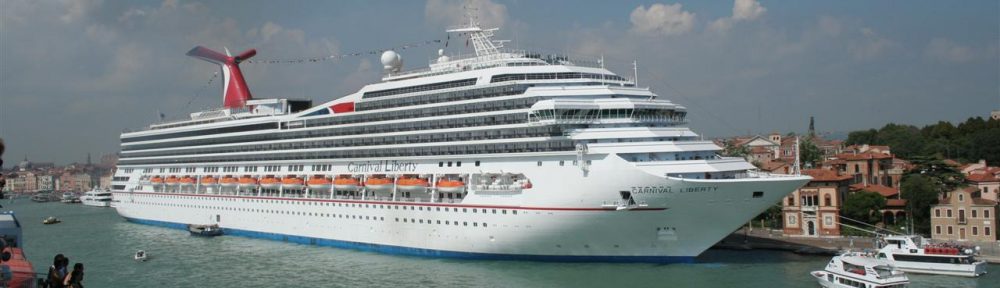


 Royal Caribbean Cruises Ltd. confirmed that it is working on a new subsidiary that would be focused on developing and marketing land tours around the globe.
 Wetravel2u's Weblog