First Panamax Containership Sprints Across Arctic Reaching China In Just Three Weeks

Container ship Flying Fish 1 is close to fully loaded. (Source: Courtesy of Peter Faas)

(gCaptain) – The first Arctic transit of a large container ship has gone off without a hitch. The 294 meter-long Panamax vessel Flying Fish 1, traveled from St. Petersburg in the Baltic Sea to China in just over three weeks, shaving around two weeks off a standard voyage via the Suez Canal. 

It is set to arrive at its destination in Shanghai early on September 26. The vessel is operated by EZ Safetrans Logistics out of Hong Kong. 

The proposition of regular summer season box shipping across Russia’s Northern Sea Route seemed impossible to most just a decade ago. This year the Arctic Ocean will see close to 20 transit voyages, all connecting Russian and Chinese ports via the Arctic shortcut.

Capable of carrying 4,890 twenty-foot equivalent containers it sets a new standard for Arctic container shipping. Prior to this summer only smaller box carriers holding around 1,500-2,000 gave the Arctic shortcut a try. Over the past three months, several larger feeder vessels have established a seasonal liner service between ports and China and Arkhangelsk and St. Petersburg.

Flying Fish 1 departed from St. Petersburg on September 3 and entered the Northern Sea Route at the top of Novaya Zemlya a week later. Shortly thereafter it crossed paths with another Chinese container ship, the first encounter of two large box carriers high in the Arctic. The nighttime rendezvous occurred just 850 nautical miles from the North Pole, with no sea ice in sight.

The vessel was able to maintain a speed of 16 knots across the entire length of the route, indicative of how Arctic ice conditions have dramatically changed over just the last two decades. Flying Fish 1 continued through the Laptev and East Siberian Sea, avoiding some late-summer ice near Wrangel Island. 

It exited from the route and passed through the Bering Strait near Alaska on September 17, without requiring any icebreaker assistance, just six days after entering the Russian Arctic.

Once complete, its journey from the Baltic Sea to Shanghai will measure approximately 8,000 nautical miles, around 4,000 nautical miles shorter than the traditional route via the Suez Canal. The current detour for most vessels around South Africa due to instability in the Red Sea adds another 4,000 miles to the standard route to Asia. 

For now, shipping services between Europe and Asia via the North remain limited to a 3-4 months summer window, but as sea ice retreats earlier in summer and returns later in winter, more operators will surely look to the Arctic for new opportunities.

Thank you to g-Captain for this article for more visit https://gcaptain.com/

AIDAsol and AIDAmar Connect to Shore Power Simultaneously

In a cruise industry first, AIDA Cruises marked the beginning of the season with a double call of the AIDAsol and AIDAmar in Rostock-Warnemünde, where the two cruise ships connected simultaneously to shore power, according to a press release.

“We are delighted by this successful shore power premiere in Rostock-Warnemünde. Thanks to the opening of further shore power facilities in European ports, we will be able to expand our commitment this year. Our goal is to be able to use shore power in all ports in the future. We, therefore, welcome the decisions of other ports to develop a corresponding solution. With our commitment to decarbonization, we are not only driving the energy transition in the cruise sector, but we are also providing an example of how to shape local value creation in our destinations sustainably,” said Felix Eichhorn, president of AIDA Cruises.

The two ships using shore power to supply energy is an important contribution to reducing carbon emissions while ships are docked in port, AIDA said in a press release.

The first shore power facility for cruise ships opened in the Baltic Sea region in 2021 with the AIDAsol in Rostock-Warnemünde during the 12th German National Maritime Conference.

The shore power plant in Warnemünde can supply two ships simultaneously at berths P7 and P8.

Cruise companies to commit to shore power in the Baltic Sea

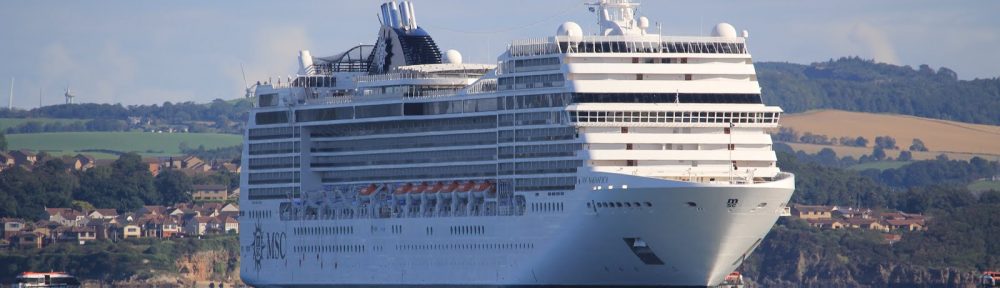
MSC Virtuosa Photo credit SpaceJunkie2

Five major cruise companies will commit to using shore power on all cruises in the Baltic Sea from 2024 at the Sustainable Cruising conference hosted by business-to-business network Cruise Baltic, to be held in Copenhagen, Denmark, on 5 April. 

Carnival Corporation, Royal Caribbean Group, MSC Cruises, Viking Ocean Cruises and Ponant will sign a memorandum of understanding at the conference, with the Danish minister for environment Lea Wermelin in attendance. 

“We are extremely proud that these cruise lines now commit to shore power in the region, and it shows that the cruise industry is taking an important responsibility when it comes to sustainability,” said Claus Bødker, director of Cruise Baltic. 

The Sustainable Cruise conference will take place at the Copenhagen Marriot Hotel and will feature talks by representatives of cruise lines and Baltic ports and destinations, along with Wermelin and the Lord Mayor of Copenhagen Sophie Hæstorp Andersen.