Royal Caribbean International is boosting its Australian presence in 2021-2022 according to local reports.
The Quantum of the Seas will move from Singapore to the Down Under market, joining the Ovation and giving the brand two Quantum-class ships in the market sailing from Sydney.
Those two ships are expected to be joined by the Radiance, sailing from Brisbane.
Originally debuting in North America and then moving to the Chinese market, the Quantum was based year-round in China before Royal Caribbean split her season between China and Singapore. Now, the ship will sail in Alaska for the 2021 summer and then move to Australia, moving tonnage out of the Chinese and Asian markets.
The early 2000s and the SARS virus sent Asia-Pacific operators scrambling to move ships, and the same may be about to play out as a number of brands operating in the Chinese market are reacting to the outbreak of the Coronavirus in China.
In a prepared statement, Astro Ocean Cruises said it is offering full refunds to any passengers that have a fever or have been diagnosed with the virus. In addition, for groups departing from Wuhan, where most cases have been concentrated, refunds are also on the table if guests cannot join the trip due to “pneumonia-related management measures.”
The company also said medical personnel that are unable to travel are also eligible for refunds or have the option to change their sailing to a future date.
Costa also issued a statement, saying it was working with port authorities to strengthen passenger screening procedures for guests that may have a fever.
The Italian brand is also modifying cruise policies to allow for full refunds for guests that have the virus or have a fever; as well as any guest from the Wuhan area; and similar to Astro Ocean, medical staff that cannot travel due to work commitments.
The pier at Icy Strait Point. Alaska is one of Norwegian Cruise Line’s most lucrative destinations.
Last winter, the Norwegian Spirit did 11-day runs from Barcelona to the Canary Islands and back, a traditional warm-weather cruise in Europe’s colder months.
But on a recent conference call, Norwegian Cruise Line Holdings CEO Frank Del Rio described it as “one of the historically lowest-yielding areas” to sail.
Jump forward a year, and the Spirit will emerge in February from a $100 million drydock and head for Asia, where it will sail nine-day cruises around Japan and cruises of 12 days or longer to Japan and China.
Del Rio said it is an example of Norwegian’s strategy of itinerary optimization, in which the line looks for the highest-returning itineraries available at a given time and concentrates its ships in those areas.
Asia, Del Rio said, and other exotic itineraries will “take advantage of our huge customer base, our past guests who have never been to those areas because we’ve never sailed to those areas before.”
Norwegian is scouring its deployments to see where customers are willing to pay the most, and it is capitalizing on their extravagance.
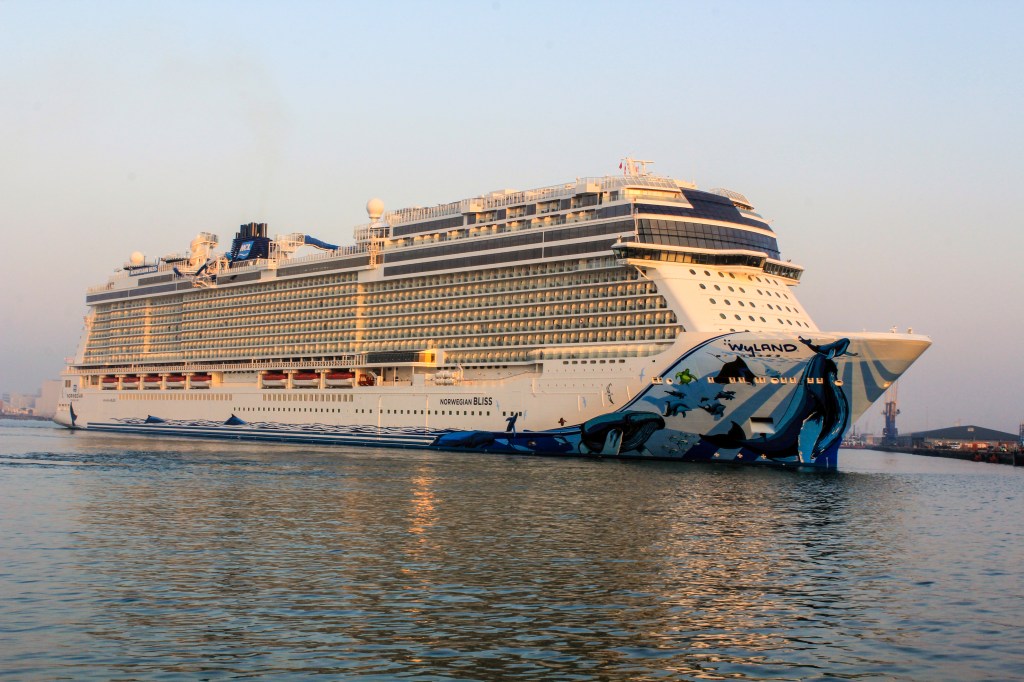
One area in which it is loading up on capacity is Alaska, where other lines have traditionally reaped the market premium. Although Norwegian has been sailing to Alaska for 20 years, its interest deepened in 2018 with the success of the 4,000-passenger Norwegian Bliss in its first Alaska season.
Christened in Seattle, the Bliss was a smash hit, according to Norwegian — so much so that when faced with obstacles in the Chinese market, Norwegian pulled its purpose-built Norwegian Joy out of Shanghai and sent it on short notice to Alaska in 2019.
Next summer, the line will repeat the feat, while also redeploying the 1,936-passenger Norwegian Sun to Alaska from the Bahamas — another low-yielding market, according to Del Rio.
In addition, to squeeze in more high-yielding cruise days, Norwegian is pushing the limits of what until now has been considered the cruising season in Alaska.
“Alaska used to be a three-month season — June, July and August. Now we’re getting there in April, and we’re not leaving until October,” Del Rio said. “It’s now a six-month season of very, very high-yielding — not only on tickets but incredibly high-yielding on onboard [spending]. And so we’re going to continue doing that.”
One of the keys to high yields in Alaska is to have land infrastructure that maximizes revenue opportunities from shore excursions as well as pre- and post-cruise extensions to lodging in the interior.
Norwegian recently announced a new aerial lift transportation system at Icy Strait Point designed to make its dock there more attractive.
The line is also extending the season in Europe, rather than bringing ships back to the Caribbean in October. Del Rio said he likes Europe because, for Norwegian, it means carrying high-spending guests.
In addition to North Americans, Del Rio said, “Guests for these itineraries do not come from locally sourced Europeans but from the rest of the world, including Australia, Asia and South America.”
He added: “And that’s a very important differentiator for us because we know that a guest who flies long distances to board the ship is a higher-yielding guest than one who drives their car or takes a bus or train to the port of embarkation.”
Next year, Norwegian is going back to the eastern Mediterranean, another high-yield area that Norwegian was one of the first to drop in 2016 after a spate of terror attacks and a coup attempt in Turkey.
At times, however, the itinerary optimization strategy backfires. The most recent example of that is Cuba. It was a natural destination for itinerary optimization when it opened to cruises from U.S. ports in 2016, and NCLH put more resources, proportionately, into Cuba than some of its rivals did.
But that also meant that when the Trump administration abruptly shut down U.S. departures to Cuba in June, NCLH was disproportionately hurt. In the third quarter, the withdrawal from Cuba reduced NCLH net income by $53 million from a year earlier.
“The year-over-year comparisons are night and day, in terms of pricing, because Cuba’s demand was at such a high price,” Del Rio said.
Literally overnight, twice-weekly Norwegian cruises from Miami and Port Canaveral that had included Havana had to be repriced as “Bahamas-intensive” cruises, said NCLH CFO, Mark Kempa.
Redeployments that will fully take effect in the second quarter of 2020 will finally end the economic penalty that resulted, Kempa said.
By sending the Norwegian Sun to Alaska next summer from Port Canaveral, Norwegian will halve its Bahamian deployment, “thus reducing capacity from this historically lower-yielding destination,” he said.


 Wetravel2u's Weblog