Policy changes after Concordia
CLIA and the European Cruise Council have adopted 10 policy changes for member lines in the wake of the Costa Concordia accident.
Common elements of musters and emergency instructions: Twelve items that must be included when pre-cruise emergency drills are designed for passengers.
Harmonization of bridge procedures:Making bridge practices consistent across fleets and brands under common ownership.
Lifeboat loading for training purposes:One lifeboat must be filled to capacity with crew members and maneuvered in the water once every six months.
Securing heavy objects: Potentially hazardous heavy objects should be secured permanently, when in use or during heavy weather, as appropriate.
Bridge access: Visitors are barred from the bridge during maneuvers that require heightened vigilance. Exceptions require preapproval from senior management ashore.
Excess life jackets: The number of life jackets on board should exceed SOLAS requirements by not less than the number of people within the ship’s most populated main vertical fire zone.
Muster drills: Group emergency instruction sessions will take place prior to sailing, rather than within 24 hours of departures as allowed under SOLAS.
Passage planning: Bridge officers should be briefed on the voyage plan well in advance and are encouraged to raise concerns without fear of retribution.
Location of life jacket stowage: Most life jackets are to be stored close to muster stations or lifeboat embarkation points on ships contracted after July 1, 2013.
Recording nationality of passengers:Nationality will be added to the list of information kept on each passenger and made readily available for search and rescue services.
The rock that pierced the Costa Concordia on Jan. 13, 2012, ripped a hole in more than its steel hull.
The accident, which killed 32 people, also tore open a debate about the safety of cruise ships and created a breach in the industry’s finances that is still being repaired.
Graphic footage of the ship’s evacuation led many people, at least for the short term, to shun a cruise vacation. Testimony from passengers left room for doubt that existing safety measures were adequate.
A year after the Concordia tragedy, it’s hard to calculate exactly its impact on cruise safety and business conditions. But evidence does suggest that while the bulk of the financial impact has already occurred, the safety impact for the most part is only beginning.
“What’s clear is there will be fairly fundamental amendments to SOLAS [the International Convention for the Safety of Life at Sea] as a result of Costa Concordia,” said Andrew Linington, a spokesman for London-based Nautilus International, a union for ship’s officers. “That process is going to be years, not months.”
That’s not so surprising, given the number of agencies and jurisdictions with some hand in the Concordia investigation. In Italy alone, the authorities involved included the Coast Guard, a maritime technical agency and criminal prosecutors. The U.S. Coast Guard and National Transportation Safety Board are lending a hand. The European Maritime Safety Agency also has a role.
But priority in the Concordia investigation thus far has been given to prosecutors looking at the incident as a possible crime. They have spent 2012 building a case to indict the ship’s captain, Francesco Schettino, and seven other Costa crew members and executives. They are expected to seek an indictment at the end of this month, at which point a judge would decide its validity.
That process has hindered the determination of what precisely caused the ship’s demise.
“The criminal investigation has taken precedence over the technical investigation,” Linington said. “The technical investigation is way, way behind where it should be.”
Without a report, regulators have no basis to craft new rules. With a few exceptions, most of the response to the Concordia accident has come from cruise lines making voluntary policy changes.
They have channeled their efforts through CLIA and the European Cruise Council, trade groups that can coordinate collective action.
To date, the groups have adopted 10 policy reforms. Observers say that if nothing else, voluntary self-regulation can be accomplished much more quickly than waiting for official investigations and rulemaking.
Some, but not all, of the rules address specific problems brought to light by the Concordia. Under existing rules, the emergency muster drill on the ship was allowed to be deferred for 24 hours after passengers boarded. Some passengers who departed Rome’s port, Civitavecchia, the evening of the accident had not been briefed about crisis response.
So CLIA member lines adopted a rule to make the muster mandatory prior to departure. They also agreed on 12 common features that must be referenced in each drill. The common elements include things like where to muster when the emergency signal is sounded and what to expect when the ship’s master orders an evacuation.
 A disturbing claim after the Concordia sank was that Schettino steered close to Giglio to make a personal “salute” to island residents. One version described it as a tribute to a headwaiter with family there.
While CLIA didn’t ban saluting outright, it decreed that voyage plans should be prepared in advance by bridge team members, who would be encouraged to raise concerns without fear of retribution.
“When there’s a need to vary from that plan, it will be properly addressed,” said Bud Darr, CLIA’s vice president for technical and regulatory affairs.
CLIA also standardized bridge practices on ships under common ownership so that personnel who rotate among brands or ships will have a familiar set of procedures.
Another reform requires lifeboats to be filled to capacity and maneuvered in the water at least once every six months. Other measures dealt with life jackets, heavy objects and passenger nationality.
The International Maritime Organization (IMO) has agreed to make mandatory participation in muster drills prior to departure a part of the SOLAS convention and to reference three more measures in its guidance on passenger ship safety.
Safety experts say that the reforms are fine as far as they go, but that they leave much to be done.
“We feel these are essentially fairly low-cost measures, certainly not of the radical nature required,” Linington said.
Bill Doherty, a former safety manager at Norwegian Cruise Line, now a director at Nexus Consulting Group in Alexandria, Va., said the IMO measures don’t compel cruise lines to make any changes.
“Unfortunately, the substance of that agreement is kind of weak,” Doherty said. “It’s almost, ‘Trust me, we’re going to do better.’”
 CLIA President Christine Duffy said the reforms are a condition of membership in the group and that cruise line CEOs are required to certify in writing annually that they are followed. The penalty for noncompliance is loss of membership, she said.
At least one of the reforms has produced practical consequences. Several passengers have been kicked off ships for refusing to join a muster drill, including an elderly couple put off the Seabourn Sojourn last May.
The U.S. Coast Guard in February 2012 ordered examiners to observe muster drills being performed on cruise ships at U.S. ports. More recently, an organization of 26 European states and Canada agreed to heightened verification of passenger ship safety drills during 2013.
What’s more, safety experts say that the delayed approach to informing passengers about how to evacuate the Costa Concordia was only one of several problems that need further investigation.
Another is why the Concordia flooded despite design features that had been expected to keep it afloat.
Cruise ships are built with multiple internal divisions to contain water and channel it so the ship stays upright. There are watertight doors between the divisions.
When the Concordia struck a rock, the two compartments that flooded first contained key electrical equipment that failed almost immediately. In addition, the ship began to lean, or list, to one side.
“Within the space of barely an hour you had a 10-degree list,” Linington said.
After three hours, the ship was listing 80 degrees, making it impossible for three of the 26 lifeboats onboard to be launched. More than 100 people remained onboard, according to a timeline from the Italian Maritime Investigative Body.
Once flooding began, watertight doors could have blocked water from spreading. By rule, they should have been closed at sea, but evidence suggests they might not have been.
“There’s a lot of analysis suggesting that the regulations are routinely not applied,” Linington said.
Watertight doors are also designed to close automatically in emergencies, but the flooding of the ship’s generators, which disabled much of its electrical system, might have prevented them from functioning.
Investigators are also considering whether the crew was adequately trained to organize an evacuation. Some 838 of the 1,023 crew members were assigned some role in the event of an emergency. About two-thirds of the crew was from India, Indonesia or the Philippines, raising questions about how well they understood commands.
Passengers Divya and Sameer Sharma testified before a congressional subcommittee in February that “nobody seemed to have any clear idea about what they had to do in this situation or where they were supposed to send us.”
However, passenger Alex Beach of New Mexico, who appeared on ABC’s “Good Morning America” after the accident, said a crew member swam to her lifeboat to start a stalled engine and that in general the Concordia crew “did everything in their power to help us.”
Some observers are also troubled by how long it took Schettino and his officers to recognize or admit the severity of the situation and to direct passengers and crew to prepare for evacuation.
Financial benefits of safety
The loss of the Costa Concordia was a problem for the cruise industry’s safety image, and that, in turn, became a problem for its bottom line. Micky Arison, chairman of Carnival Corp., which includes the Costa brand, recently told industry analysts that the accident made 2012 the most challenging year in the company’s history.
At Costa alone, Carnival estimated operating losses for 2012 at $100 million. Costa suspended all marketing for weeks after the incident and has struggled to sail its ships full.
Although there was some early speculation that Carnival would abandon Costa, that has not been the case. But Arison said it will be several more years before Costa returns to its former profitability.
And the damage the Concordia caused cruising’s image was felt across the industry.
While Costa was most directly hit, all of the Carnival brands took some collateral damage.
For the 2012 fiscal year ended Nov. 30, Carnival revenue fell 2.5%, to $15.4 billion.
To place that in some perspective, Carnival revenue fell 3.7% in 2002, the year after 9/11.
Nor was the damage confined to Carnival, as all cruise lines felt some fallout.
In July, Royal Caribbean Cruises Ltd. cited larger-than-anticipated discounting in Europe as a factor in a $3.6 million Q2 loss.
“It is hard to distinguish how much of the pressure in Europe is connected to the Costa Concordia incident and how much is due to the economic roller coaster,” said Brian Rice, executive vice president.
Rice said the timing of the incident “left a big gap during our peak booking period, and filling that gap disrupted our normal booking patterns.”
For agents, lower prices have meant a reduction in earning power. Instead of selling at higher prices and the resulting higher commissions, as had been expected at this time last year, agents have had to absorb lower prices and often see fares on cruises booked way in advance of departure undercut by last-minute discounts to top off ships.
 At Des Moines, Iowa-based Cruise Compete, CEO Bob Levinstein said it was an off year, due in no small part to the Concordia. “Overall, 2012 was down in the 7% to 10% range. We usually grow.”
Levinstein cited a warm winter, the economy and other smaller ship incidents as contributing factors, but he said the Concordia was the event that captured the most public attention.
For a while, the phones rang less often, and bookings were scarce. It didn’t last, he said, but it created a deficit that was hard to close. “As soon as you start getting behind in filling the ships, prices have to come down,” Levinstein said.
By the end of 2012, Cruise Compete still had not closed the gap. And Levinstein said there will be some carryover into 2013. Because sales weren’t robust in May and June, there are sailings in January and February that were filled at discounted rates.
Still, the worst is over, Levinstein said. “The real effect has crested. We’re looking at some ripples and waves at this point.”
Concordia’s impact varied by agent.
Bob Newman of Cruise Brothers in East Providence, R.I., said, “On me personally, it had no effect. I deal with a lot of educated consumers, not first-time cruisers.”
 Agents agree that luxury lines and luxury-oriented passengers were the least affected group.
“Our cruise business was up,” said Mary Kleen of Pisa Brothers Travel, a Virtuoso agency on Fifth Avenue in New York.
Kleen said the Concordia did have an effect on first-quarter sales but that has faded. “Demand is back,” she said.
But the bigger the agency, the more likely it was to suffer the general downdraft. At Montrose Travel (No. 54 on Travel Weekly’s Power List) cruise sales in 2012 were softer than anticipated.
“While our cruise sales were up, we had expected a much higher number for this product,” said Andi Mysza, president of the Mtravel subsidiary. “Our land-product sales were up more than cruises.”
This month will bring renewed attention to the Concordia as the one-year anniversary prompts media to revisit the scene. The CBS stalwart “60 Minutes” was among the first to jump in with a Dec. 16 report on how salvage engineers plan to raise the capsized ship.
Once the anniversary passes, attention will revert to whatever is in the news. But Doherty of Nexus Consulting warned that the cruise industry should resist the urge to quickly move on to other things.
The 32 people who died on the Costa Concordia are a reminder that complacency about safety can’t be tolerated, he said.
“It’s only been a year now,” Doherty said. “How fast we forget what a real disaster this was.”
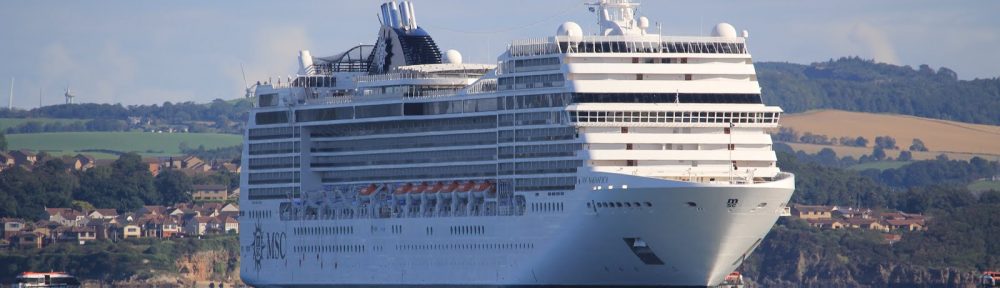
 After last year’s aborted Wave season, the cruise industry has been counting on a good start to 2013, and most early signs point to the likelihood that it will get one.
 January is world cruise season, and this year a dozen ships are sailing on three- to four-month voyages around the world. It’s a time-honored tradition, especially for luxury lines.


 Wetravel2u's Weblog