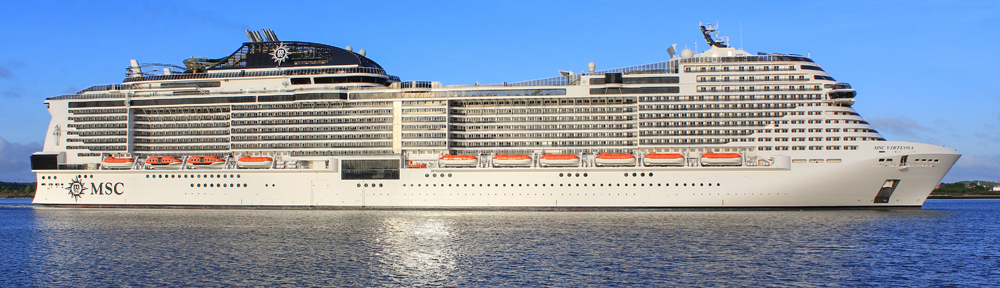
Hong Kong making room for big ships
 Hong Kong is nearly ready to roll out the welcome mat for large cruise ships, hoping to become the gateway for an increasingly wealthy area of China.
Crews are putting the final touches on a new, $1 billion terminal that will be able to accommodate the largest cruise ships afloat.
Nearly a quarter-mile long, the terminal will open its first half in June, anticipating 37,000 passengers on 16 ships in the first 10 months of operation. By mid-2014, the second half of the terminal will open.
Tourism officials are already selling the city as a new and improved port.
“Hong Kong is fully geared up to provide cruises of all sizes,” said James Tien, chairman of the Hong Kong Tourism Board.
For years, Hong Kong has been an appealing but limited destination for ships.
The city has a great harbor, shopping and cultural treasures, and unlike most of its Asian neighbors, the former British colony is comfortable for English speakers.
Cruise itinerary planners say it is on a select list that includes Istanbul, Venice and St. Petersburg, Russia, where ships overnight in port to let passengers explore.
“I think it speaks to the appeal of Hong Kong,” said Bruce Krumrine, vice president for shore operations at Princess Cruises, which plans two full days in Hong Kong on its 2013 World Cruise.
But Krumrine and others agree that its existing cruise terminal has handicapped Hong Kong. It can handle just two ships of about 50,000 gross tons each. At peak times, a shortage of berth space gives cruise lines heartburn.
“Royal has had to homeport at anchor in Hong Kong occasionally,” said John Tercek, vice president for commercial development for Royal Caribbean Cruises Ltd. “This is a real problem for us.”
Recognizing the issue, Hong Kong officials in 2008 put out bids for a new facility on the site of the city’s former international airport, Kai Tak.
Closed in 1998, the airport’s main runway extends 10,000 feet into Victoria Harbor, creating a natural pier. Hong Kong officials retained renowned British architect Norman Foster to design the terminal, which has a dramatically long profile.
The terminal itself is 1,181 feet long, with berthing space of 2,788 feet, giving it the ability to accommodate two Oasis-class cruise ships, each 1,186 feet long.
Plans call for five passenger bridges and 100 check-in stations, along with customs facilities able to process about 3,000 passengers an hour, officials said. A landscaped park will occupy the third story of the terminal, offering elevated views of Victoria Harbor and the Hong Kong skyline.
With the debut of the new terminal and renovations planned for the old Ocean Terminal, Hong Kong will be able to handle four ships at once, leapfrogging cities such as Singapore and Shanghai, which also have new facilities.
 Cruise lines currently treat Hong Kong as a seasonal homeport as they migrate from north Asia to Southeast Asia during the winter.
Malaysia-based Star Cruises is the only line with a year-round presence. Its 1,081-passenger Star Pisces does one-night cruises to nowhere at prices ranging from $150 to $970.
With its large international airport (also designed by Foster), Hong Kong has the airlift to be a starting and departure point, and not just a port of call, for cruise ships.
“The ability to turn around big ships in Hong Kong is something we’ve been waiting on for a long, long time,” Krumrine said.
But lately, an even bigger opportunity has popped up on the radar screens of U.S.-based cruise executives. Cruise lines, particularly Royal Caribbean and Costa, are increasingly putting ships in Asia to sell to Asians.
“The exciting part of our industry is the local potential,” said Tercek.
Hong Kong officials estimate there are potentially 50 million middle-class Chinese in the Pearl River Delta provinces of China who would see Hong Kong as the closest cruise port.
Chinese officials last year granted permits for Chinese residents sailing through Hong Kong to cruise beyond Taiwan to Japan, an attractive route, cruise executives said.
One potential stumbling block for the Kai Tak terminal is its location away from the center of Hong Kong. Jeff Bent, director of cruise projects for Worldwide Flight Services, said that can be overcome by developing water transport options.
A ferry operating from the tip of the Kai Tak pier would cut transit time to Hong Kong island’s Central district in half, Bent said.
The terminal will be run by a partnership, whose principal owner is Worldwide Flight Services, a Paris-based ground handler operating in more than 120 airports.
Minority partners include Royal Caribbean (20%) and Shun Tak (20%), a Hong Kong conglomerate founded by gaming tycoon Stanley Ho.
 The biggest challenge for the cruise industry over the next decade may be the cultural one.
 Germans also appear to love to cruise. Some of Carnival Corp.’s best performing ships sail for German brands. The number of cruisers from Germany could overtake the total from the U.K. within five years, CLIA President Christine Duffy recently forecast.
 The number of cruise line members has grown from 26 to 55, she said.
 Wetravel2u's Weblog