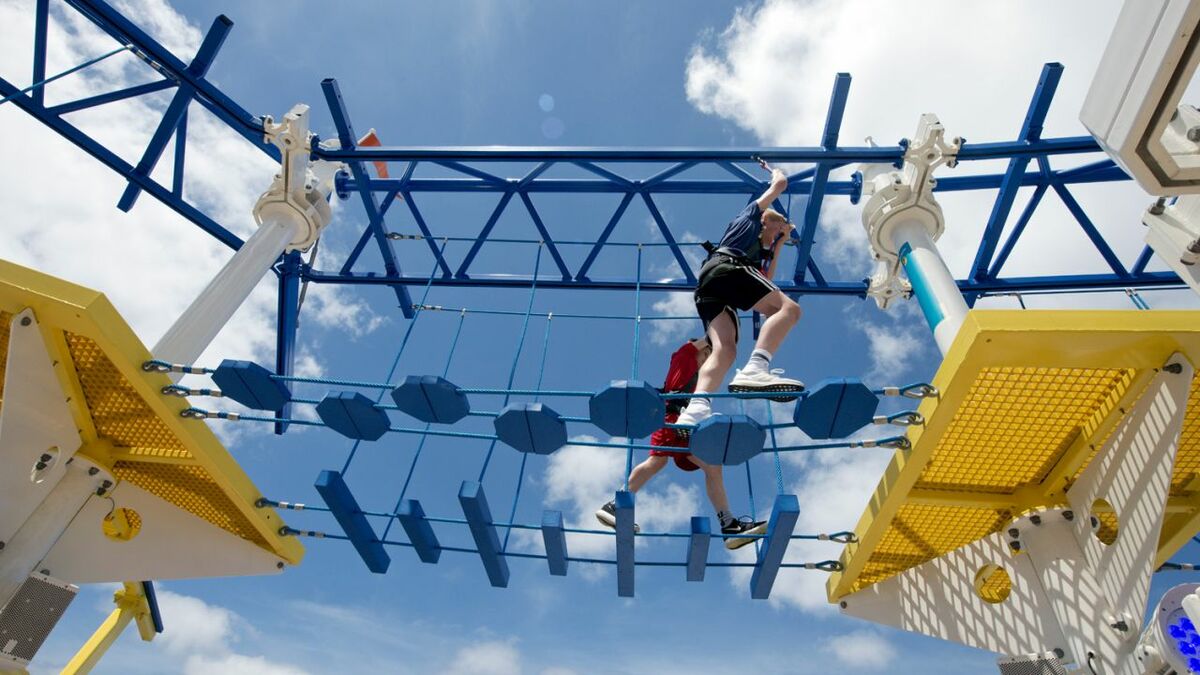
Carnival Triumph’s transformation into Carnival Sunrise includes a suspended ropes course as part of its sports square (credit: Andy Newman)Carnival Triumph’s transformation into Carnival Sunrise includes a suspended ropes course as part of its sports square (credit: Andy Newman)
Carnival Cruise Line vice president revitalisation and hotel refurbishment Lisa McCabe opens up on the transformation of Carnival Sunrise and how this will be incorporated into Carnival Victory’s revitalisation In 2019 Carnival Cruise Line carried out the largest refurbishment in its history – and it is using those learnings as it plans a major retrofit for Carnival Sunrise
Carnival Cruise Line vice president revitalisation and hotel refurbishment Lisa McCabe explains “At US$200M, the transformation of Carnival Triumph into Carnival Sunrise was the largest single-ship refurbishment in our company’s history, involving a 38-day drydock in Cadiz, Spain with 7,000 ship employees and contractors working 24/7 to make Carnival Sunrise a reality.
“Given the complexity of the refit, the process was streamlined and efficient. The end result is simply amazing – new dining and beverage outlets, exciting top-deck attractions including a massive water park and a suspended ropes course, updated staterooms and suites, enhanced guest flow and a more contemporary feel overall.”
The company is now gearing up for another major transformation – that of Carnival Victory’s transformation into Carnival Radiance.
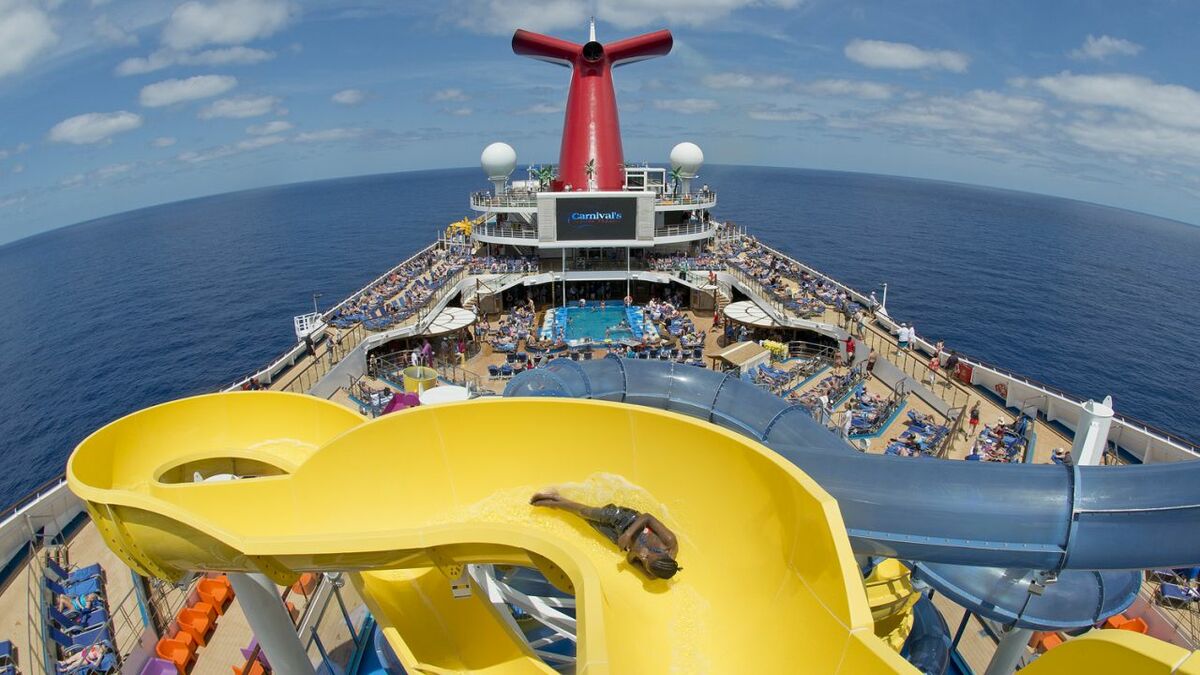
Carnival Sunrise includes exciting new top-deck attractions, including a massive water park (credit: Andy Newman)
Enter Carnival Radiance
Ms McCabe says “We learned so much from the Carnival Sunrise drydock and have incorporated these learnings as we began the planning for Carnival Victory’s transformation into Carnival Radiance. Not only in the work itself but in all aspects of the refit, from staffing, working with suppliers and vendors and the logistical challenges that come with a project of this magnitude. Our designers have also changed the layout for Carnival Radiance – relocating the Guy Fieri BBQ to enhance visibility and ultimately drive more traffic.”
Carnival Radiance will also feature the first Big Chicken restaurant by its Chief Fun Officer Shaquille O’Neal. “Incorporating a brand new restaurant concept into a renovated ship has its share of challenges – from sourcing materials to equipment and logos – but we worked closely with our internal design teams as well as Shaq’s personnel to create a dining venue we’re sure our guests will enjoy,” says Ms McCabe.
Elaborating on Carnival Cruise Line’s refurbishment strategy, she says “All 27 of our ships undergo a refit every few years and between 2020 and 2021, 13 ships – roughly half our fleet – will undergo a drydock with the work being done varying by ship. Interestingly, because of a lack of drydock space here in North America, we’re refurbishing more ships in Europe which can create even more logistical and staffing challenges given that it’s not as close as our other facilities and we have to sail across the Atlantic just to get there and back. Our marketing and itinerary planning teams are hard at work creating attractive new transatlantic crossings for our guest.”
She expands that every ship in the fleet will undergo at least one major refurbishment during its lifetime and “our focus is making sure we are able to schedule these drydocks and closely manage not only the schedule but also staffing, logistics, design and provisioning to ensure we deliver a quality refit on time and on a budget”.
These refits are part of a US$2Bn ship enhancement project that is introducing new features and standardising offerings across the fleet.
Popular amenities
Ms McCabe says “With many of these refurbishments, we are adding spaces that have proven very popular with our guests – the Caribbean-inspired RedFrog Pub, the cocktail pharmacy-themed Alchemy Bar, expansive water parks and the transformation of the three-deck main theatre into the multi-purpose Liquid Lounge across two decks which allows for a more intimate space with enhanced sightlines while at the same time providing an opportunity to add staterooms in the previous space.”
She points out that the upcoming refurbishment of Carnival Miracle will mark the installation of the 27th Guy’s Burger Joint by longtime partner and Food Network star Guy Fieri so the venues are now available fleetwide.
Asked about the current challenges when it comes to refurbishing the interiors of the cruise ships, Ms McCabe says “Refurbishing ship interiors is an extremely involved and complex process that begins several years before the refit actually takes place. It is imperative that we come up with creative solutions that offer the guest new experiences while also satisfying the needs of our operational teams on board. Real estate is very valuable, and it is important to make spaces multifunctional. In addition to securing quality vendors and subcontractors to refurbish the space the way it was designed, the overall look and feel have to be eye-catching, functional and timeless as it will likely be on the ship for many years.”
Sustainability is also a priority when it comes to interior refits. Ms McCabe says “Being a leader in environmental stewardship is a top priority for Carnival Cruise Line and this, of course, extends to our ship refurbishment programme. We take sustainability into account in everything we do – from the materials, we source to the vendors we use and how they work is carried out each day. We are constantly evaluating our procedures and processes to make sure we are operating in a way that reflects our commitment to being an environmental leader.”
Snapshot CV: Lisa McCabe (Carnival Cruise Line)

Lisa McCabe joined Carnival Corp in 2009 and moved to Carnival Cruise Line to build the refurbishment department in 2012.
She leads a team of project managers responsible for most of the cruise line’s large-scale drydock projects throughout the fleet that includes adding new branded food and beverage venues, stateroom renovations and additions, water parks and upgrades to crew spaces. During her time at Carnival Cruise Line, Ms McCabe has been responsible for over 500 refurbishment projects in shipyards throughout the US, the Bahamas, and Singapore.
Ms McCabe studied interior design at Florida International University and has focused her career on refurbishing ships.



 Wetravel2u's Weblog