As the European financial crisis drags on and various countries’ austerity measures push unemployment skyward, cruise lines could once again find their Europe-based ships filled with North Americans this summer.
With many ships now departed on transatlantic repositioning trips, the cruise lines say that demand within Europe has been softer than anticipated, particularly in southern European countries.
Royal Caribbean Cruises Ltd. (RCCL) recently announced it will cut capacity in Europe again in 2014, reducing it to 25% of its total berths, compared with 31% as recently as 2011.
 To a greater degree than in the past, passengers from the U.S. and Canada will be filling those ships, because their economies are performing relatively better than those in most of Europe.
“We will have more Americans cruising with us on itineraries away from North America in 2013 than we had expected,” Royal Caribbean International CEO Adam Goldstein said in a recent conference call.
On the other hand, an enticing whiff of demand in February from European travelers complicates the outlook. It might yet turn out that Europeans will cruise this year, despite unemployment rates that in some countries have risen to more than 25%.
But Europeans tend to wait until they’re close to sailing to book. So cruise executives are left to project, without a lot of certainty, how lines such as Costa, P&O and Pullmantur will do.
 “Because of the closer-in booking pattern in Europe, that [makes] forecasting European yields much more difficult,” Carnival Corp. Chairman Micky Arison said in a mid-March conference call.
For travel agents selling European cruises to U.S. travelers, this year has been a modest improvement, at best, over 2012.
“My Europe sales are pretty consistent with last year,” said CruiseOne agent Becky Piper of Strongsville, Ohio, near Cleveland. “I can’t say they’re tremendous, but they’re OK.”
Kevin la Van, manager of Village Cruise & Travel on the southwest side of Chicago, said he’s selling one or two European cruises a month.
“The prices aren’t bad,” la Van said. “That certainly helps. But the airfares are higher. It’s kind of a wash.”
For many agents, summer is the key season, and most of those cruises have been booked.
“It’s difficult to move Europe last minute,” said Mark Fletcher, executive vice president of Mann Travels in Charlotte, N.C. He said escorted tours and river cruises are doing better than deep-water cruises.
Some agents said the European cruises they sell now tend to be for 2014.
Gayle Fortin, director of sales at Legendary Journeys in Sarasota, Fla., said a “No Air Europe” trip combining two transatlantic voyages on Oasis of the Seas next year, with a 15-day land tour sandwiched in between, is very popular.
 She said her core business is seniors: “If their heart’s desire is to go to Italy, they’re going to go. They don’t have five years to wait.”
Meanwhile, the economies in some European countries continue to worsen. In Spain, which accounts for 9% of European cruise passengers, unemployment recently hit 27%.
Both RCCL and Carnival Corp. have written down their investments in Spanish cruise lines, based on a bleak forecast for future revenue growth. Those lines are looking outside Spain for passengers. In one example, Pullmantur will use the Monarch of the Seas, recently transferred from Royal Caribbean International, to offer southern Caribbean cruises to Latin Americans.
But the picture is far from uniform. Demand in Germany and much of northern Europe remains healthy.
Beyond Spain, Royal has indicated that the U.K., Europe’s top cruise market, is weaker than expected. Carnival officials said in March that economic uncertainty in Italy was hurting confidence in that country, Europe’s third-largest cruise market.
“With the situation with the [Italian] government basically in a stalemate, that’s not helping either,” Arison said.
However, in late February, Carnival reported a “significant uptick” in European brands’ bookings, and Royal officials said they saw “meaningful demand” from European source markets.
But Carnival also said that was partly in response to pricing actions taken in Germany and the U.K. to maintain full occupancy. Overall, prices and occupancies remain lower year over year for European cruises, Carnival said.
RCCL Vice Chairman Brian Rice said that Royal’s strategy is to divert capacity from Europe to other markets such as the Caribbean and Asia so that prices hold up even if demand is weak.
“We are happy that we took 10% of our capacity out of Europe this year,” Rice said. “We are dealing with an easy comparable [and] we think we are in a good place in terms of our capacity relative to what the market condition is right now.”
From that perspective, Royal’s forecast for European business is a little stronger than what the economy there would predict, he said.
“We view Europe as slightly better than we did three months ago,” Rice said. “But we’re not ready to declare victory there and say that that is the new treasure chest of the industry.”
Despite the current difficulties, there are good reasons for the cruise industry to stick with a European deployment strategy, according to Robin Farley, a leisure analyst for UBS Securities.
In a recent report, she wrote that although European passenger growth was only 1% last year, it has averaged 10% over the past decade, more than double the rate for North America.
European cruises tend to be more profitable than those in North America, and only 1% of Europeans cruised last year, compared with 3.7% of North Americans, a sign of higher potential growth.
Still, Farley noted that the big winner in Europe this year might be Norwegian Cruise Line, because just 15% of its passenger base comes from outside North America.
“We believe Europe, longer term, is an important market for the cruise industry, given low penetration rates,” Farley said. “But 2013 is a good year to have limited exposure to European passenger sourcing.”
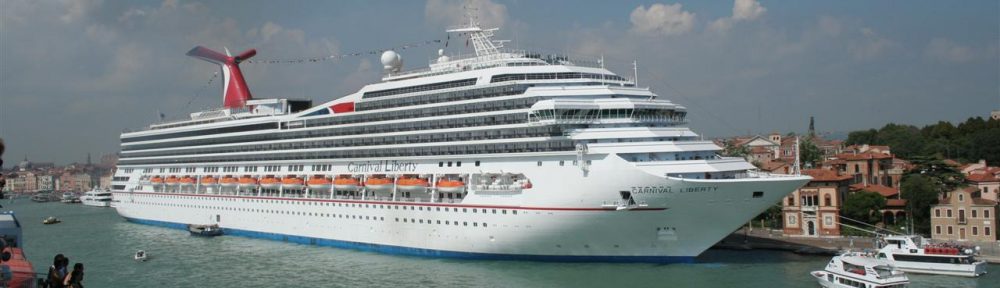
 The Carnival Sunshine is hosting a media group on its current Mediterranean voyage, and the top concern of the European reporters onboard is Carnival Cruise Lines’ decision to go without a ship in Europe in 2014.
 The reset on Europe comes as Carnival is withdrawing from several regional ports on the U.S. East Coast, such as Baltimore and Norfolk, Va. Tighter pollution rules mean higher costs for clean fuels at those ports, and Carnival has an aversion to higher costs. When low prices are such an important part of your strategy, anything that raises them means trouble.
 “This was a difficult decision for us, as we realise our guests truly love sailing with Carnival in Europe, largely because we provide great holidays at great value for money. We are hopeful we will return in the future.”
 Wetravel2u's Weblog