EU’s new biometric border checks.

Some of Europe’s most popular destinations have reportedly been given permission to further delay full implementation of the EU’s new biometric border checks.

Passenger queue to clear border control at a European control point.A number of countries appear to have tacitly been given permission not to fully implement EES
The Times reports France, Belgium, the Netherlands, Germany, Greece, Malta, Portugal, Italy and Switzerland have all told they will not enforce the EU Entry-Exit System (EES) until the technology and systems that underpin it are working correctly.


It comes after a set of contingency measures, which have been available to Schengen nations over the summer to alleviate EES bottlenecks, were due to be withdrawn earlier this month – six months after the full EES rollout, which itself followed a soft launch in October 2025.


EES requires arrivals into EU nations from third-countries, like the UK after Brexit, to submit to biometric checks; these include a facial scan and having their fingerprints taken.
To date, the EU has been steadfast in its insistence there will be no grace period ahead of the coming winter season and in the months to follow.


However, The Times reports that on this occasion, the EU has quietly given the likes of France, Greece, Italy and Portugal permission to pause implementation in the interest of what Eurostar chief Gwendoline Cazenave described to the paper as “maintaining border fluidity”.


Despite the European Commission’s insistence EES has “broadly worked well” over the summer, a spokesperson said the commission was in “close and constructive contact” with certain member states, and conceded “some adjustments” may be needed at some border crossing points.


The industry has been pushing for respite for several months. As the 6 September deadline approached, Abta’s Director of Public Affairs, Luke Petherbridge, said the association would continue to push for the emergency measures and “flexibilities” to be available beyond September.


Other have been more blunt; Ryanair said the EU’s handling of EES had been “a shambles from start to finish” while Holiday Extras said the decision to let the emergency measures lapse was “the clearest sign yet” that the system “had failed”.


Problems identified by Ryanair include malfunctioning EES kiosks, lengthy processing times and staff shortages. Holiday Extras chief Matthew Pack, meanwhile, said the challenges would make it difficult for the EU to rollout its Esta-style visa waiver in Q4, as planned, as it is reliant on EES working correct.

Marella Cruises Launches All-Inclusive Cruise Calculator

Marella Cruises Launches All-Inclusive Cruise Calculator

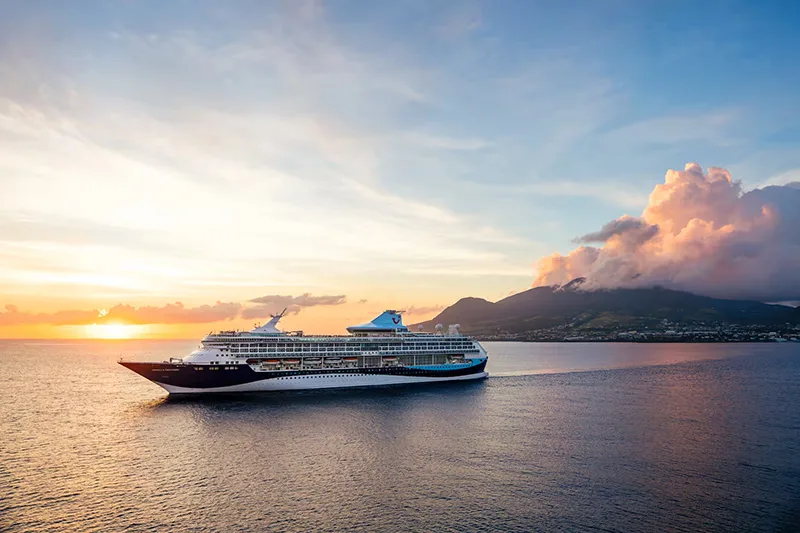
marella tui ship

Marella Cruises has introduced the All-Inclusive Cruise Calculator, a free tool that reveals the cost of sailing with the company.

The company said in a press release that the tool demonstrates savings from booking an all-inclusive offering.

The tool highlights the all-inclusive offering, which includes flights, food and drink, transfers, entertainment, tips and service charges.

Chris Hackney, managing director at Marella Cruises, said: “The new All Inclusive Cruise Calculator allows customers to see the value for money we provide to our customers.”

“With all-inclusive at the heart of our cruise holidays, we provide an exceptional end-to-end service which includes flights, transfers, tips and accommodation rolled into one price, as well as entertainment, food and drink offerings and fantastic service,” added Hackney.

“We hope the tool helps new-to-cruise customers who are looking for alternative holidays consider a cruise holiday this summer and beyond.”

Research by Marella Cruises revealed that over 60 per cent of Brits plan to take a holiday this year, yet 20 per cent admit that the cost of living is stopping them from booking.

Twenty-two per cent see an all-inclusive cruise to be the best value; however, 46 per cent would be open to a cruise holiday if they could compare the costs more easily.

Chelsea Dickensen, a travel expert influencer, said: “All inclusive holidays are back in fashion with searches for stress-free escapes skyrocketing by 60 per cent year on year.”

“And it’s not just resorts seeing the love, with cruise holidays expecting to surpass pre-pandemic levels by reaching 37.1 million passengers in 2025. However, prices are on the rise too, with the average package holiday prices rising 4.2 per cent compared to 2024,” added Dickensen.

“For cruises, these hidden costs could include your flights, transfers, meals, drinks and tips, though companies such as Marella Cruises do include all of these as standard. Their All Inclusive Cruise Calculator is really helpful in sharing exactly what you’ll get, and how much you could save by having it as part of your package.”

Iata: ‘Widespread use’ of vouchers will accelerate cash burn

Iata: ‘Widespread use’ of vouchers will accelerate cash burn

The International Air Transport Association (Iata) has highlighted how the extensive use of refund vouchers will accelerate cash burn for airlines.

The association warned that the “widespread use” of vouchers in Europe is “one of the difficulties airlines will be facing as they are slowly moving towards restarting their operations”.

With the grounding of fleets in mid-March, as the pandemic crisis began to hit revenues, airlines opted to provide vouchers to passengers rather than immediate refunds.

“This proved useful in slowing down their cash burn and helped prevent bankruptcies,” reported Iata Economics in its latest Chart of the Week.

“However, airlines’ liability to transport these passengers was only deferred but did not disappear.

“A month after the easing of travel restrictions on intra-EU routes, we can already observe that passengers have used a large number of vouchers to pay for their travel.

“This means that airlines now incur the cost of transporting these passengers – against no or limited new revenues.

“Whilst the issuance of vouchers helped decelerate cash burn a few weeks ago, their use will now accelerate cash burn in the coming months.”

Iata also said the booking behaviour of passengers has changed “dramatically”, with 41% of global travellers booking up to three days before travel in June, compared to 18% last year.

“This makes it difficult for airlines to plan and optimise their schedules, crew and fleet,” said the association.

In April, Alexandre de Juniac, Iata’s director-general and chief executive, said airlines owed $35 billion for cancelled flights, so the use of refund vouchers would buy the industry “vital time to breathe”.

Last week, the Iata Economics chart showed how intra-Europe routes were leading the initial recovery in international flights after border restrictions were eased.

Most passengers were travelling to visit friends and family or going on holiday, rather than going on business trips.