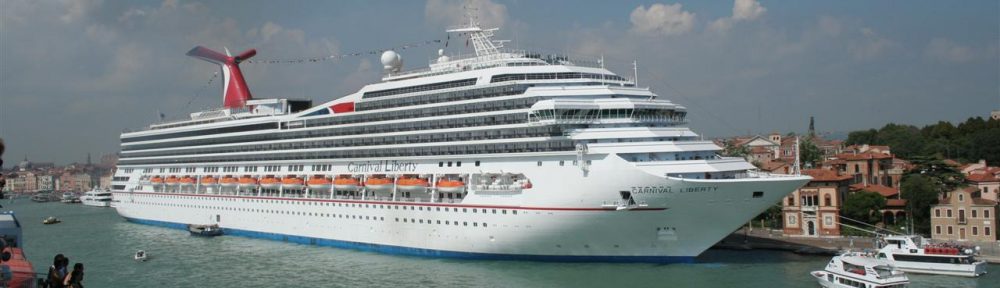
PortMiami Reports Increased Economic Impact in 2023

PortMiami’s annual economic impact has grown to $61.4 billion, up from $41.4 billion in 2016, according to a study conducted by Martin Associates, according to a press release.

The study measured PortMiami’s impact in terms of jobs, business revenue, consumer spending and state and local taxes. PortMiami has contributed $2.2 billion in state and local taxes, of which $1.6 billion is attributed to port users. Additionally, 340,078 jobs are supported by port activity, including 29,423 direct local jobs.

“PortMiami is not only one of Miami-Dade County’s most important economic engines, its economic impact is also felt regionally and globally,” said Miami-Dade County Mayor Daniella Levine Cava. “This report confirms the seaport’s vital role in supporting good-paying local jobs and contributing to the growth of our community, in addition to our commitment to resilience and reducing our carbon footprint with shore power and our net zero plan.” 

Highlights of the 2023 study:

  • $61.4 billion in total economic activity, which accounts for 3.9 per cent of the $1.6 trillion Gross Domestic Product (GDP) for the state of Florida.
  • $2.2 billion in state and local taxes, of which $1.6 billion is attributed to Port users.
  • 340,078 jobs supported by port activity, including 29,423 direct local jobs.

The economic impact analysis was based on data obtained through interviews and telephone survey programs of the seaport’s tenants and the companies providing cruise and cargo services at PortMiami. In addition, a survey of cruise passengers and crew was conducted to develop passenger spending profiles pre- and post-cruise as well as the spending characteristics of the crew during each port call at Miami. 

“The seaport continues to play a critical role in the economic vitality of our region. We will continue to invest in our infrastructure to ensure that PortMiami remains a world-class cruise and cargo port,” said Hydi Webb, director and CEO, of PortMiami. “I want to thank all the seaport’s partners for their unrelenting support. Our continued growth and success are a result of strong collaborations.” 

Cruise staff urged to take part in research to help boost sales

A university researcher is calling on cruise operators and agents to take part in a study on the most effective ways to communicate with passengers in the Covid-19 era in order to boost sales.
Senior teaching fellow Liz Sharples, of the University of Portsmouth, who has previously worked at British Airways, P&O Cruises, Thomas Cook and Thomson, is looking to interview cruise specialists, from tour operators or agencies, as well as passengers who have had their cruise holiday cancelled due to the pandemic.
Sharples is hoping to interview around 20 cruise industry staff and 20 passengers and has urged anyone interested to get in touch by the end of October. Interviews will be on Zoom and take 40 minutes.
She said: “I would really appreciate elite cruise practitioners and passengers who have had their trips cancelled to get in touch. Your input and comments will really help inform this research.
“I am ex-industry and passionate about this sector and hope that this work, which looks the most effective messages to help boost sales in the Covid-19 era, will play a small part in helping to rebuild the cruise sector.”
She is hopeful her research will be used by ocean and river cruise lines in their passenger communication strategies to help ensure they use the right tone and get across the key messages that passengers want to hear. These could include reassurance, safety, what happens if they fall ill and the fact they can still have fun by in a safe environment.
The research is split into two parts, the first of which is asking agents, head of sales, managing directors, cruise business owners what their key messages are and how they plan to change this in the Covid-19 era.
She added: “I hope the research will provide cruise lines with clear detail on what communication strategies their passengers want and how it compares to their current Covid-19 approach.
“I hope it will boost cruise lines’ sales by helping to ensure that the messages being sent by cruise lines are what their passengers want and need to help them rebook and re-engage with the sector.”

Iata: ‘Widespread use’ of vouchers will accelerate cash burn

Iata: ‘Widespread use’ of vouchers will accelerate cash burn

The International Air Transport Association (Iata) has highlighted how the extensive use of refund vouchers will accelerate cash burn for airlines.

The association warned that the “widespread use” of vouchers in Europe is “one of the difficulties airlines will be facing as they are slowly moving towards restarting their operations”.

With the grounding of fleets in mid-March, as the pandemic crisis began to hit revenues, airlines opted to provide vouchers to passengers rather than immediate refunds.

“This proved useful in slowing down their cash burn and helped prevent bankruptcies,” reported Iata Economics in its latest Chart of the Week.

“However, airlines’ liability to transport these passengers was only deferred but did not disappear.

“A month after the easing of travel restrictions on intra-EU routes, we can already observe that passengers have used a large number of vouchers to pay for their travel.

“This means that airlines now incur the cost of transporting these passengers – against no or limited new revenues.

“Whilst the issuance of vouchers helped decelerate cash burn a few weeks ago, their use will now accelerate cash burn in the coming months.”

Iata also said the booking behaviour of passengers has changed “dramatically”, with 41% of global travellers booking up to three days before travel in June, compared to 18% last year.

“This makes it difficult for airlines to plan and optimise their schedules, crew and fleet,” said the association.

In April, Alexandre de Juniac, Iata’s director-general and chief executive, said airlines owed $35 billion for cancelled flights, so the use of refund vouchers would buy the industry “vital time to breathe”.

Last week, the Iata Economics chart showed how intra-Europe routes were leading the initial recovery in international flights after border restrictions were eased.

Most passengers were travelling to visit friends and family or going on holiday, rather than going on business trips.