New dining program postponed for Oasis-class ships

Royal Caribbean International is postponing the scheduled introduction of Dynamic Dining on its two mega-ships, Oasis and Allure of the Seas.

The alternative-dining concept had been scheduled to debut on Oasis in March, but has now been put off until “later in the year” according to the line’s web page for Oasis.

Dynamic Dining, introduced on Quantum of the Seas in November, eliminates the main dining room in favor of four themed restaurants that serve about 450 diners each. There is also a separate complimentary restaurant for suite guests.

The main dining room on Oasis had been converted into separate restaurants on each of its three decks during a drydock last fall, but the actual implementation of Dynamic Dining is not yet in place.

The three new dining concepts for Oasis were to be American Icon Grill, Silk and The Grande.

Royal Caribbean said it will continue to offer early and late seatings in the main dining room on Oasis as well as the flexible My Time Dining program as an option.

Allure of the Seas is scheduled for a drydock in 2015.

Cruise Giant Increases Megaship Order

By Michelle Howard
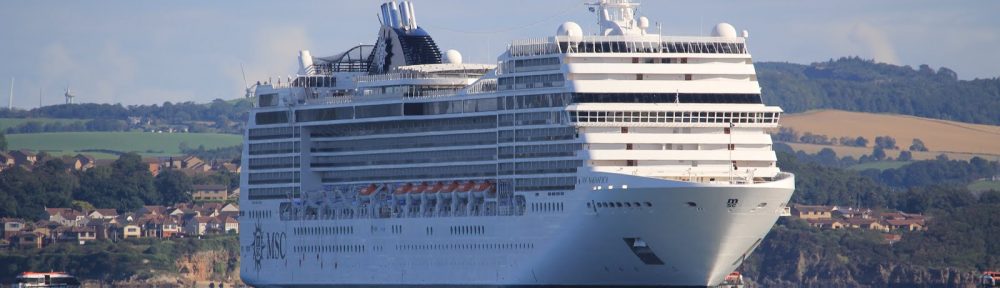
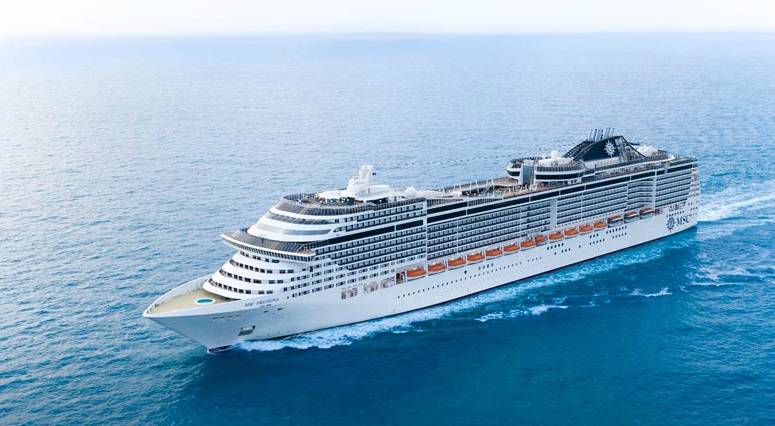
File MSC Preziosa (Courtesy MSC Cruises)
MSC Preziosa (Courtesy MSC Cruises)

MSC Cruises has moved to increase its order of megaships from Italian shipbuilder Fincantieri to two ships, with an option for third. At a cost of AUD $3.2 billion, this investment signifies a confidence that the cruise holiday industry will only continue to strengthen.
The Italian-Swiss shipping company currently operates 12 cruise liners, running numerous different sea routes simultaneously. The two new ships, currently nicknamed Project Seaside I and Project Seaside II, from Fincantieri are larger in terms of gross tonnage than any of the company’s current liners.
Alongside these recent purchases, MSC Cruises also has two even larger ships in production by STX Europe at the moment.
MSC Cruises chief executive officer Gianni Ornato said that the orders fitted into MSC’s fleet development plan: “Today, MSC Cruises adds the last piece to its new industrial plan that will allow us to double the capacity of our fleet by 2022,” he enthused. “With the arrival of the new ships we will reach a capacity of about 80,000 passengers a day.”
Cruise1st reports that Project Seaside I and II are scheduled to make their maiden voyages in November 2017 and May 2018 respectively. Like all MSC liners, the two megaships will sail under the Panama flag.
ImageBoth of the ships will utilise cutting edge design, architecture and technology, affording the ship unusually large amounts of deck space for the passengers to enjoy. Additionally, a unique sea-level promenade will be incorporated, utilising cantilever technology and featuring a large theatre, terraced balcony and panoramic views from an external passenger lift to the upper deck.
UK and Ireland Managing Director, Giles Hawke, explained: “The idea is to bring passengers closer to sea level so they feel as if they are at the beach.”
Other technologically advanced features include glass deflectors and tunnel technology that will give diners indoors the experience of dining al fresco. This has been implemented to take advantage of the warm weather routes that are being targeted by MSC for the two new liners.
Weighing in at 154,000 tonnes each, the 323 metre-long ships will be able to cater for up to 5,300 passengers in 2,070 cabins. The two ships represent a giant leap forward for MSC Cruises in terms of project size and technological ambition.
MSC Cruises executive chairman Pierfranscesco Vago said, “From the moment we started talking with Fincantieri, we had in mind to design and build two completely new ships, revolutionary in their structure, unlike anything that exists on the market today.”
“Seaside is a futuristic prototype because of its structure, shape and versatility. We are getting ready for the new and compelling challenge that the construction of these ships represents. It will be a real revolution in the world’s cruise market, an excellent product for its unique and innovative architectural features and cutting-edge technology.”

Lines await effect of plan to slash Venice cruise ship traffic

Lines await effect of plan to slash Venice cruise ship traffic

By Tom Stieghorst

Italy’s decision to constrain cruise ship growth in Venice will likely change the way some cruise passengers enter and leave the city as it is phased in over the next few years.

Prime Minister Enrico Letta approved plans to limit or shut down cruise ship traffic in parts of the Venice lagoon.

His order is at least a partial victory for the No Grandi Navi (No Big Ships) movement that sprang up in Venice as megaships began to visit the city.

And it is a setback, at least for now, for cruise lines.

“This would certainly be a disappointing outcome from our perspective,” Carnival Corp. said in a statement, which went on to assert that “the cruise industry is an important economic driver for Venice and other communities around the world.”

The ruling does not ban cruise ships from docking in Venice, but it places restrictions on how many ships can transit the Guidecca Canal, which takes passengers past the city’s iconic St. Mark’s Plaza.

Starting in January, it requires a 20% reduction in the passage of ships larger than 40,000 gross tons. It limits the number of large ships that can dock at the city’s main cruise terminal, Venezia Terminal Passeggeri, to five per day, according to European press reports.

By November 2014, ships over 96,000 gross tons would no longer be permitted in the Guidecca canal.

In its statement, Carnival said that while no changes are currently being planned, “we will evaluate the ruling and see how it impacts our business in the long run.”

Royal Caribbean Cruises Ltd. also responded to the ruling, saying that it is reviewing its deployments for 2013 and 2014 to be sure they comply with the new regulations.

“We recognize visiting Venice during their cruise is a highlight of our guests’ vacation,” Royal stated. “We expect to continue with our scheduled port calls to Venice for our 2013 and 2014 itineraries.”

Last year, 661 cruise ships bearing 1.7 million passengers called at Venezia Terminal Passeggeri. No breakdown of ship size was immediately available.

For the industry, Venice has become a vital turnaround port, uniquely serving both western and eastern Mediterranean itineraries.

For the city, that means extra revenue. Cruise ship passengers and crews spend $255 million a year in Venice, according to a 2013 Cruise Market Watch study, ranking it eighth among world cruise ports and third in Europe, behind Barcelona and Rome (Civitavecchia).

Practically, the decision will first affect deployment decisions for 2015. Neither Carnival nor Royal has announced its 2015 itineraries. The squeeze would be most acute in the summer months when ships tend to migrate to the Med.

One solution is to develop a new channel to Venezia Terminal Passeggeri for large ships that bypasses the most historic part of Venice. Letta’s office said the order restricting ship size also authorized development of such a channel.

However, that would end the romantic entrance to the city past St. Mark’s Plaza, which is treasured by many cruise passengers.