The Freedom of Cruise Ship Redeployment

The Freedom of Cruise Ship Redeployment
PHOTO: The wake behind Carnival Cruise Line’s Carnival Vista. (photo by Mark Leppert)

When it was uncertain that Cuba would remain open to roundtrip cruises from the United States, it was never a worry that the ships on the route would be incapable of redeployment.

Executives like Frank Del Rio, president and chief executive officer for Norwegian Cruise Line Holdings Ltd., repeat that in troubled times, cruise ships can go anywhere.

It’s true. A ship originally slated for the Caribbean can easily end up in Alaska or Europe seasonally, but often that’s the plan all along.

What may not be anticipated are geopolitical tensions or fears of terrorism that warrant ships go elsewhere. The latter has been the reason cruise lines have shied away from Turkey in the Mediterranean, for example.

More recently, cruise itineraries from China have stayed clear of South Korea due to heated relations between the two countries.

It was looking for awhile like the Trump administration would cease permissions for cruises to Cuba, but thankfully Norwegian Cruise Line and Royal Caribbean International were allowed to continue and Carnival Cruise Line has since been able to make its inaugural run as well.

If not, the Norwegian Sky, Empress of the Seas and Carnival Paradise, respectively, would just have had to cruise to lands beyond, likely still in the Caribbean.
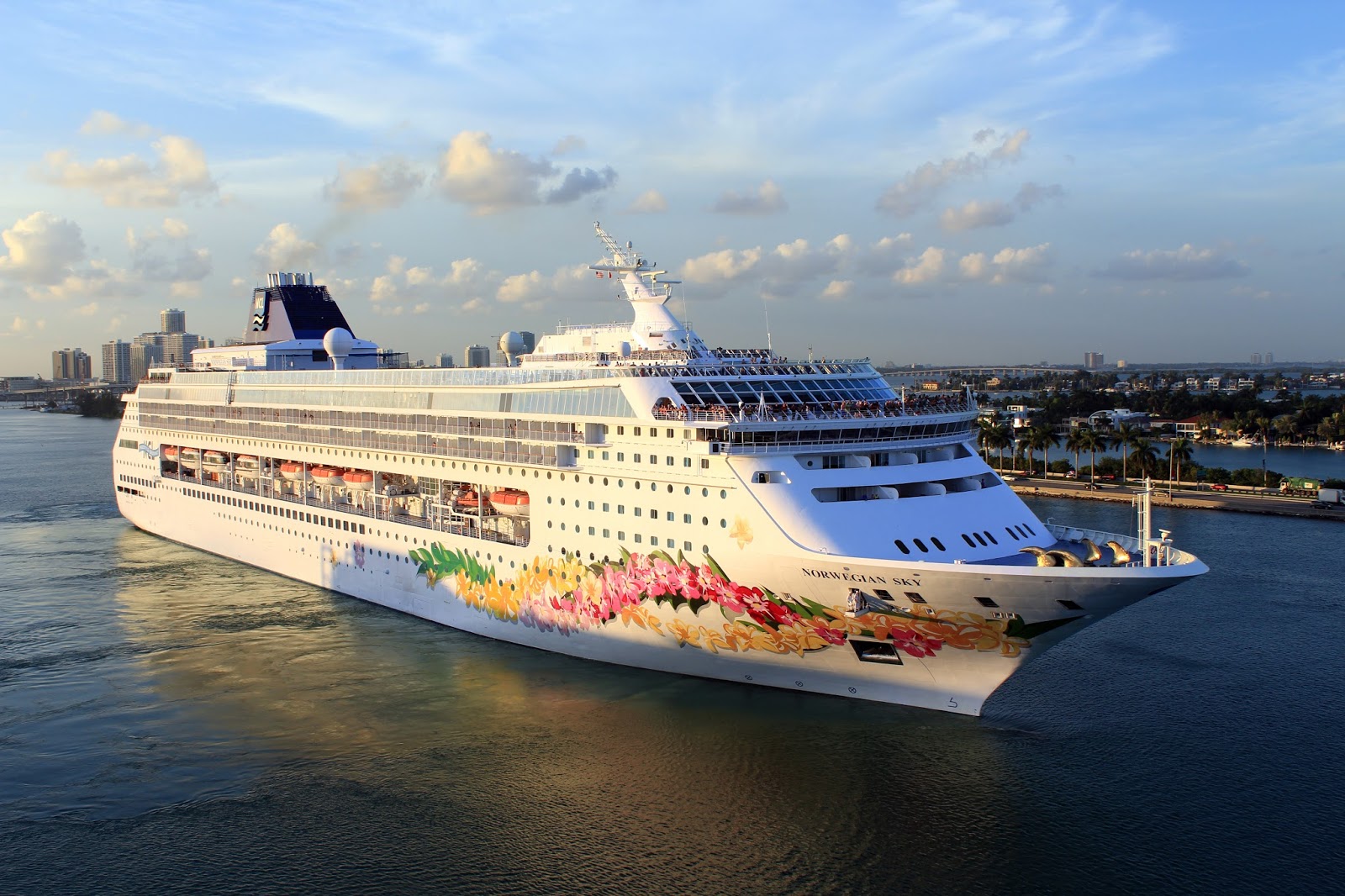

Photo Credit Dave Jones~Norwegian Sky leaving Miami

In the Caribbean and the Mediterranean, there are plenty of alternative ports to go to when some become off limits, but such is not always the case. For the Chinese cruise market, the loss of South Korea as a destination has limited where local ships can head, particularly on itineraries with short durations.

In those cases, Japan is an option, but port capacity saturation is then a concern.

Once a booming market, cruise lines may have to rethink their long-term Chinese potential. Princess Cruises’ Majestic Princess—partially for this reason, as well as consideration of other growth markets—has opted to no longer dedicate itself to China year-round as originally planned. It also now has intentions for Australia-based cruising in 2018 and 2019.

When a cruise ship is built generically for any market, it is easy to deploy anywhere in the world, but when it is purpose-built like the Majestic, it is more challenging to take away.

Whether or not the ship will see any sort of redesign prior to its Australian deployment is still to be determined.

Still, the vast majority of cruise ships are geared towards the American market and can go pretty much anywhere in the world, catering to our sensibilities just fine.

As ships have aged out of their original brands, they have often gone on to later service international clients for different companies. However, now foreign markets are demanding new-builds as much as the American one, leaving older ships somewhat in limbo.

It’s easiest for the most popular fleets to deploy wherever they need to and still have a following, but mature vessels have a harder time of either competing in high-traffic regions or being handed down to other markets.

That’s why it’s always crucial for the cruise industry to be developing new port and destination options for the wide variety of international vessels to service. As long as they exist, there are plenty of places to go around for them all.

Having movable assets is a freedom that most shoreside industries don’t have. Even with its occasional challenges, including tracking complex global conditions, the international cruise fleet has it good compared to, say, a fixed retail shop with poor sales in a failing regional neighborhood.

Norwegian Cruise Order 4 new class of ship, with a option for another 2

Image result for norwegian escape
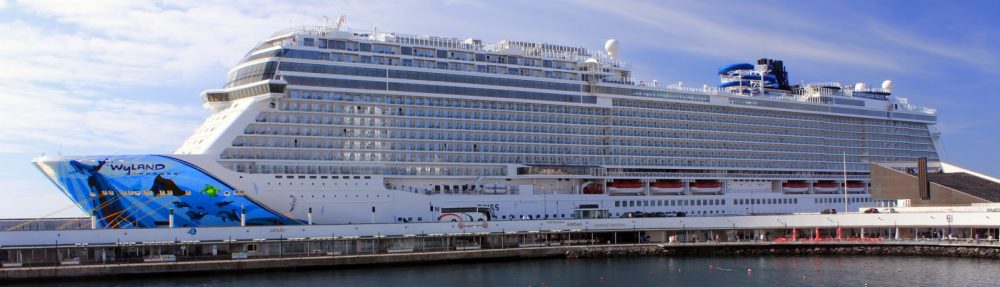
Norwegian Escape – Breakaway Class Plus

Norwegian Cruise  today announced it has reached an agreement with Fincantieri S.p.A. to construct the next generation of extraordinary ships for its Norwegian Cruise Line brand.  Four ships are on order for delivery in 2022, 2023, 2024 and 2025, with an option for two additional ships to be delivered in 2026 and 2027.

The four 140,000 gross ton ships will each accommodate approximately 3,300 guests.  The new class of ships will build upon the highly successful offering of freedom and flexibility found on the brand’s most recent Breakaway-Plus Class ships and feature a host of innovative designs that will further elevate its already award-winning guest experience.  A priority of the prototype design is energy efficiency, with the aim of optimizing fuel consumption and reducing the impact on the environment.  Details on the ships’ many innovative guest facing and first at sea features will be announced at a later date.

“This new class of ships will continue Norwegian Cruise Line brand’s legacy of introducing meaningful innovation to the cruise industry,” said Frank Del Rio, president and chief executive officer of Norwegian Cruise Line Holdings Ltd.  “This order continues to highlight our disciplined newbuild program, extends our growth trajectory well into the future, enhances our already attractive earnings profile, and drives expected long-term returns for our shareholders.”

“For the past 50 years, Norwegian Cruise Line has been focused on offering our guests the very best in cruising,” said Andy Stuart, president and chief executive officer of Norwegian Cruise Line.  “It is with great excitement that we look ahead to our next 50 years, which includes this next generation of ships that will offer guests the innovative experiences that have come to define the Norwegian Cruise Line brand.”

“We are extremely excited to collaborate with Norwegian Cruise Line and this partnership allows us to include a new prestigious client in Fincantieri’s portfolio,” said Giuseppe Bono, CEO of Fincantieri S.p.A. “We are very proud of the innovative design of these ships and recognise the various stakeholders of the export chain who have contributed decisively to achieving this goal. The significant value of the order will provide substantial economic benefits by extending the employment horizon of our shipyards, and we are honoured to support the growth of our country’s economy.”

The contract price for each of the four vessels is approximately €800 million per ship.  The Company has obtained export credit financing with favourable terms to fund 80 percent of the contract price of each ship delivered through 2025, subject to certain conditions.

With a combined fleet of 24 ships with approximately 46,500 berths, these brands offer itineraries to more than 510 destinations worldwide. The Company will introduce eight additional ships through 2025, and has the option to introduce two additional ships for delivery in 2026 and 2027.

Norwegian Cruise Line Ltd. eyes Cuba and China


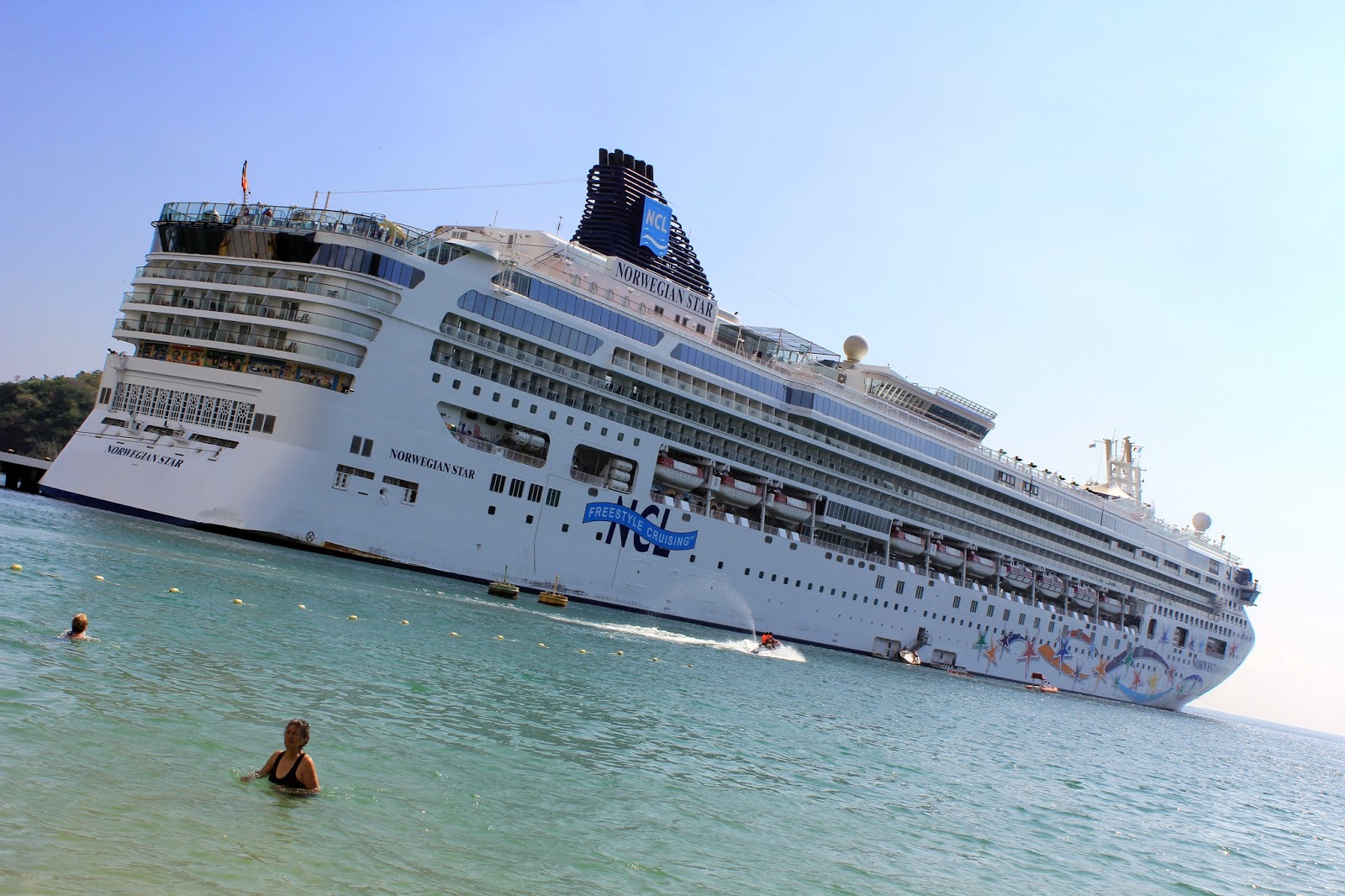
Norwegian Star in Cabo San Lucas, by Dave Jones

By Michelle Baran
One day after announcing that Norwegian Cruise Line will sail to destinations in Asia and Australia for the first time since 2002, Norwegian Cruise Line Holdings Ltd. revealed it is looking into opportunities for deployment in both China and Cuba.

“We believe that once Cuba opens up totally, it’s going to be a real windfall for the industry,” Frank Del Rio, president and CEO of Norwegian Cruise Line Holdings Ltd., said during the company’s second-quarter earnings call on Tuesday.

Del Rio said that the company has already applied for a license to operate Cuba cruises with the Treasury Department’s Office of Foreign Assets Control and an export license with the Commerce Department. “And we have engaged the Cuban government,” said Del Rio.

He said that a possible Cuba deployment is still a work in progress, but that the company is hopeful it will receive the applicable permissions from both governments before the year is over. “And then we’ll have an interesting dilemma on our hands of what vessels to deploy to Cuba and from where,” said Del Rio.

He said that of the company’s brands, the first vessel to sail to Cuba would most likely come from the Oceania fleet.

As for speculation about whether the company’s Asia expansion would include deploying a vessel in China, Del Rio said that China plans aren’t finalized but that the market is desirable.

“You hear the other lines say how their most profitable ships are based in China, and so we want in on that action,” said Del Rio. “It’s now no longer a startup market if you will. … And given that the Norwegian fleet will have grown to 17 vessels, its’ time to deploy some tonnage there.”

He added that if the company decides to go to China, a ship will not arrive there before 2017.

In February, Del Rio told investors that China was being studied as a deployment option for one of its ships on order for 2018.