Norwegian Cruise Line follows the money with itinerary optimization

The pier at Icy Strait Point. Alaska is one of Norwegian Cruise Line's most lucrative destinations.

The pier at Icy Strait Point. Alaska is one of Norwegian Cruise Line’s most lucrative destinations.

Last winter, the Norwegian Spirit did 11-day runs from Barcelona to the Canary Islands and back, a traditional warm-weather cruise in Europe’s colder months.

But on a recent conference call, Norwegian Cruise Line Holdings CEO Frank Del Rio described it as “one of the historically lowest-yielding areas” to sail.

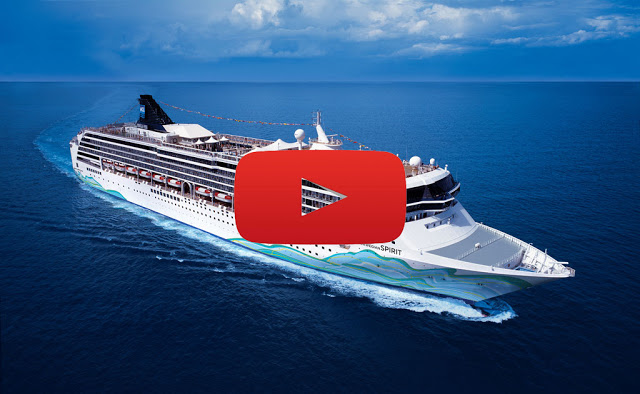
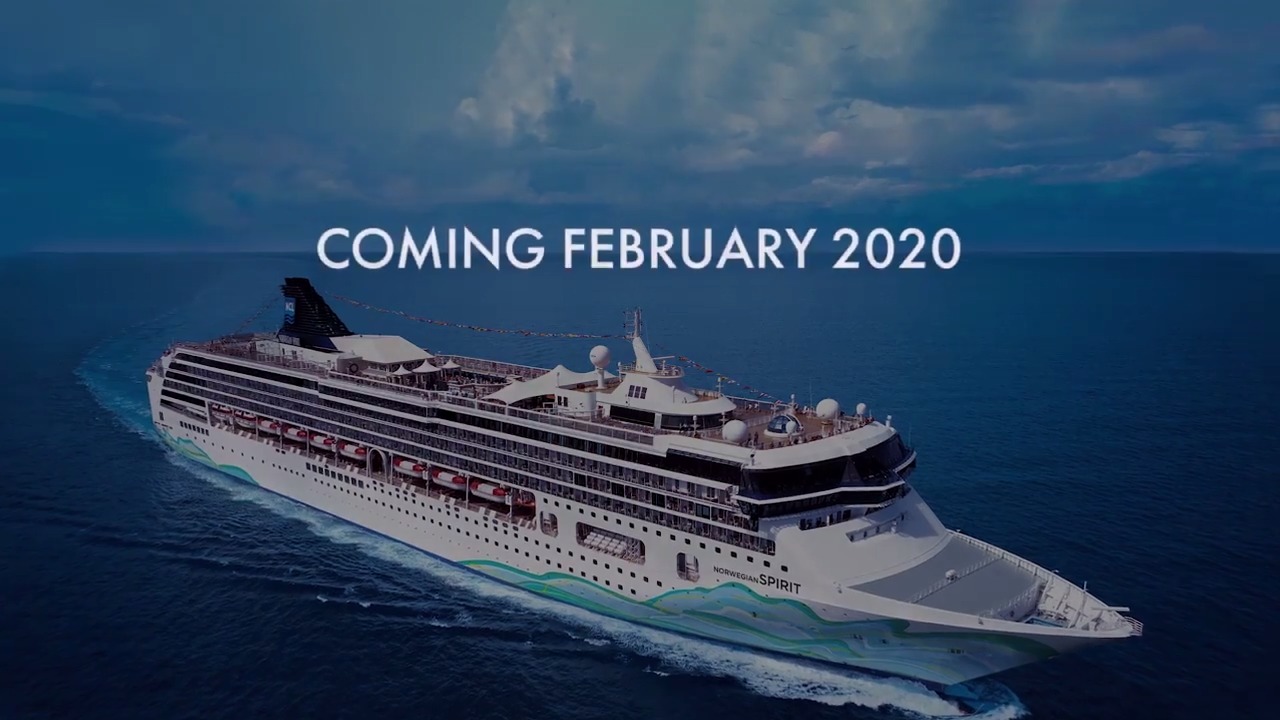
Jump forward a year, and the Spirit will emerge in February from a $100 million drydock and head for Asia, where it will sail nine-day cruises around Japan and cruises of 12 days or longer to Japan and China.

Del Rio said it is an example of Norwegian’s strategy of itinerary optimization, in which the line looks for the highest-returning itineraries available at a given time and concentrates its ships in those areas.

Asia, Del Rio said, and other exotic itineraries will “take advantage of our huge customer base, our past guests who have never been to those areas because we’ve never sailed to those areas before.”

Norwegian is scouring its deployments to see where customers are willing to pay the most, and it is capitalizing on their extravagance.

One area in which it is loading up on capacity is Alaska, where other lines have traditionally reaped the market premium. Although Norwegian has been sailing to Alaska for 20 years, its interest deepened in 2018 with the success of the 4,000-passenger Norwegian Bliss in its first Alaska season.

Christened in Seattle, the Bliss was a smash hit, according to Norwegian — so much so that when faced with obstacles in the Chinese market, Norwegian pulled its purpose-built Norwegian Joy out of Shanghai and sent it on short notice to Alaska in 2019.

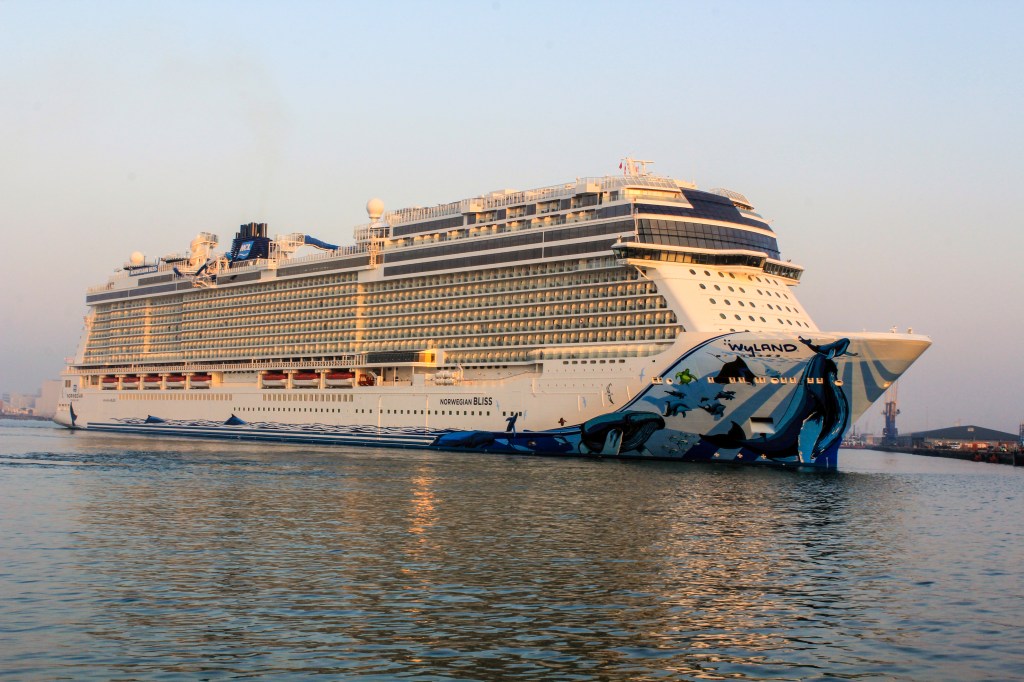
Norwegian Bliss, Photo credit Dave Jones – https://flic.kr/g/GZdoW 

Next summer, the line will repeat the feat, while also redeploying the 1,936-passenger Norwegian Sun to Alaska from the Bahamas — another low-yielding market, according to Del Rio.

In addition, to squeeze in more high-yielding cruise days, Norwegian is pushing the limits of what until now has been considered the cruising season in Alaska.

“Alaska used to be a three-month season — June, July and August. Now we’re getting there in April, and we’re not leaving until October,” Del Rio said. “It’s now a six-month season of very, very high-yielding — not only on tickets but incredibly high-yielding on onboard [spending]. And so we’re going to continue doing that.”

One of the keys to high yields in Alaska is to have land infrastructure that maximizes revenue opportunities from shore excursions as well as pre- and post-cruise extensions to lodging in the interior.

Norwegian recently announced a new aerial lift transportation system at Icy Strait Point designed to make its dock there more attractive.

The line is also extending the season in Europe, rather than bringing ships back to the Caribbean in October. Del Rio said he likes Europe because, for Norwegian, it means carrying high-spending guests.

In addition to North Americans, Del Rio said, “Guests for these itineraries do not come from locally sourced Europeans but from the rest of the world, including Australia, Asia and South America.”

He added: “And that’s a very important differentiator for us because we know that a guest who flies long distances to board the ship is a higher-yielding guest than one who drives their car or takes a bus or train to the port of embarkation.” 

Next year, Norwegian is going back to the eastern Mediterranean, another high-yield area that Norwegian was one of the first to drop in 2016 after a spate of terror attacks and a coup attempt in Turkey.

At times, however, the itinerary optimization strategy backfires. The most recent example of that is Cuba. It was a natural destination for itinerary optimization when it opened to cruises from U.S. ports in 2016, and NCLH put more resources, proportionately, into Cuba than some of its rivals did. 

But that also meant that when the Trump administration abruptly shut down U.S. departures to Cuba in June, NCLH was disproportionately hurt. In the third quarter, the withdrawal from Cuba reduced NCLH net income by $53 million from a year earlier. 

“The year-over-year comparisons are night and day, in terms of pricing, because Cuba’s demand was at such a high price,” Del Rio said.

Literally overnight, twice-weekly Norwegian cruises from Miami and Port Canaveral that had included Havana had to be repriced as “Bahamas-intensive” cruises, said NCLH CFO, Mark Kempa.

Redeployments that will fully take effect in the second quarter of 2020 will finally end the economic penalty that resulted, Kempa said. 

By sending the Norwegian Sun to Alaska next summer from Port Canaveral, Norwegian will halve its Bahamian deployment, “thus reducing capacity from this historically lower-yielding destination,” he said.

Fiscal realities now tempering cruise lines’ China infatuation

The Norwegian Joy, built for the Chinese market, will move to Alaska next spring.

The Norwegian Joy, built for the Chinese market, will move to Alaska next spring.

Wall Street has long questioned whether the international cruise industry’s romance with China is the beginning of a lifelong affair or just one of those things. While it is still too soon to call, that relationship in recent months has shown signs of cooling.

The latest evidence is the decision by Norwegian Cruise Line to pull its year-old Norwegian Joy out of China, where it was sent in 2017 to cruise year-round.

The Joy, which was custom-built for the China market, will move to Alaska in April, then remain on the West Coast through the winter of 2020.

In its place, Norwegian will send the 20-year-old Norwegian Spirit to cruise from Shanghai seasonally starting in summer 2020. That would leave a gap of more than a year when the cruise line will be altogether absent from China.

While the move is welcome news for U.S. travel agents and will put Norwegian’s two newest ships in Alaska next summer, it seems to write off much of the investment that Norwegian made to enter China.

Norwegian president Andy Stuart said the switch is more a reflection of hot demand for Alaska than it is discouragement with China.

“We’re still optimistic about China,” Stuart said. “China’s a good market. We introduced Bliss in Alaska, and we’ve seen a tremendous strength and a lot of excitement around the introduction of a new ship to the Alaska market.”

He added: “We’re seeing such strength in Alaska, good strength in Europe, and the beauty of our industry is that assets are flexible. So it’s really right-sizing the market as we’re seeing demand today.”

Stuart said the recent tension in Sino-U.S. relations, with each side imposing new tariffs on goods imported from the other, had no bearing on the decision to move the Joy out of Asia.

But even before that, cruise lines were not enjoying the smooth sailing they had once hoped for in the world’s most populous country.

The Norwegian Joy arrived in June 2017 in the wake of the installation of a U.S.-provided defensive missile system in South Korea. The system gave Chinese military officials heartburn, and they moved to punish South Korea economically, in part by ending permission for China-sourced cruises to visit Korea.

That left cruise lines cutting the prices on their charter contracts with Chinese travel wholesalers.

Still, officials at Norwegian Cruise Line Holdings (NCLH), parent of Norwegian Cruise Line, remained upbeat. Asked in a February conference call which world markets were the least robust, CEO Frank Del Rio said that all were good enough.

“It’s one of those few times in my tenure, in the 25 years I’ve been in the industry, that I wouldn’t move any of my ships. I like where they are,” Del Rio said.

But he went on to add he wouldn’t necessarily put the second ship in China.

“There are still challenges in China,” Del Rio said. “I don’t think China’s hitting on all cylinders like it can.”

He went on to reel off the names of a half-dozen unserved or underserved markets in North America, among them Los Angeles and Alaska.

The Joy news cheered Wall Street. NCLH shares rose 5.4% on the day of the announcement, with other cruise companies seeing smaller increases. In an investor note, Citigroup analyst Greg Badishkanian said Norwegian’s move “should help right-size capacity in China.”

Analyst Robin Farley of UBS Group said in May that yields for the Joy in China this year were likely to be 25% below the other Breakaway-class ships, such as the Norwegian Escape. She said it would boost Norwegian’s earnings to move the ship to North America.

The news was also greeted warmly by travel agents.

“It’s really exciting to have new hardware and new experiences for our customers in Alaska,” said Ashley Hunter, vice president of business development at Avoya Travel, which has its operations office near San Diego.

Agents on the West Coast have been starving for up-to-date inventory, and having the Joy for a year, sailing Mexican Riviera cruises from Los Angeles in the winter of 2019-20, will expose more people in Western states to the brand.

Many cruise lines cut back their already small presence on the West Coast after the 2009 swine flu outbreak and unrest in Mexico, Hunter recalled, but she said the trend is starting to reverse.

“I think we’re starting to see a movement back over to the West Coast,” Hunter said, citing new Carnival Cruise Line capacity in Long Beach and San Diego in addition to the Norwegian Joy announcement.

Conversely, the urge to add capacity in China is ebbing.

In 2015, Princess Cruises said it would devote the new Majestic Princess to year-round cruising in China and customize it to Chinese tastes, even giving it a Chinese-language name. But in September, the 3,560-passenger ship will begin an eight-month deployment in Australia.

The brands with a remaining multi-ship commitment to China are Royal Caribbean International and Carnival Corp.’s Costa Cruises.

Stuart said Norwegian’s size relative to the two other big cruise companies gives it more flexibility.

“We’re not the largest brand,” he said, “and the size of our fleet allows us to be a little more nimble in making sure you capitalize on opportunities where you have overperforming markets.”

Norwegian plans to spend $50 million on the Joy before it arrives in Seattle to make it a virtual twin to Bliss, Stuart said. But it plans to keep the hull art by Chinese artist Tan Ping of a large red phoenix, a symbol of beauty and good luck in Chinese culture.

Stuart said that while it might strike a note of discord with some in Alaska, others will view it differently.

“It feels like a beautiful piece of art on the side of the ship,” he said.

“I’m not sure if everybody started from scratch and said, ‘Look at the art on Norwegian Joy. What country does it represent?’ I don’t know that everyone would immediately say China,” Stuart said.
Norwegian Cruise Line to deploy six ships in Europe in 2019

Norwegian Bliss entering Southampton, photo by Dave Jones

Norwegian Cruise Line will deploy an additional ship in Europe next summer.

The 2,394-passenger Norwegian Pearl will offer ex-Amsterdam itineraries and sailings from Rome, Barcelona and Venice, having spent the 2018 summer season sailing out of the US.

Pearl will join five other NCL vessels in Europe: Norwegian Epic, Norwegian Spirit, Norwegian Getaway, Norwegian Star and Norwegian Jade.

The sailings will go on sale on July 31, while Norwegian Jade and Spirit’s new 2019 programme will become available to sell on August 6.

NCL will deploy Norwegian Spirit in China from the summer of 2020, but next year it will operate ex-Southampton itineraries.

Nick Wilkinson, NCL’s vice president and managing director of UK & Ireland, said the decision was made in response to customer demand from Europe.

He said: “If you look at the robust demand environment around the world which was demonstrated by Norwegian Bliss – the best selling ship in our history – customers were booking nine, 12 and 18 months in advance.

“The message to the trade is this is our commitment to Europe. There are some great itineraries in the programme which gives agents more choice to offer their clients. The new home port in Amsterdam or Rome, for example.”

The 2,000 passenger-capacity Norwegian Spirit vessel will undergo a bow-to-stern revamp as part of the Norwegian Edge fleet refurbishment.

Spirit’s journey from Europe to Asia will feature sailings which include maiden calls for the line in South Africa, Mauritius, Seychelles and the Maldives.

Jade will offer a season of sailings throughout south-east Asia, departing from Singapore and Hong Kong in winter 2019/20.

Ports of call include in-demand locations such as Phuket, Langkawi, Penang, Bangkok (Laem Chabang), Ho Chi Minh City and Ha Long Bay.

Frank Del Rio, Norwegian Cruise Line Holdings’s president and chief executive, said: “The booming demand environment in our core markets around the world, coupled with Norwegian Bliss’ record-breaking performance, continue to exceed our expectations.

“As a result, we are leveraging the strategic benefits of our growing fleet to quickly seize sizeable opportunities in overperforming, and unserved markets to meet the demands of our global customer base and drive higher returns for our shareholders.”