Norwegian Cruise Line Holdings (NCLH) has entered 2023 with a record-booked position at a higher price, with each of its three brands experiencing “record-breaking” wave periods.
The Norwegian Cruise Line (NCL), Oceania Cruise and Regent Seven Seas Cruises parent has seen “very strong” demand so far in 2023, according to a recent trading update covering the fourth quarter and full year to 31 December 2022.
The company entered the year with a cumulative booked position of approximately 62% for 2023, in line with previously outlined expectations and within the firm’s optimal 60% to 65% range, and at higher prices than 2019 at a similar point in time.
Booking volumes have accelerated in recent months buoyed by strong wave season demand, NCLH said, with its brands achieving several booking records in recent months.
As a result, the full-year 2023 cumulative booked position is ahead of 2019 levels inclusive of the company’s 19% increase in capacity.
NCLH expects this positive momentum to continue throughout the year, with occupancy expected to average 100% for the first quarter and is on track to reach “historical levels” for the second quarter.
As of 31 December 2022, the company’s advance ticket sales balance, including the long-term portion, was $2.7 billion, approximately 9% higher than the prior quarter and approximately 30% greater than at year-end 2019.
Norwegian Cruise Line Holdings (NCLH) will generate record EBITDA and net yield in 2023, according to a very upbeat and confident Frank Del Rio, CEO and president, who spoke at a two-hour presentation aboard the Norwegian Prima in New York City on Thursday morning.
Del Rio said that bookings for 2023 were up from 2019, including a 16 per cent capacity increase, and at significantly higher prices.
Talking about the so-called key value drivers, Del Rio asked analysts not to lump NCLH in the same pool as the other cruise companies, and that the company differentiates itself in many ways, including targeting a more upmarket demographic, featuring ships for its three brands that are at the top of each market segment, and premium itineraries.
Other companies, he said, have so many brands they are sabotaging each other. In contrast, Norwegian Cruise Line, Oceania Cruises and Regent Seven Seas Cruises (the NCLH brands) are clearly differentiated, each in a different market segment. Del Rio described the brands as stand-alone that do not compete against each other.
Del Rio went on to say that itineraries are the number one driver of pricing and that he spends more time on itinerary planning than anything else. Another key driver is the cabin mix and he noted that the brands have a richer mix of cabins, with a higher percentage of outside balcony cabins.
He said that NCLH’s go-to-market strategy is focused on filling the ships, offering consumers value and deals they are happy with, while not discounting, and noted that they are beating their competitors by a large margin.
Pricing is almost irrelevant, according to Del Rio, who said the key is to have consumers feel they get a deal. And when products are bundled in that consumers buy dining and beverage packages up front, as well shore excursions, they come onboard with a so-called “fresh wallet” and spend more.
He noted that onboard spending on the Norwegian Prima on its trans-Atlantic crossing had been double of the company’s average.
By comparison, in 2018, 52 per cent of the passengers bought packages in advance of their cruise. For 2022, Del Rio said that number has increased to 85 per cent. He added that also means that more cruises are “sticking,” meaning there are fewer cancellations and higher advance deposits.
The average booking curve is now more than eight months out, he noted. From 171 days in 2016, the booking curve is now 245 days. The extended booking window also gives the company more visibility and the ability to manage pricing to maximize ticket and onboard yield.
Another key factor contributing to a strong 2023 is that NCLH is a U.S.-centric company, according to Del Rio, who said that 78 per cent of the passengers come from the U.S.
Among the trends noted were more direct bookings with the travel agency community constricting during the pandemic and with consumer behaviour changing to more online purchasing.
Looking forward, Del Rio and Mark Kempa, CFO and executive vice president, said the brands will continue to benefit from the underserved and unserved markets while continuing to be U.S.-centric.
They also said that NCLH has a lot of “headroom” to raise prices while comparing cruise to land vacations.
Among the key takeaways from the presentation, Del Rio underscored that not all cruise companies are created equal and that NCLH has laid the foundation for a strong 2023, surpassing 2019, targeting a higher-end demographic, which is reflected in its stronger pricing and bookings.
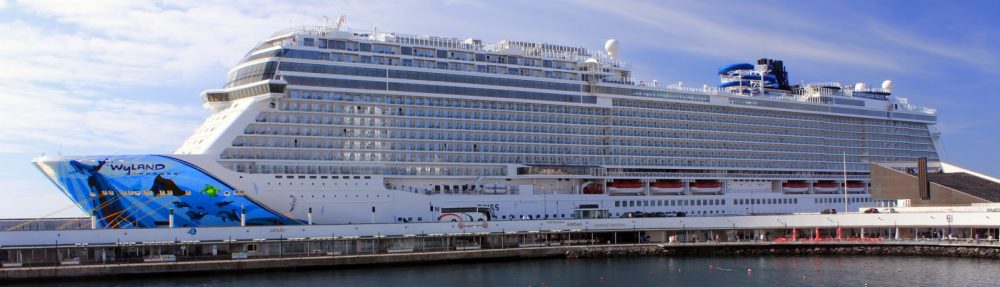
Norwegian Bliss in Ponta Delgada Azores, photo credit Spacejunkie2
Norwegian Cruise Line Holdings today announced it will no longer require guests to complete pre-cruise COVID-19 testing unless required by local regulations, according to a press release.
This policy will go into effect across Norwegian Cruise Line, Oceania Cruises and Regent Seven Seas Cruises beginning August 1, 2022, the company said.
The pre-embarkation testing requirement will remain in place for guests currently travelling on voyages departing from destinations with local testing regulations, including but not limited to the U.S., Canada, Greece and Bermuda.
Norwegian said that the relaxation of the testing policy is in line with the rest of the travel, leisure and hospitality industry worldwide as society continues to adapt and return to a state of normalcy. The company added that it continues to strongly recommend all guests be up to date on vaccination protocols and test at their convenience prior to travel.


 Wetravel2u's Weblog