The Messy, Booming Business of Recycling Cruise Ships

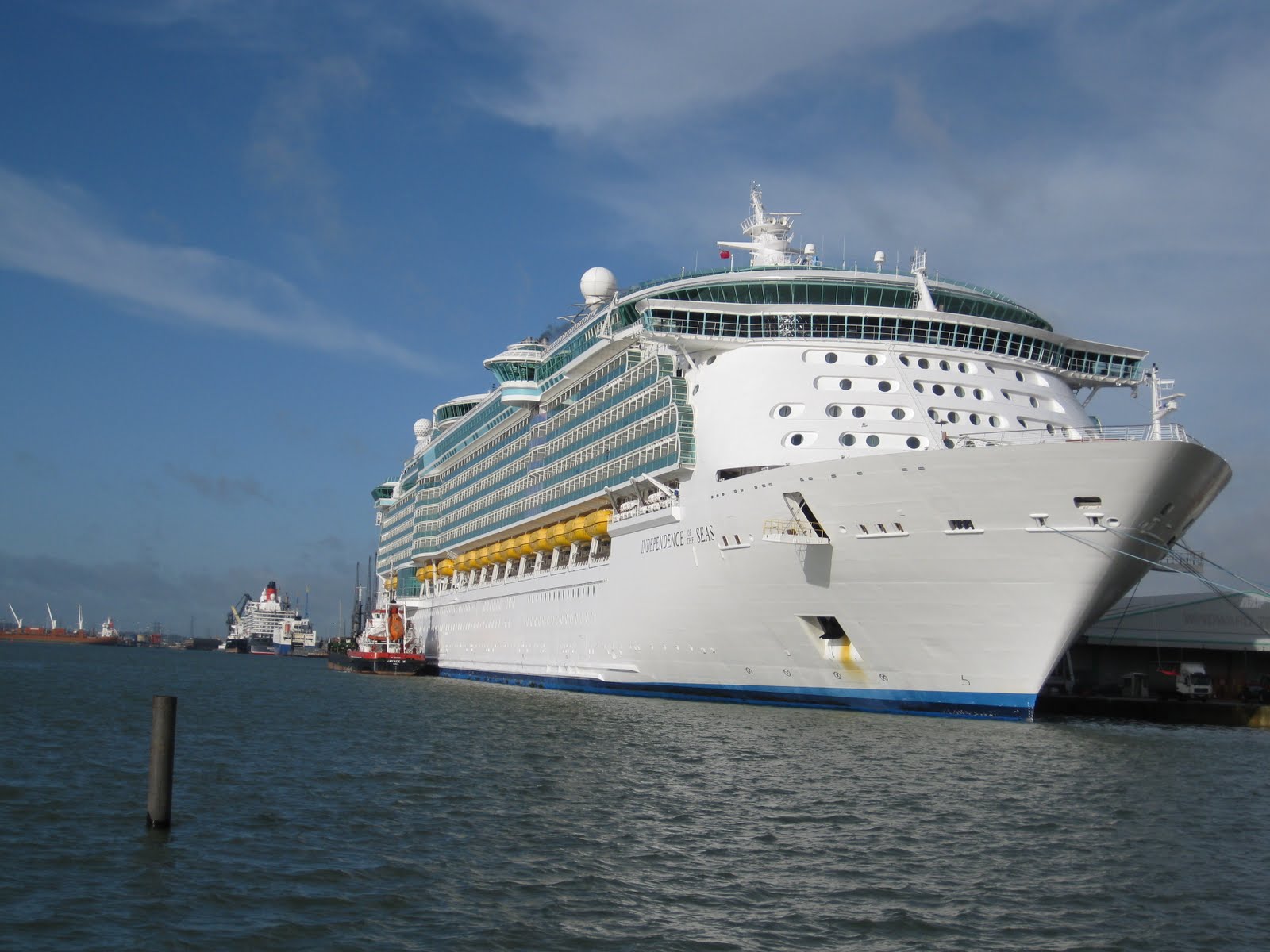
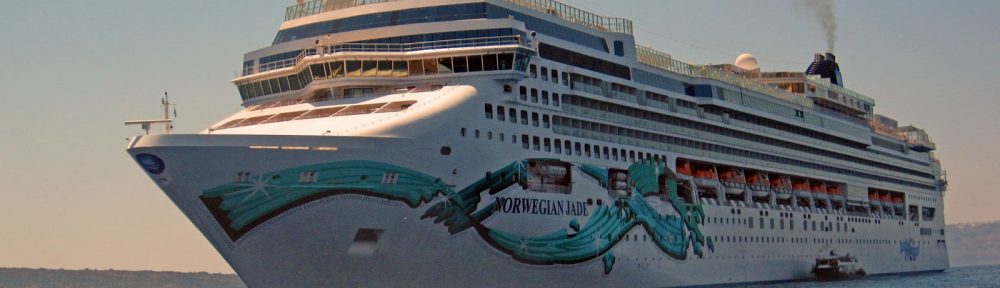
2 Royal Caribbean and 3 Carnival cruise ships can be seen, such a shame.


A drone image shows decommissioned cruise ships being dismantled at Aliaga ship-breaking yard in the Aegean port city of Izmir, western Turkey, October 2, 2020. REUTERS/Umit Bektas

Carnival Fantasy was a ship famous for its outlandish décor, all-night revelry and its size—back when 2,000 was an incredible number of passengers. The “Fun Ship” vibe it introduced in 1990 came with such whimsical spaces as an Egyptian-themed piano bar, decorated with a fake sarcophagus, and a glitzy glass-topped atrium that was the hub of the social scene.

Today the Fantasy is attracting a whole different breed of booty-seeker. In July, the 30-year-old ship sailed to the Aegean Sea, wrapping its final voyage in the shipbreaking capital of Aliaga, Turkey.

Its resting place there is a demolition yard where old cargo ships, tankers, research vessels—and now cruise ships retired during the Covid-19 pandemic—get torn apart and broken into pieces. In this case, they’re not being broken in half to get upgraded and stitched back together. Instead, circling the Fantasy’s partially deconstructed innards are buyers from all sorts of industries, looking for rock bottom deals on everything from artwork and kitchenwares to electrical wires and stainless-steel sinks.

For the cruise company, it’s an opportunity to recoup at least some value from an asset that’s currently acting as dead weight; while ships’ values decline with age, the Fantasy was originally built for about $225 million. And for the recycling companies that buy the vessel for cash and take on the hazardous task of emptying all its valuables, it’s a matter of a months-long salvage resale on steroids.

Cutting the Losses

It’s hard to gauge how exactly much money is made off of cruise ship recycling. Companies don’t immediately disclose the sale prices of the vessels after relinquishing ownership, and the resale value of their most sought-after commodity, scrap steel, fluctuates in each global market on a daily basis.

But the business is booming.

Next to Carnival Fantasy in Aliaga are two other Fantasy-class ships built in the late 1990s. And next to them are two former Royal Caribbean vessels (scrapped by Royal’s Spanish partner line Pullmantur Cruceros). The ships all had big fan bases, even as they aged. Fantasy and its sister ships started 2020 full of passengers bent on fun-in-the-sun activities in the Caribbean, Bahamas, and Mexican Riviera.

A drone image shows decommissioned cruise ships being dismantled at Aliaga ship-breaking yard in the Aegean port city of Izmir, western Turkey, October 2, 2020. REUTERS/Umit Bektas

The ships would have left the fleet in coming years even in a healthy industry; the pandemic sped up the process, with owners of idled vessels haemorrhaging cash and looking to cut their losses.

In its third-quarter filing, Carnival Corporation said it planned to sell 18 “less efficient” ships in 2020, resulting in a 12% reduction of its nine-brand fleet. “Those ships were giving us a bad drain,” Carnival CEO Arnold Donald said during a recent webinar with the Society of American Travel Writers.

Going, Going, Gone

Without much of a market for second-hand tonnage, the main worth of the ships is the steel that makes up the superstructure.

If, for instance, Carnival Fantasy has 15,000 tons of steel in its superstructure, the scrap may sell for upwards of $4.7 million based on current global market prices—though other factors also come into play, such as local prices and demand.

Decommissioned cruise ships are being dismantled at Aliaga ship-breaking yard in the Aegean port city of Izmir, western Turkey, October 2, 2020. REUTERS/Umit Bektas

Along with the risk of these market fluctuations, the buyer also takes on the uncertainty of just how much metal can be salvaged. Pre-1990s ships tend to have more steel in their hulls and underwater plating, but those built in the ’90s and after can bear lighter and stronger alloys.

Either way, steel and metal scraps will travel to a smelter to make rebar for construction projects around the world. Steel from some other dismantled ships can find its way to Turkey’s large car manufacturing industry, where it might become parts for a Toyota or a Ford.

Aluminum, copper, and stainless steel are also salvaged and resold, along with other valuable commodities that mostly remain in Turkey. The ripped out teak decks on Fantasy may end up in local shops, restaurants, and homes. Theatre scenery and lighting may find its way into show productions. Even the tackiest artwork has some value, and can end up in restaurants throughout the country.

Buyers come to the yard for everything down to the bolts and nuts. Even if a used toilet sells for a fraction of the shelf price, multiply that amount by a few thousand—given the number of cabins and public spaces on each ship—and it can add up to a substantial sum.

According to Orbay Simsek, vice president of the Aliaga-based Simsekler Ship Recycling Company, there are even markets for kitchenware, closets, and blankets.

Basically anything and everything that can be sold sells. Everything must go. Even the sarcophagus.

Eco-friendly Shipbreaking

Taking apart ships is a controversial topic, thanks to concerns over both human and environmental risks. It’s one of the most dangerous jobs in the world, according to Wouter Rozenveld, director of Sea2Cradle (SC2), an expert in green ship recycling who was hired by Carnival to oversee the safe dismantling of its ships. Each Carnival vessel may take up to nine months to break down, he says, and the blowtorch-based work comes with constant fire hazards.

Those hazards are amplified when the recyclable component pieces, like furniture, cabling, piping, and machinery inside each deck have to be carefully taken apart and separated says Ehud Bar-Lev, who oversees assessment services at maritime specialist Lloyd’s Register.

The extra steps in disassembly also increase the potential for hazardous waste spills, containing everything from oily residues to sludge, asbestos, and coolants in fridges.

To prevent those incidents, the Turkish shipbreaking yard undertakes its work in a concrete holding area that catches debris; in similar facilities throughout India and Bangladesh, the process may happen on the beach. Rather than letting toxic chemicals spew into the water, the Turkish yard collects the materials, has them catalogued by Sea2Cradle, and then hands them over to the government-run Ship Recycling Association of Turkey for proper disposal.

Carnival Corporation saw these precautions as a marketing opportunity, making a highly unusual move to publicize its efforts as “responsible recycling.” But it was the shipbreaking yard, not Carnival, that saw the biggest windfall as a result: never before has Aliaga seen five mega cruise ships in its harbour.

There may be more coming in the months ahead.

“The longer the pandemic rages on in the world, the more cruise ships will end up in scrapyards, and my guess is at an increasingly younger age,” says Manso Ng, a maritime management professor at Virginia’s Old Dominion University. “Even if a vaccine becomes available, how many of us will be comfortable jumping right back on cruise ships?”

Cruising Predictions About Testing, Destinations, Health Bubbles and the Permanence of Protocols

Independence of the Seas in Laderbee Haiti 

It should come as no surprise that the main topic on everyone’s mind during this year’s Seatrade Cruise Virtual industry convention was COVID-19, with a particular focus on restarting operations. Despite such daunting challenges, the cruise travel market is the most optimistic it has been since shutting down sailings.

Among the takeaways were the following key points.

Testing, Testing, One, Two, Three

More than anything, testing for the novel coronavirus was presented as the most important step for cruising’s eventual return — specifically, the 100% testing of all passengers and crew before boarding any ship as outlined by Cruise Lines International Association (CLIA).

In fact, Rick Sasso, president and CEO of MSC Cruises, believes testing effectively makes vaccines “irrelevant” as tests will help weed out any instances of COVID-19 regardless of who has or who has not been inoculated.

Another common belief is that while testing is a crucial “first gate,” as stated by Dr. Grant Tarling, chief medical officer, Group Health Services at Carnival Corporation, it is still possible that the virus could make its way onboard. Thus, multiple layers of protection including masking and physical distancing, as well as case isolation as needed, will be implemented.

Protocols Not Permanent

It is also good to remember that the strictest health protocols will not be in place forever. Donnie Brown, vice president of maritime policy at CLIA, anticipates stringent measures to exist at the “initial resumption” but looks forward “to being able to scale them back in time.”

He said what will contribute to the eventual loosening of protocols is a combination of easing restrictions on terrestrial travel; the availability of treatments and vaccines; and the remaining prevalence of COVID-19 in source markets and destinations.

Next Up: The Caribbean

Trunk Bay in St. Johns

The Caribbean is expected to be one of the first destinations to return for North American travellers, who can look forward to a gradual phasing in of ports, not all of which will likely be available on initial itineraries.

Holland America Line’s new president Gus Antorcha emphasized that cruise lines’ own private islands will come into play more to start, but traditional destinations are not out of the running.

Even if there are more restrictions, to begin with, sanctioned shore excursions are not necessarily a bad thing. Josh Leibowitz, president of Seabourn, pointed out that the cruise industry actually started out with “controlled” tours.

Ultimately, “pleasure should not be restricted,” said Clarice Modeste-Curwen, minister for tourism and civil aviation, Grenada Tourism Authority, but the region is rethinking attractions as needed, as well as avoiding mass gatherings with smaller groups. She specifically cited beaches and health-focused tours as good offerings.

It will come down to instilling traveller confidence in destinations and building mutual trust between ports and cruise lines, and those discussions are well underway.

Alaska’s Health Bubble

Both Holland America Line (HAL) and Windstar Cruises have specifically said they are planning for full 2021 Alaska seasons.

Equally anticipating next year’s return are Alaska’s individual ports of call. Skagway, for one, depends on cruising for a staggering 90% of its local economy, according to Andrew Cremata, borough mayor of Skagway.

“We want [guests] to have a completely free experience while they’re in the port,” he said.

Cremata discussed how a health bubble can be created on a ship, but also in a small destination such as Skagway, where visitors can still openly wander beyond shore excursions to hike, shop or dine. Crucial to that will be routinely testing seasonal workers so the local bubble and incoming bubble can safely interact.

Demand and Demographics Remain Steady

Also positive is the news that traveller demand remains high. Colleen McDaniel, editor-in-chief of Cruise Critic, spoke of the emerging trend of “revenge travel,” and the huge desire there is to get back out there, particularly among those who have cruised before. She said cruising is already their preferred vacation, and they miss cruising with friends.

HAL’s Antorcha does not see demographics shifting either. Those who “took travel for granted,” are raring to go, and, perhaps surprisingly, older guests are disproportionately booking cruises right now, he said.

Similarly, MSC’s Sasso believes loyalists will return. First-timers “may have been moved a little bit away from the fence,” he said, but there’s an opportunity to capture a new audience that appreciates all the robust steps the cruise industry is taking to ensure the healthiest of environments.

Travel Advisors Are Key

“Coming out of this, [travel agents] will never be in greater demand,” said Alex Sharpe, president and CEO of Signature Travel Network.

Sadly, Sharpe does foresee a smaller community that is “leaner and meaner,” but also one that has a chance to quickly grow back as consumers need help understanding everything. The additional silver lining, he added, is the potential for greater revenue per advisor with fewer in the market.

To that end, Dan Blanchard, owner and CEO of UnCruise Adventures — who said “God bless agents” — remains very thankful for advisors’ continued support and advised them to become as knowledgeable as possible about all the new protocols to keep their edge moving forward.

White House hosts call with cruise line bosses to discuss Healthy Sail Panel proposals

Cruise line bosses have held discussions with the White House over plans to resume sailing in a “safe and responsible manner”.
US vice president Mike Pence chaired a call with five cruise line executives; the Centres for Disease Control and Prevention (CDC); the Department of Health and Human Services, and the Healthy Sail Panel.
Carnival Corporation chief executive Arnold Donald; Norwegian Cruise Line Holdings president and chief executive Frank Del Rio; Royal Caribbean Group chairman and chief executive Richard Fain; Disney Signature Experience president Thomas Malzoum and MSC Cruise’s executive chairman Pierfrancesco Vago was present for the discussions, held yesterday (October 9).
A statement on the White House website said the call had focussed on “the impacts of the coronavirus on the cruise line industry and the maritime economy, the CDC’s No Sail Order, and the Cruise Lines International Association (Clia) and Healthy Sail Panel’s proposal to resume sailing operations in a safe and responsible manner.”
The Healthy Sail Panel has proposed 74 key steps towards the resumption of cruising, and since being announced in September, has received industry-wide adoption.
The proposals are now to be presented to the Coronavirus Task Force with a view to providing a recommendation to the president, Donald Trump, on the next steps on the CDC’s current No Sail Order which currently bans US-based cruising through until October 31.