The industry is prepping for a comeback. Where is the CDC?

Cruise industry taps leading health experts for enhanced Covid-19 ...

MSC Cruise has put together a Blue ribbonCovid group to put in protocols for safety.

By Johanna Jainchill

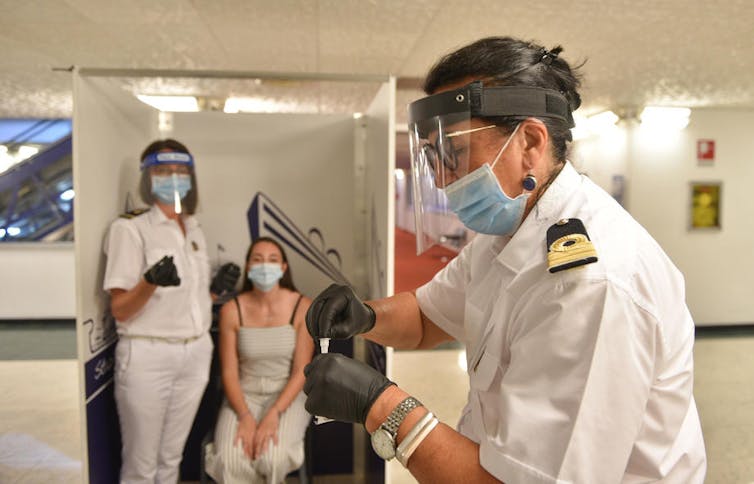
The past week has seen major movement in the shaping of protocols around the resumption of cruising. Last week, the European Union released guidelines for the resumption of cruising. Yesterday, Royal Caribbean Group and Norwegian Cruise Line Holdings Ltd. revealed that they had assembled a panel to develop health and safety protocols for the industry to resume operations. MSC Cruises has put together a Blue Ribbon Covid Expert Group that will advise it on sanitation and health protocols.

What’s missing from all of these advancements is any word from the U.S. Centers for Disease Control and Prevention (CDC), which will ultimately determine when large cruise ships can resume sailing from U.S. ports. The agency has said nothing about the cruise industry since updating its No Sail Order on April 9 to expire on July 24.

The cruise industry has not publicly said that the CDC is being uncooperative, but in a conversation with Travel Weekly last month, CLIA CEO Kelly Craighead praised Europe for enabling the industry to “participate in dialogue about thoughtful resumption protocols” but said that with the CDC it was “having some challenges with having that kind of engagement and dialogue with them.”

CLIA said it had been actively engaged in the development of the guidance published last week by the EU.

UBS analyst Robin Farley said in a note to investors in June that according to her sources, the reason CLIA announced a voluntary suspension of cruises through Sept. 15 is “likely so that [the] CDC would not have to extend its No Sail Order while negotiations continue.”

“It sounds like there needs to be an agreement with the CDC in place about 30 days before ships can restart,” Farley said.

However, Farley also said that according to Royal Caribbean Group management, the company “is in constant communication with the CDC in a constructive dialogue, and at this point, they are going back and forth with iterations of an agreement.”  And one of the co-chairs of the Royal/Norwegian panel, Mike Leavitt, a three-term governor of Utah and former secretary of the U.S. Department of Health and Human Services, said that the CDC was “very pleased to know the panel was being proposed. We described the membership and told them how we were going to work and we pledged transparency and they received it warmly.”

But publicly, at least, the CDC has been quiet. And several industry stakeholders have privately said the CDC is being unresponsive and uncooperative with the industry. The CDC did not respond to outreach from a Travel Weekly reporter.

It has been suggested that the CDC has been hamstrung by the Trump administration, such as in a scathing New York Times report in June that detailed the CDC’s failures overall in its response to the Covid-19 pandemic. In one example of its shortcomings, the article cited the CDC’s No Sail order and reported that the CDC wanted the order to be indefinite, but that the White House intervened, and so the agency replaced it with the order the ends in July.

It’s not the only article on the agency’s failures: the Washington Post this week reported that the CDC’s mishandling of the coronavirus is similar to the mistakes it made with the Zika outbreak in 2016.

CLIA and the cruise industry may not want to rock the boat and cause any further delay, but given the fact that so many travel advisors depend on the ability to relaunch operations in the world’s No. 1 cruise market, ASTA CEO Zane Kerby might have spoken for the industry at large when he called the CDC’s communications about travel “uneven at best.” In a letter to its director, Robert Redfield, on June 9, he said that prioritizing of the restart of the cruise industry is one of four main goals the CDC should tackle.

“In the absence of clear communication, the entire population remains essentially in the dark, left to rely on a patchwork of regional, state and local pronouncements to inform their decision-making with respect to travel,” Kerby wrote. “Airlines, hoteliers, cruise lines, tour operators, car rental companies, insurance providers and others are similarly left to their own devices as to when to restart operations in the face of an unprecedented global pandemic.”

Larger cruise ships on local deployments expected to be first to return

Deck Plans | Azamara

Larger cruise ships with local deployments will be the first to come back on sale following Covid-19, the former boss of Azamara has predicted.

Larry Pimentel, who stepped aside from his role as president and chief executive in April as the line made plans to survive the pandemic, said he expected older, smaller ships with international deployments to “sit on the sidelines simply because of the air travel” as travel resumes.

Speaking on a Travel Weekly webcast, he said: “Think about taking a 10, 12 or 15-hour flight in coach and the denseness that you’d find on these carriers. I’m not going to do that at the moment.

Click on the image to watch the Chat.

Webcast: 'It's a matter of choice, we have to choose to persist ...

“We’re going to find big ships with local deployments are the first to come back,” Pimentel said. “You’re probably going to find short rotations out of the States and you’ll probably get three or four-day rotations going to private islands. Why? Private islands can secure the safety and health in all areas without a bunch of nonsensical politics layered in it, which makes things even more complex and, frankly, angers a lot of people.”

Pimentel said small luxury vessels sailing to less crowded destinations may also come back sooner, but said: “We still have an issue with social distancing in an industry that was all about the connection on the ships, so herein lies a paradoxical sort of scenario.”

Pimentel predicted many ships would not come back into the sector at as line battle with cash flow issues.

“Cruise lines need the cash right now,” he said, noting that the only income lines are bringing in is onboard revenue as cabins on 2021 sailings will be filled up with people who deferred from this year and used their future cruise credits to rebook. “So the cruise industry is going to have a terrible 2020, and a terrible economic 2021.”

Pimentel said: “The ships that come back are likely to fill up as there won’t be as many ships operating. Let’s face it, there will be some ships that will sit in the sidelines that won’t come back to the industry. The whole industry closed down in about three weeks. There is no way in hell we’re coming back in three weeks or even three months.”

He also predicted that “new cruise ship orders will slow so significantly that it will almost seem like they are stopping altogether, compared to we’ve seen over the last couple of years”.

“I fully expect a lot of options not to be secured,” he said. “This [recovery from the pandemic] is not months, this is a multi-year process.”

He pointed out that there are 19 new ocean ships on order this year, adding: “That’s a lot of vessels and right now, who needs more capacity? Nobody. But in the future, demand will be there. I’ve learned this about the consumer – once they feel even a little bit comfortable, and the value seems there, they will book.”

Port Canaveral: Diversified Offering

Six Ships, Port Canaveral

A brand-new Terminal 3 is nearing the final stages of construction for Carnival Cruise Line at Port Canaveral, along with a 1,800-spot parking garage, all in preparation for the new Mardi Gras which will become the first LNG-fueled ship in North America.


Projections call for just under five million cruise guests in the fiscal year 2020, and over 5.6 million by 2024.


For port CEO Captain John Murray, the planning started years ago, wanting to be ready for LNG-fueled ships. The effort has paid off as Port Canaveral will host the Mardi Gras year-round and is expected to be home to Disney’s LNG-fueled ships as well.

“We are growing consistently,” Murray said. “All our cruise lines are very strong and over the next few years they plan to add additional ships.


A rendering of the new Cruise Terminal 3

“We are going to become the Florida port that can expand as the tonnage will be on the market and there won’t be as many berthing options in Florida as there have been in the past.”

Other big news at Port Canaveral includes the summer arrival of Marella Cruises in 2021, a deployment move announced late last year that had been in the works since 2017, said Robert “Bobby G” Giangrisostomi, vice president, cruise business development.

“They were looking for an American product,” he said, adding that the port’s proximity to Orlando was key.


Long term, the big homeport customers have major deals with Port Canaveral, including Carnival, Royal Caribbean and Disney, and Murray said in November he was negotiating a new deal with Norwegian.


With options, Carnival’s latest arrangement could extend to 45 years. For the port, terminal infrastructure is about building smart. “Flexible terminals,” commented Giangrisostomi. “A 1,200-foot ship can have up to 7,000 passengers. You have to be flexible. LNG ships, big ships, medium ships and Port Canaveral can handle them all.”

Deals also include more parking infrastructure, which may not be as long term.

“We have to look at what the concept of parking could be in 10 years,” Murray said, noting autonomous vehicles and an 83 per cent jump in Uber and Lyft usage at the port year-over-year.


Shorter cruises? Plan for more drive-in passengers. Estimates suggest that 40 to 60 per cent of guests embarking at Port Canaveral are drive-in customers.

“We are 200 miles closer to the entire Southeast,” explained Giangrisostomi

Another metric that is up is port-of-call business. With an expected 83 transit calls this year, that number jumps to just over 100 next year with more visits from the Oasis of the Seas sailing from Bayonne.


“Our port-of-call business is substantial,” added David German, director, cruise business development. “It’s good for the local community, with 6,000-plus passengers.”

The out-island arms race has paid dividends to all the Florida ports, Murray added. With cruise lines spending big developing their own destinations in the Bahamas, they have a reason to keep ships in nearby homeports.


New facial recognition has sped up clearing ships with U.S. Customs and Border Protection, which can now happen in as little as two hours for 5,000 disembarking guests.

“They clear the ship very quickly. It helps the cruise lines get to zero counts much sooner,” Murray said.


“Being ready and out front for our cruise customers,” Murray answered when asked about how to run a cruise port successfully. “The guests are the most important part of our operation … easy in, easy off, easy on the ship, easy off the ship. We want to be number one in customer service … It boils down to the end-user.”