Royal Caribbean International will debut a new array of amenities on the 3,114-passenger Adventure of the Seas, after a $61 million refurbishment this November.
Originally introduced in 2001, the ship will be fitted with new dual racer waterslides, the Cyclone and Typhoon; a FlowRider surf simulator; and Splashaway Bay, a children’s aqua park.
The ship will debut a FlowRider surf simulator this fall.
New culinary and entertainment venues include an Izumi Japanese Cuisine; Royal’s signature steakhouse, Chops Grille; and Boleros Latin Lounge.
The ship will also receive an additional 100 cabins and a new Suites Lounge.
The Adventure is Royal Caribbean’s fifth ship to undergo revitalization, and will be the brand’s largest ship revitalization investment yet, Royal said.
The Adventure offers southern Caribbean itineraries from San Juan.
Passengers wishing to cancel cruises will face an earlier penalty period for their deposits with Royal Caribbean International. Starting March 7, the final payment deadline for bookings goes from 60 to 75 days on short cruises (four days or less) and from 75 to 90 days on longer ones. Cancellation terms even closer to departure also changed in many cases. Vicki Freed, the senior vice president of sales, trade support and service, spoke with cruise editor Tom Stieghorst about why the line made the changes.
Q: Why did Royal Caribbean change its policy to make it harder for passengers to cancel?
A: Actually, we simplified the policy. If you look at the old policy, we used to have five different [product categories, now reduced to two]. So it was really hard for travel agents to remember, ‘OK, does this fall in this bucket, or in this one or this one? Was it a holiday sailing, what do you view as a holiday sailing?’ There was a lot of confusion, so we wanted to just simplify it.
Q: Did you get travel agent feedback before you made the change?
A: We ran it by our travel agent advisory board back in January, and they said, yes you should do it. We said, is this going to affect bookings, what do you think? And they said, “No, we like a much stricter cancellation policy because it allows us to encourage people to buy travel insurance, and it makes the bookings stickier; people are more committed.” They were saying, “This is a no-brainer. You should do it.”
Q: Why do it now?
A: We did not want to do anything during Wave [season]. That was our decision as a brand. We wanted to do it with new deployment, which we’re … just releasing now. [Royal releases schedules for the Caribbean, Bahamas and Northeast regions for 2017-18 on March 7]. So that’s why we’re doing it now.
Q: Simplifying the policy sounds logical, but couldn’t you have simplified it and kept the same final payment period you had previously?
A: Yeah, I suppose we could have. If you really look at the differences, when you compare it, the 75% of the total price [penalty] for the shorter cruises remains the same, from 28 to 15 days, 50% [penalty] went from 29 days to 56, versus 29 to 42, so that’s a little bit more of a window. The [loss of] deposit [penalty] went from 59 days to 74, so there were some small tweaks. They weren’t anything significant.
Q: What was the biggest change?
A: On five nights or longer, the first penalty starts at 89 days versus 74.
Q: How does the price integrity policy factor into this?
A: With our new no-discounting within 30 days of departure, we’re training the consumer to book further out, and so we don’t want a bunch of space dumped back to us close in when we don’t really have an opportunity to resell it. If someone’s going to cancel now, with 90 days out, it gives us two more weeks to resell that space. Because remember, all bets are off the table at 30 days out. That’s the motivation and the reason why we did this. And our travel agent advisory board suggested we do it. And to help travel agents sell more insurance.
Q: How many people cancel before the penalty period to get their money back?
A: I don’t think it’s many. I think it’s a small percentage. But that’s why we encourage travel agents to urge consumers to buy travel insurance.
As cruise lines search for ways to appeal to younger guests, one item in the toolbox is the app, that downloadable software that makes a smartphone into more than just a device to make calls.
By one estimate, the average smartphone user has 41 apps installed on his or her device, used for everything from calculating tips to forecasting weather or playing games. Now cruise passengers are finding room on their screens for apps from the cruise lines.
Within the past two years, most of the large cruise lines have rolled out at least one app for customers. They generally fall into two categories. The first provides precruise information to help customers research their trip and check out shore excursion or ship info.
The second category is designed to help passengers once they embark by enhancing the onboard experience.
While it seems like they’ve been around forever, apps only really took off in the summer of 2008 when Apple opened its App Store shortly after introducing the iPhone in 2007.
Last year, Apple CEO Tim Cook said that app downloads from the store had surpassed 100 billion since it opened.
WiFi access on cruises has led to shrinking of Internet cafes
Once the cutting edge of electronic sophistication, computer stations are now seeing less demand, so cruise lines are cutting back on them and redeploying the space. Read More
The rise of apps dovetailed with dramatically increased infrastructure spending by the cruise industry on Internet connectivity at sea and WiFi networks that enabled guests to use personal devices to access the Web onboard.
Because shipboard apps function by piggybacking on a WiFi network, it was only after onboard wireless services were upgraded and strengthened that they could reliably work.
Cruise lines offer their apps for free, and most are downloadable from the App Store for iPhones and iPads as well as from Google Play for Android-based devices. Some cruise lines charge a fee to use the app for chat communication, which is one of the most popular functions.
But unlike WiFi connectivity, which is an additional expense, apps are not seen by cruise lines as a profit generator. Rather, they are considered a service to help passengers make the onboard experience richer.
The Hub app can help Carnival Cruise Line passengers research their dining options while onboard as well as check in on any ship activities.
When Carnival Cruise Line was developing its shipboard app, called Carnival Hub, it boiled the mission down to answering passenger needs at the most basic level, said Gaby Gonzalez, Carnival’s vice president of guest technology and photo operations.
“If you look back at what the app was meant to solve, there were two main questions: ‘What can I do now?’ and ‘Where’s Sally?'” Gonzalez said. So Carnival paid close attention to functions that displayed daily activities on its ships and also provided person-to-person messaging.
Gonzalez said passengers have been pleased with the results, measured by positive reviews that Carnival Hub garnered in the app stores, with users rating it at 4.5 out of five stars. She said about a third of the passengers on ships outfitted for Hub use it.
The idea of the Hub [is] how do you maximize the fun of the cruise experience?” Gonzalez said. “How do you make being on a cruise better because you now have your gateway, your hub to that experience?”
Although it’s very functional, Carnival Hub is currently available on only four ships, the Breeze, Dream, Magic and Sunshine, although the line said the plan is for it to be available on all ships by the end of 2016. Royal Caribbean International’s Royal IQ app is offered only on its Quantum-class ships, and some lines don’t offer an app.
In general, small-ship cruise lines are less likely to invest in a shipboard app.
“If you look at our fleet, which is made up of smaller, more intimate ships and where a majority of them carry 700 passengers or less, it’s kind of hard to get lost while onboard,” said Jason Lasecki, spokesman for Regent Seven Seas Cruises and Oceania Cruises, neither of which offers an app.
The Royal Caribbean app, available on Quantum-class ships, displays events on the daily Cruise Compass.
One of the few lines to make its app available fleetwide is Princess Cruises, in part because Princess@Sea is a website accessible through a browser rather than a downloadable program. That approach made it easier to implement, and it is accessible on laptops, at terminals in the ship’s Internet cafe and for devices other than mobile phones and tablets.
Development of Princess@Sea started early in the winter of 2012 and was timed to launch with the debut of the Royal Princess in 2013, said Nate Craddock, the project lead for guest experience applications at Princess Cruises.
A look at how Princess@Sea functions demonstrates the variety of features that shipboard apps include. The landing page is mostly about events and schedules: times for movies, happy hours, contests and the like. There is some basic weather information for the day and a quartet of buttons at the bottom that lead to other pages with more information.
The events button, for example, takes passengers to a listing of all happenings during the cruise (events for the current day are displayed on the landing page). Users can touch or click on an event link to add it to a personalized agenda called My Cruise Planner.
An Internet button connects to the passenger’s Web account (using Princess@Sea itself does not incur Internet charges).
A Messenger button initiates the chat function. Each user of Princess@Sea has a unique identification number. Users who want to chat with each other exchange these numbers. Group chats are also possible.
The More button is a gateway to a variety of extra functions. Like most shipboard apps, Princess@Sea has a stateroom account page where passengers can view an itemized list of what they’ve spent.
Another page leads to information about bars, restaurants, lounges and the casino. For example, the Adagio Bar page lists hours, displays a menu, has a photo gallery and includes a descriptive paragraph.
A Map It button brings up a deck plan for any location being researched.
The More tab is also where passengers can go deep into the ship’s itinerary. Clicking on a port of call brings up arrival and departure info, a brief description and photos.
A page on Puerto Vallarta, Mexico, for example, includes a selection of restaurants that offer authentic local cuisine, fun facts and how to take part in a sea turtle protection program. There’s information on the port’s ties to Hollywood, tropical birds that are native to the area and a bar where guests can enter and exit on a burro. Another area has other information guests need about where they are docked, proper attire, nearby beaches, shopping, tipping customs, banks and post office locations and emergency numbers.
A general-information page contains a variety of useful items typically found in the loose-leaf binders on the desk of a passenger cabin, things like communications and stateroom services and safety and environmental reminders. There’s even a security section that lists phone numbers for the FBI, Coast Guard and a national sexual-assault hotline.
To help passengers who may not be digitally savvy, Princess has trained staff members who interact with guests to walk them through any problems they have with the app, Craddock said.
Princess guests can request a reference sheet from guest services or at the Internet cafe front desk. Cruise directors include a brief Princess@Sea how-to in the daily Wake show, and commercials for the app run during gaps in programming on the in-cabin TV system.
Although the Princess@Sea website has some features common to many cruise line apps, each line has its own approach. Here’s a look at what some other lines offer.
Carnival Cruise Line
In addition to person-to-person chat, which costs $5 per person, per voyage, Carnival Hub is popular with small groups because it enables joint chats.
“When people are traveling in groups of 20 or so, we actually prepopulate the contacts list that enables that connectivity,” Gonzalez said. “If you arrive together in a group of 20, you’ll already see in your contact list the 20 people.”
For 2016, Carnival is focusing on two things. The first is expanding Hub fleetwide; Gonzalez said her goal is to have that accomplished by the end of the year. The second is to add the ability for passengers to use the app to download and buy shipboard photos.
Celebrity Cruises focused its app on cruise planning rather than on listing onboard activities.
Celebrity Cruises
Celebrity has focused its Celebrity Destinations app on cruise planning rather than on shipboard activities. Its app offers videos and rich imagery of the ports Celebrity visits, itineraries and maps of Celebrity tours, profiles of the line’s shore excursions, interactive deck plans and other planning aids. Celebrity also has a separate Cruise Lingo app that translates useful phrases on a customer’s phone into a variety of languages.
Costa
The Italian line’s MyCostaMobile includes a 360-degree tour feature for each ship and offers free text messaging or phone service to connect with other passengers on the ship using a mobile device.
Crystal Cruises has the Storyteller as part of its app, enabling passengers to edit their photos.
Crystal Cruises
Crystal’s three offerings are not conventional shipboard apps. One, called the Storyteller, is a photo-editing app. Users store or share photos via Facebook or email and can create postcards from them. While using the app to edit photos is free, an Internet package is required to share photos in social media.
Crystal also has a media-player app for watching movies and Crystal-produced programming as well as enrichment lectures, while the PressReader by Newspaper Direct app lets users read U.S. and international newspapers for free while onboard.
Cunard
Carnival Corp.’s staunchly traditional Cunard Line has two mobile apps available in the App Store: one displays Cunard U.K. brochures, and the other houses the onboard magazines.
The Disney Navigator is available for use on every ship in the fleet. Among its features is a complimentary chat function. It also identifies where character interactions can be found onboard.
Disney Cruise Line
Along with Princess, Disney Cruise Line is one of the few lines where apps function fleetwide. Its Navigator is similar to Princess@Sea, plus it has times and locations for children’s character interactions, as well as a drink-of-the-day description for adults. Disney includes a complimentary chat function. The chat does not work on Disney’s Castaway Cay private island, but passengers can view maps of the Cay on the app.
Holland America Line
HAL has an app optimized for tablets that describes its Alaska cruise offerings. Users can explore both cruises and Land+Sea Journeys with a new level of detail, including an interactive map with destination details and excursion options as well as a sampling of the line’s Glacier Bay podcasts.
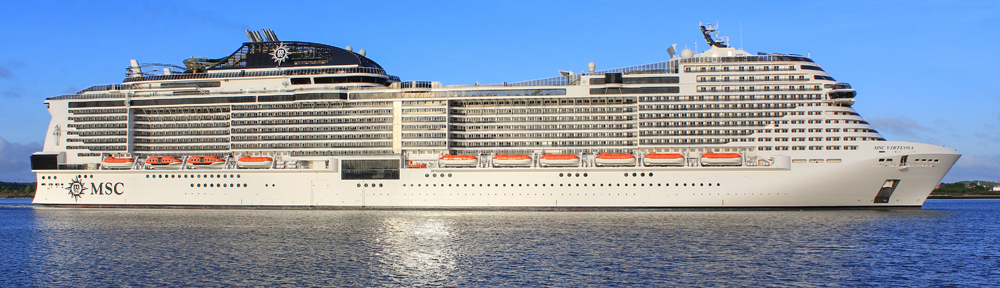
MSC Cruises’ app enables its passengers to book restaurants and shore excursions through its app along with keeping track of where the ship is heading.
MSC Cruises
Once onboard, guests can download the MSC Traveler app to “friend” and chat with other passengers in real time. The app also enables guests to book restaurant and shore excursions, view sea conditions and weather forecasts for ports of call, check out daily activities and special events, update their location and keep up to date on global news. The app is available on a limited number of ships including the MSC Divina, Magnifica and Preziosa.
Norwegian Cruise Line’s iConcierge app enables a guest to make calls to people off the ship, and an intraship chat is available for a fee. It’s available on 11 of the line’s 14 vessels.
Norwegian Cruise Line
The iConcierge app has functionality similar to the Princess@Sea website. An additional feature is the ability to make calls to and receive calls from people who are not on the ship, though additional charges apply on a per-minute basis. An intraship chat feature is priced at $7.95 per person, per voyage. The app is available on 11 of Norwegian’s 14 ships.
Royal Caribbean International
The debut of the Quantum of the Seas also marked the debut of the Royal IQ app.
One feature unique to Royal IQ is the ability to track luggage through the embarkation and debarkation processes, using radio-frequency identification tags. Royal’s app provides for ship-to-shore and shore-to-ship calls billed at a per-minute rate. The app is featured on Quantum-class ships, including the Anthem of the Seas.
• • •
Cruise ship apps continue to be a work in progress, with lines cooking up new functions and versions. A spokeswoman for Norwegian, for example, said last month the line was working on enhancements but as of press time was not ready to talk about it.
Princess said probable improvements to Princess@Sea include the ability to redeem prepurchased gifts, a preview function for prepurchased shore excursions, a ratings and reviews section for alternative dining rooms and more collaborative tools for groups and charters.
At Carnival, there’s plenty of excitement about the upcoming debut of photo downloading and purchases through the Carnival Hub app on the Carnival Vista, which will launch in May.
“You’ll be able to view the photos that the photographers took of you, and you can buy them right on the app,” Gonzalez said. “This is going to be a fully digital gallery, and you’ll be able to download it on your phone, buy it on your phone and walk away with it.”
Also on the radar at Carnival in the next few years, Gonzalez said, will be the ability to use the app to buy shore excursions. “We have a pretty rich road map ahead so that we can facilitate the cruise vacation even more,” she said.


 Wetravel2u's Weblog