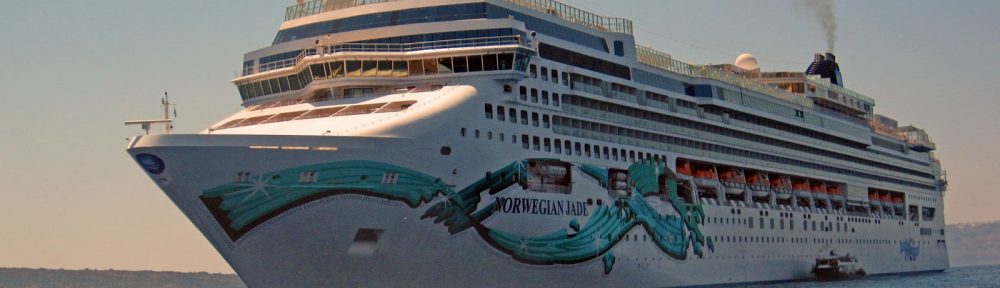
Costa Magica Sold to Seajets

The Costa Magica has been sold to Seajets, a Greek ferry operator, according to Greek media reports and multiple industry sources.

The ship represents another Carnival Corporation vessel leaving the Costa fleet as the world’s largest cruise operator continues to shed less economical capacity.

Of note, it is the newest and biggest vessel to exit a Carnival-owned brand, with the Magica having the capacity for 2,720 guests at double occupancy and having been built in 2004 at a cost of $400 million. It was one of three ships Carnival said would leave the fleet in December. The AIDAaura will also be retired, and a yet-to-be-named Costa ship will follow.

The Marios Iliopoulos-led Seajets has purchased multiple secondhand cruise ships since the start of the pandemic. A handful of ships have since been scrapped, while the former Maasdam was sold to French start-up CFC and will soon enter service.

The Magica will soon join a number of other ships in a layup in Greece under the control of Seajets, including the former Veendam, Pacific Area, P&O Oceania and Majesty of the Seas.

While the former Maasdam was sold to CFC, Seajets has also retired some ships for scrap value including the Columbus and Magellan, two ships that it bought at auction following the demise of Cruise & Maritime Voyages

Norwegian Cruise Line Holdings Completes Biofuel Trial

PRIO, a producer of biofuels in Portugal, and Norwegian Cruise Line Holdings in collaboration with World Fuel Services (WFS), have successfully completed the first trials with sustainable biofuels produced in Portugal, according to a press release.

Following the launch of ECO Bunkers B15 and taking the first step towards the decarbonization of maritime transport in the Iberian Peninsula, PRIO has announced a blend of Biofuels with 30 per cent renewable base material.

This milestone was achieved in collaboration with Norwegian Cruise Line Holdings and the Florida-based energy and services company World Fuel Services.

The new fuel, ECO Bunkers B30, contains a blend of 30 per cent of advanced biofuel from waste raw materials and it is produced at PRIO’s biodiesel plant in Aveiro. This enables the company to scale up production as demand increases and to adjust the percentage of Biodiesel blends (up to a 100 per cent renewable product).

Luis Nunes, a member of PRIO’s Executive Board said: “Advanced biofuels, produced from residual raw materials, i.e., the result of circular economy, are the solution of the present and that allows us to immediately meet the growing needs of our clients. They are “drop-in” solutions, meaning that they did not require any modifications to the engine or tank of Norwegian Cruise Line Holdings’ cruise ships and, in this way, allowed an immediate impact without any need for additional investment in these ships.

“We are at a crucial moment in the world’s response to climate and biodiversity emergencies, so PRIO believes we can already accelerate the energy transition if we increase the contribution of advanced biofuels in the maritime sector,” he added.

PRIO has established itself as the ideal partner for maritime companies on the road toward decarbonization of the sector.

With the help of World Fuel Services, two Norwegian Cruise Line Holdings ships were fueled with a total of 400 tons of B30 supplied by PRIO last year.

The Norwegian Star received 200 tons of ECO Bunkers B30 in Lisbon in November.

The following week, the Norwegian Epic, received another 200 tons of ECO Bunkers B30. This has enabled the cruise company to avoid approximately 440 tons of CO2 emissions.

Royal Caribbean Newbuild Outlook: ‘Market Underpenetrated’

Royal Caribbean Group and its portfolio of cruise brands will launch 11 new ships between 2023 and 2026, culminating in the third Icon Class ship in 2026 being delivered from Meyer Turku to Royal Caribbean International, and a newbuild for TUI Cruises from Fincantieri, according to the cruise ship orderbook.

In the near term, Jason Liberty, president and CEO, said that the business would grow capacity by 10 per cent in 2024, 5 per cent in 2025 and 6 per cent in 2026.

“I think the first thing to point out is, that’s not just one brand in one market, in one destination,” he said. “So this reflects our three wholly owned brands and how they’re going to grow in their different segments and also for these ships to be in other parts of the world.

“If you look at the orderbook, as you get into ’27 and ’28, it’s lighter orderbook. We believe that at Royal Caribbean that the addressable market is underpenetrated, especially in all the different markets in which we operate. We work very hard to create global brands that attract guests from all over the world and build revenue management systems to effectively harvest that quality demand. And we think that apparatus more than supports our expected supply growth over the coming years.”